Key Takeaways
- Kamloops winters create specific damage patterns — freeze-thaw cycles, soil heaving, and salt accumulation — that standard spring checklists don’t account for.
- Start with drainage and hardscape inspection before you touch a single plant bed or lawn area.
- Don’t rush your first mow or spring fertilizer application — soil temperature matters more than the calendar date.
- Trees and shrubs need a post-winter assessment before pruning; not everything that looks dead actually is.
- Getting the order of tasks right saves you from redoing work and sets your property up for a strong growing season.
Introduction: Kamloops Winters Are Rough — But Spring Has Its Own Demands
If you’ve lived in the BC Interior for more than a few years, you know that Kamloops winters aren’t always predictable. Some years you get a deep freeze with reliable snow cover that actually insulates your lawn and plant beds. Other years — and we’ve seen this more and more — you get repeated freeze-thaw cycles that heave soil, crack hardscaping, and leave your yard looking like it went through a blender by the time April rolls around. That’s why spring property maintenance in Kamloops isn’t just about raking leaves and planting petunias. Done right, it’s a structured process of assessment and repair before restoration and planting.
We’ve worked hundreds of residential and commercial properties across the BC Interior, and the most common mistake we see homeowners make in spring is jumping straight to the “fun” tasks — spreading fresh mulch, buying new plants, booking the first mow — before they’ve actually assessed what the winter did to their property. This post walks you through the right order of operations, with priorities built specifically around Kamloops and BC Interior conditions. Think of it as a checklist with context, not just a generic to-do list.
Step 1: Start with Drainage — It’s the Most Overlooked Spring Task
Before you pull a single weed or rake a single leaf, walk your property and look at where water is sitting. In Kamloops, the late winter snowmelt combined with spring rain can expose drainage problems that weren’t obvious in summer. Low spots that pooled for a week in March? Those are problem areas. Soil that’s still saturated in late April near your foundation or retaining walls? That’s a red flag.
Freeze-thaw cycles are particularly hard on drainage infrastructure. We regularly see catch basin lids that have shifted, French drain outlets that have become blocked with sediment and debris over winter, and downspout extensions that got knocked out of position under snow load. Check each one.
Pay close attention to any grading near your foundation. The BC Interior’s clay-heavy soils — common in many Kamloops neighbourhoods — expand when wet and can shift over winter. If you notice new low spots near the house or water tracking toward rather than away from your foundation walls, that’s something to address before summer irrigation season kicks in and makes things worse. Our post on what site grading is and why it matters goes deeper on this if you’re seeing signs of settling or pooling on your property.
Step 2: Assess Your Hardscape — Cracks, Heaving, and Salt Damage
Concrete, paving stone, and exposed aggregate surfaces take a beating in the BC Interior every winter. The culprit isn’t just cold — it’s the freeze-thaw cycle and, in many cases, the de-icing products applied all winter long. Calcium chloride and sodium chloride (road salt) are effective, but they’re also corrosive to concrete and toxic to the soil and plant material alongside walkways and driveways.
Your spring hardscape inspection should cover:
- Paving stone and patio surfaces: Look for shifted or sunken pavers, especially along edges. Freeze-thaw cycles work at the base, not just the surface.
- Poured concrete: Check for new cracking, spalling (surface flaking), or joint deterioration. Small cracks from last year that were left unsealed often widen significantly after a hard winter.
- Retaining walls: Look for bulging, leaning, or mortar cracking. A wall that moved even slightly this winter will continue to move.
- Steps and stair landings: These are safety issues first — heaved steps are a liability, especially for commercial and strata properties.

After you’ve done your visual inspection, flush the areas that received heavy salt treatment with a good volume of water. This won’t undo soil damage, but it dilutes salt concentration before your spring plantings go in. If lawn areas or shrub beds along a driveway look dead or sparse, salt burn is often the cause — not winter kill from cold.
Step 3: Lawn Cleanup and First Mow — Timing Is Everything in Kamloops
Here’s an opinion we’ll state plainly from experience: most Kamloops homeowners mow too early in spring. We understand the impulse — the grass is green-ish, the weather’s warming up, and the lawn looks shaggy. But if the soil is still cold and wet, driving equipment over it compacts the root zone and does more harm than the mow does good.
In the BC Interior, we generally recommend waiting until soil temperature is consistently above 8°C before the first mow and definitely before any fertilizer application. Soil temperature lags behind air temperature significantly, especially after a cold spring. You can check soil temperature with an inexpensive probe thermometer — it’s one of the most useful tools a Kamloops homeowner can own. Environment and Climate Change Canada publishes historical and current climate data that can help you get a sense of where you are seasonally, but a physical measurement in your yard is always more accurate.
Before that first mow, do a proper spring cleanup:
- Rake out dead thatch and matted grass — Kamloops lawns often develop snow mould under long snow cover, and matted areas need to be opened up to breathe.
- Pick up any debris, sticks, and gravel that migrated onto the lawn over winter (gravel from driveways is a common one).
- Set your first mowing height higher than you think — no lower than 7–8 cm. Scalping the lawn in spring stresses it going into the dry summer ahead.
Step 4: Trees and Shrubs — Assess Before You Prune
We’ve seen homeowners cut back shrubs aggressively in early spring, convinced they were dead — only to see new growth emerge weeks later from the base or along branches. In the BC Interior, some shrubs that look completely lifeless in March are simply slow to wake up. Give them time.
The general rule we follow: wait until you see the buds beginning to swell or break before making any final decisions about what’s dead and what isn’t. For most of Kamloops, that window is mid-April to early May depending on elevation and microclimate. Scratch the bark with your thumbnail — if there’s green underneath, the branch is still alive.
That said, late winter and early spring (before leafout) is actually an excellent time to prune many deciduous trees and shrubs because the structure is visible and the plants are still dormant. Ornamental trees like flowering crabs, Amur maples, and native serviceberry all respond well to early spring shaping. What you want to avoid is pruning spring-flowering shrubs like lilac or forsythia before they bloom — you’ll cut off the flower buds that formed last fall.
For fire-prone properties in the BC Interior, spring pruning is also a FireSmart priority. Clearing dead wood, limbing up trees, and thinning dense shrub masses reduces fuel load before fire season. Our guide on designing a FireSmart yard in the BC Interior is worth reading if wildfire risk is on your radar — and in Kamloops, it should be.
Step 5: Bed Prep and Mulching — Do It in the Right Order
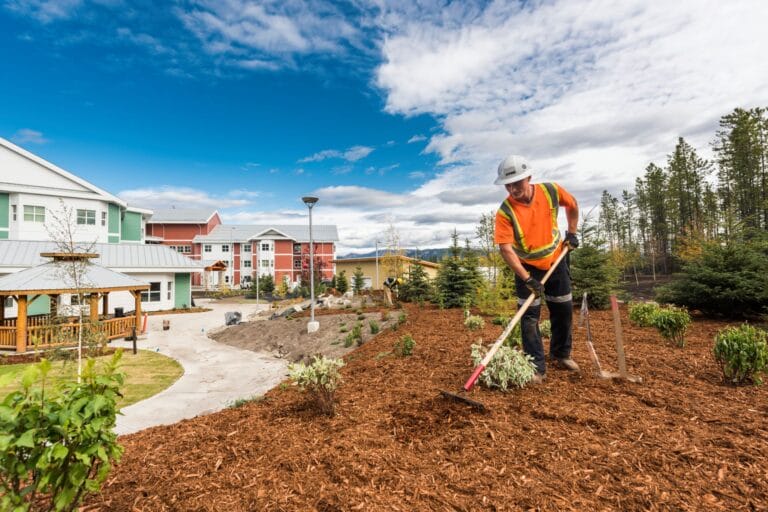
Fresh mulch is one of those spring tasks that homeowners often do too early or in the wrong sequence. The right order matters:
- Pull winter debris first. Rake out any leaves, dead stems, and matted organic matter that accumulated over winter. This stuff can harbour fungal disease and slugs — both of which are real problems in Kamloops garden beds through wet spring months.
- Let the soil surface dry and warm. Putting mulch over cold, wet soil traps moisture and keeps the root zone cold longer. Give the bed a week or two to breathe.
- Add compost or soil amendment before mulch. If your beds need organic matter worked in, do it now, before the mulch goes down. Good-quality compost from a trusted local source makes a meaningful difference in BC Interior soils, which tend to be alkaline and low in organic content.
- Apply mulch at the right depth. Two to three inches is the target. More than that and you risk smothering shallow roots and creating habitat for rodents. Less and you lose the moisture retention benefit — which matters enormously heading into a Kamloops summer.
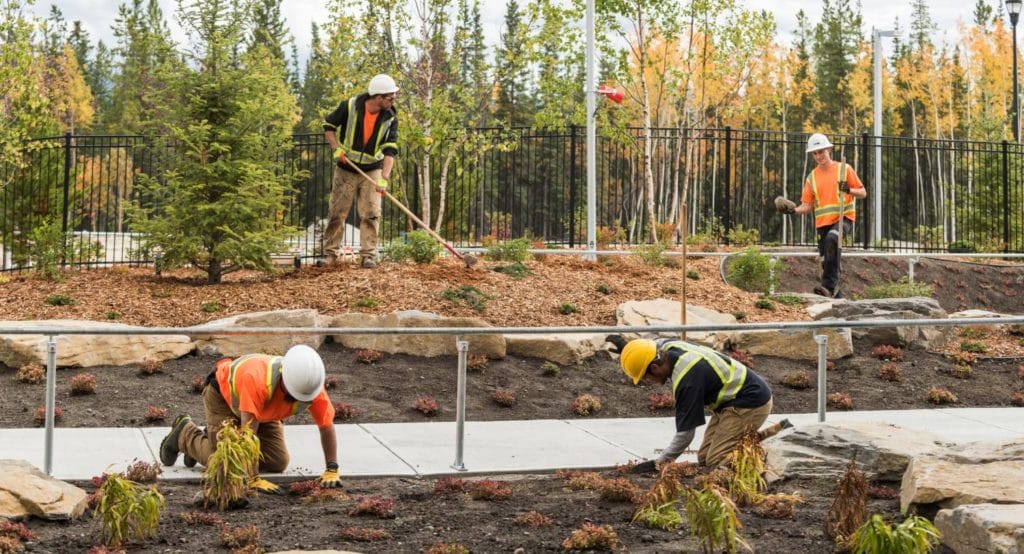
If you’re sourcing mulch or soil amendments locally, our Kamloops Garden Centre carries premium soil, mulch, and compost suited to BC Interior conditions — no guessing about whether the product is right for your climate.
A Word About Timing — and Not Rushing It
One scenario we see every spring: a homeowner has a landscaping company come in the first warm week of March, lay fresh sod, plant new shrubs, and spread a full application of granular fertilizer — and then Kamloops gets two more weeks of below-zero nights and a late frost. The sod dies back, the new plants struggle, and the fertilizer sits unused in frozen soil or gets flushed away in snowmelt.
Spring in Kamloops can be generous or it can be deceptive. The Interior’s frost-free date varies but typically lands somewhere between late April and mid-May depending on your specific location and elevation. For tender annuals and new sod, there’s no benefit to rushing. The plants won’t establish faster just because they went in two weeks earlier if the conditions aren’t right. Patience in spring is genuinely one of the most valuable things you can bring to property maintenance in this climate.
Conclusion: Get the Order Right and the Rest Follows
Spring property maintenance in Kamloops isn’t complicated — but the order of operations matters more than most homeowners realize. Drainage and hardscape first, lawn cleanup and soil assessment before mowing or fertilizing, trees before the window closes, and bed prep done properly before you invest in new plants or mulch. Do it in sequence and you’re not redoing work three weeks later.
If you’d rather hand this off to a crew that knows BC Interior conditions inside and out, that’s exactly what we’re here for. Our landscape maintenance services in Kamloops and across BC cover everything from spring cleanups to full-season property care — residential, commercial, and strata.
Contact Lyons Landscaping today for a free estimate and let’s get your property set up for a great growing season.