
Your Month-by-Month Property Maintenance Schedule for BC Interior Conditions
Key Takeaways
- The BC Interior’s semi-arid climate, heavy frost, and clay-heavy soils require a maintenance calendar that doesn’t look like anything you’d find in the Fraser Valley — or a generic home improvement guide.
- Timing is everything: missing your spring aeration window by even two weeks can set your lawn back for the entire growing season in Kamloops or Kelowna.
- Fall is the most underrated season for property maintenance — the work you do in October and November pays dividends all the way through July.
- A consistent, scheduled approach to property upkeep prevents the kind of expensive catch-up work we see every spring from homeowners who went dormant along with their lawns.
- This schedule is built for BC Interior conditions specifically — hot, dry summers, cold snaps that arrive fast, and soils that punish neglect.
Introduction: Why Generic Maintenance Advice Fails BC Interior Homeowners
If you’ve ever followed a property maintenance schedule BC homeowners in the Lower Mainland use and wondered why your results looked nothing like the photos — you’re not alone. The BC Interior is its own world. Kamloops averages fewer than 150 frost-free days a year. Summer temperatures regularly push past 35°C. Soils range from cracked silt loam in the valley bottoms to dense clay on the benches. Irrigation isn’t optional here; it’s the difference between a lawn and a dirt patch by the end of July.
We’ve worked on hundreds of residential and commercial properties across Kamloops, Kelowna, Merritt, and the surrounding Interior, and we’ll be honest with you: most of the expensive problems we fix in spring trace back to skipped maintenance steps in fall. This month-by-month guide is built specifically for where you live — not for some hypothetical mild-climate homeowner on the coast. Follow it consistently, and you’ll spend less money, less time, and a lot less frustration on your outdoor spaces every single year.
January & February: Plan Now, Save Later
January is not a lawn care month. But it absolutely is a property maintenance month — and the homeowners who treat it that way are miles ahead come April.
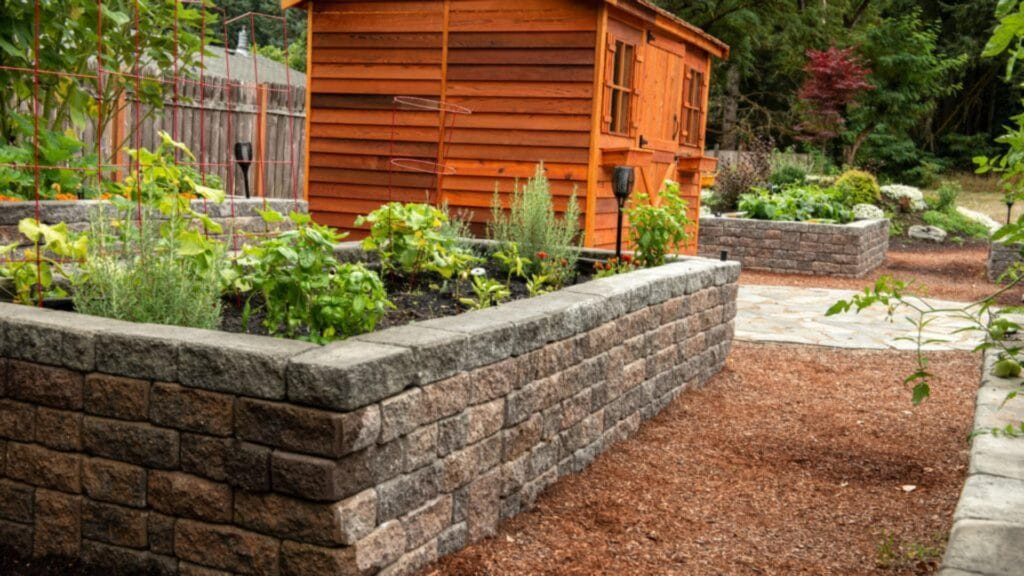
In the BC Interior, January and February are ideal for reviewing your irrigation system plans, booking spring service appointments early (popular contractors in Kamloops fill up fast), and assessing any damage from freeze-thaw cycles that have already started. Walk your property after every significant temperature swing. Frost heaving can shift retaining wall stones, crack concrete edging, and push shallow-rooted shrubs partially out of the ground.
This is also the right time to order or research plants for spring. If you’re planning to add hardy trees and shrubs — think drought-tolerant species like Potentilla fruticosa, native saskatoon berry, or ornamental grasses suited to Interior conditions — getting your list together now means you’ll actually find what you want at a reputable garden centre rather than settling for whatever’s left in May.
For commercial property managers, this is budget season. Use January to review your maintenance contracts, confirm your snow removal protocols are still working, and document any areas that consistently caused problems this winter. Good records now mean better decisions later.
January–February Checklist:
- Inspect retaining walls and hardscape for frost heave damage
- Book spring aeration, dethatching, and cleanup appointments
- Review and update irrigation system plans
- Research spring planting — choose species suited to Interior drought conditions
- Commercial properties: review and renew maintenance contracts
March & April: The Critical Startup Window
This is where the year either starts well or starts with a scramble. In the BC Interior, March can still bring hard frost — but it can also arrive warm and dry faster than you expect. Average last frost dates hover around late April in Kamloops, but we’ve seen frosts in early May that caught homeowners completely off guard after they’d already put tender plants in the ground.
The biggest mistake we see in March is rushing. Homeowners get excited at the first warm weekend and start raking, aerating, and fertilizing before the soil is ready. Aerating saturated, frost-softened soil does more harm than good — you’ll compact rather than open it. Wait until the ground has thawed consistently to at least 5–8 cm depth and has dried enough that a footstep doesn’t leave a deep impression.
By mid-to-late April, you’re into the real startup season:
- Dethatch cool-season lawns (Kentucky bluegrass is the dominant species in most Kamloops and Kelowna yards) once the grass is actively growing
- Apply a slow-release, balanced fertilizer — we typically recommend a 20-5-10 or similar formulation for Interior lawns coming out of dormancy
- Begin irrigation system commissioning: check heads, test zones, replace any winter-damaged components
- Prune dead wood from trees and shrubs — but hold off on flowering shrubs until after bloom
- Scout for knotweed, thistle, and other invasive species that establish fast in disturbed soil; early removal is dramatically easier than dealing with an established stand
- Top-dress garden beds with 5–8 cm of quality compost or mulch
According to the BC Government’s invasive species program, early spring is the most effective window for controlling invasive plants before they set seed or establish deep root systems — something we remind every client who wants to “deal with the knotweed later.”
May & June: Peak Growing Season — Don’t Coast
May and June are genuinely beautiful in the BC Interior, and it’s tempting to sit back and enjoy the results of your spring prep work. Don’t fully relax yet. This is the period when problems develop quietly and become expensive if you miss them.
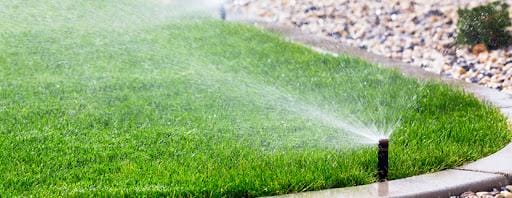
Irrigation is your number one priority by late May. Kamloops averages only about 280 mm of precipitation annually — well below what most landscape plantings require through the growing season. If your irrigation system wasn’t commissioned in April, get it running now. Every week of delay in June is stress your lawn and plants can’t fully recover from during July’s heat.
We had a client in South Kamloops a few years back who pushed their irrigation startup to mid-June because “it was still raining.” By the time we visited in late July, they’d lost three established ornamental grasses and had significant bare patches across 40% of their lawn. Replanting and overseeding cost them more than three years of regular maintenance would have. That’s not an unusual story — it’s one of the most common ones we hear.
May–June Checklist:
- Confirm irrigation is running correctly and adjust schedules for warming temperatures
- Begin regular mowing — keep cool-season grass at 6–8 cm in summer to reduce heat and moisture stress
- Apply pre-emergent weed control in lawn areas if not done in April
- Plant annuals and warm-season vegetables after last frost risk has passed (typically mid-May in valley-bottom Kamloops)
- Fertilize trees and shrubs before June heat sets in
- Edge beds, refresh mulch to control moisture and suppress weeds
- Check for aphid and pest pressure on newly leafed-out trees and shrubs
July & August: Survival Mode (the Right Way)
July and August in the BC Interior are not the time to be aggressive with your landscape. Your job this time of year is to keep what you’ve built alive and minimize stress on plants and lawn. Full stop.
Mowing too short is one of the most damaging things Interior homeowners do in summer. Scalping a lawn to 3–4 cm in 35°C heat is essentially a death sentence for the root zone. Keep your mowing height at 6–8 cm minimum, mow in the evening when temperatures are lower, and never remove more than one-third of the blade length in a single cut.
Watering deeply and infrequently is far more effective than frequent shallow watering. Aim for 2–3 deep watering cycles per week that penetrate 15–20 cm into the soil, rather than daily light watering that encourages shallow root growth. For properties on clay-heavy soils — common on the Kamloops benches — watering cycles may need to be slowed to allow proper absorption before runoff occurs.
This is also the season to stay on top of your landscape maintenance schedule with consistent walk-throughs. Catch irrigation head failures early. Remove spent blooms from perennials to extend flowering. Spot-treat weeds before they go to seed — one thistle plant can produce 4,000 seeds.
July–August Checklist:
- Water deeply 2–3x per week; adjust for heat events
- Mow high (6–8 cm) and only when grass is actively growing
- Monitor for drought stress signs: blue-grey lawn tint, footprint persistence, wilting
- Deadhead perennials and trim back overgrowth from pathways and structures
- Spot-treat invasive weeds before seed set
- Check mulch depth in beds — replenish if below 5 cm
September & October: Fall Is When the Real Work Happens
We say this to clients every year: fall maintenance is the most important investment you’ll make in your property’s outdoor health. It’s not glamorous. But the work you do in September and October determines how your lawn and landscape look from April through July. This is where the gap between well-maintained properties and struggling ones really opens up.
The BC Interior’s first hard frost typically arrives in Kamloops between late September and mid-October. That window between when the summer heat breaks (usually early September) and first frost is genuinely ideal conditions for lawn recovery — moderate temperatures, better moisture retention, and actively growing cool-season grasses that respond well to fertilizer and overseeding. Drainage prep is one of the fall tasks that appear on this schedule but is easy to overlook — getting water moving away from hardscape before freeze-up prevents a lot of spring damage.
September–October Checklist:
- Aerate: Fall is the second-best aeration window (after spring) for cool-season lawns. On clay soils, this is non-negotiable — compaction builds through the summer and needs to be addressed before winter.
- Overseed: After aeration, overseed thin or bare areas with a drought-tolerant Kentucky bluegrass or fescue blend suited to Interior conditions. Germination happens reliably in September soil temperatures.
- Fertilize: Apply a fall/winterizer fertilizer with higher potassium content to harden root systems for winter.
- Shut down irrigation: This is one of the most critical steps and one of the most commonly rushed. Blow out your irrigation system thoroughly before first hard frost. A single freeze event can crack poly mainlines, shatter heads, and damage backflow preventers — repairs that easily run $300–$800 or more.
- Cut back perennials: Most perennials should be cut back to 10–15 cm to reduce disease pressure and vole habitat over winter. Leave ornamental grasses standing for winter interest and bird habitat.
- Mulch tender plants: Apply 10–15 cm of wood chip mulch around the root zones of marginally hardy shrubs and perennials.
- Final weed clear: Remove all visible weeds before they drop seed for next spring’s headache.
If you want to understand more about the full scope this schedule is built around, our post on professional property maintenance breaks it down in detail.
November & December: Protect, Secure, and Prepare
By November, most of the active growing season work is done. But there’s still meaningful maintenance to complete — and skipping it costs money in spring.
For additional fall prep detail beyond this checklist, our dedicated fall guide covers the winterizing steps in more depth.
Late fall is the time to assess your trees for structural issues before snow load arrives. Look for co-dominant stems, crossing branches, or any limb that hangs over structures, vehicles, or high-traffic areas. Scheduling a winter pruning appointment now, rather than after a branch fails in a January snowstorm, is simply good risk management.
For commercial property managers, November is also the time to confirm your snow removal contracts are active, equipment is serviced, and salt and sand stockpiles are in place. We’ve written about how much snow removal costs in Canada if you’re budgeting for the season ahead.
November–December Checklist:
- Tree inspection for structural risk — prune or cable as needed
- Wrap or stake young trees susceptible to sunscald (common on south-facing bark in Interior winters)
- Lay burlap screens around wind-exposed broadleaf evergreens
- Remove and clean all garden tools, hoses, and portable irrigation equipment
- Confirm snow removal contracts and equipment readiness
- Document any hardscape or structural damage for spring repair planning
- Take stock: what worked this year, what needs to change next year
Thinking About Hiring Out? Here’s Our Honest Take
A schedule like this one is genuinely manageable for engaged homeowners who have the time and equipment. But we hear from a lot of people every spring who intended to stay on top of it — and didn’t. Life intervenes. And in the BC Interior, falling even a month behind on the right task at the right time can mean real, expensive consequences.
Professional landscape maintenance isn’t just about having someone else do the mowing. It’s about having a team that knows when Kamloops soil is ready to aerate, when to back off irrigation during a heat dome, and what that yellowing patch in your lawn actually indicates. If you’re weighing whether to bring in help, our post on 10 questions to ask before hiring a landscaper is a great starting point — it’ll help you evaluate any contractor you’re considering, including us.
Our landscape maintenance services cover the full annual cycle for residential and commercial properties across Kamloops and the BC Interior — from spring startup and irrigation commissioning through fall shutdown and winterization. We build custom schedules around each property’s specific conditions, not a one-size template.
Conclusion: Consistency Is the Only Maintenance Strategy That Works
Here’s the honest truth about property maintenance in the BC Interior: there’s no shortcut, no miracle product, and no single intervention that replaces doing the right thing at the right time, consistently, year after year. The properties we maintain that look incredible aren’t the ones with the most expensive plants or the most elaborate designs. They’re the ones where someone — a homeowner or a professional team — showed up every month and did the work.
This schedule is your starting framework. Adapt it to your specific property, your soil type, your microclimate, and your plants. And if you’d rather hand it off to a team that’s been doing this across the Interior for years, we’re here for that too.
Contact Lyons Landscaping today to discuss a custom seasonal maintenance plan for your BC Interior property — residential or commercial. We’d love to walk your site and put together a schedule that actually fits where you live.