Key Takeaways
- Site grading is the process of reshaping and levelling land to control how water moves across your property — and it’s one of the most important steps before any landscaping work begins.
- In BC’s Interior, freeze-thaw cycles, clay-heavy soils, and intense spring runoff make proper grading especially critical.
- Poor grading is one of the leading causes of foundation damage, waterlogged lawns, and failed landscaping investments.
- Grading should always be assessed before hardscaping, planting, or irrigation installation — not after.
- A professional civil excavation team can assess your site’s slope, drainage patterns, and soil composition before a single plant goes in the ground.
If you’ve ever watched a beautifully landscaped yard turn into a swampy mess every spring, or noticed water pooling against a foundation after a heavy rain, there’s a good chance the problem started long before the sod was laid or the garden beds were built. It started with the ground itself — and specifically, with how it was (or wasn’t) graded. Site grading in BC isn’t a glamorous topic, but it might be the single most important thing that happens before your landscaping project gets underway.
We’ve worked on hundreds of properties across Kamloops, the Thompson-Okanagan, and throughout the BC Interior. Time and again, the projects that go sideways — the ones with drainage complaints two years later, or patios that shift and crack, or lawns that just won’t drain — share a common thread: nobody properly addressed the grade before construction started. This post breaks down what site grading actually is, why it matters so much in BC’s specific climate and terrain, and what you should expect from a proper grading assessment before your next project.
What Site Grading Actually Means
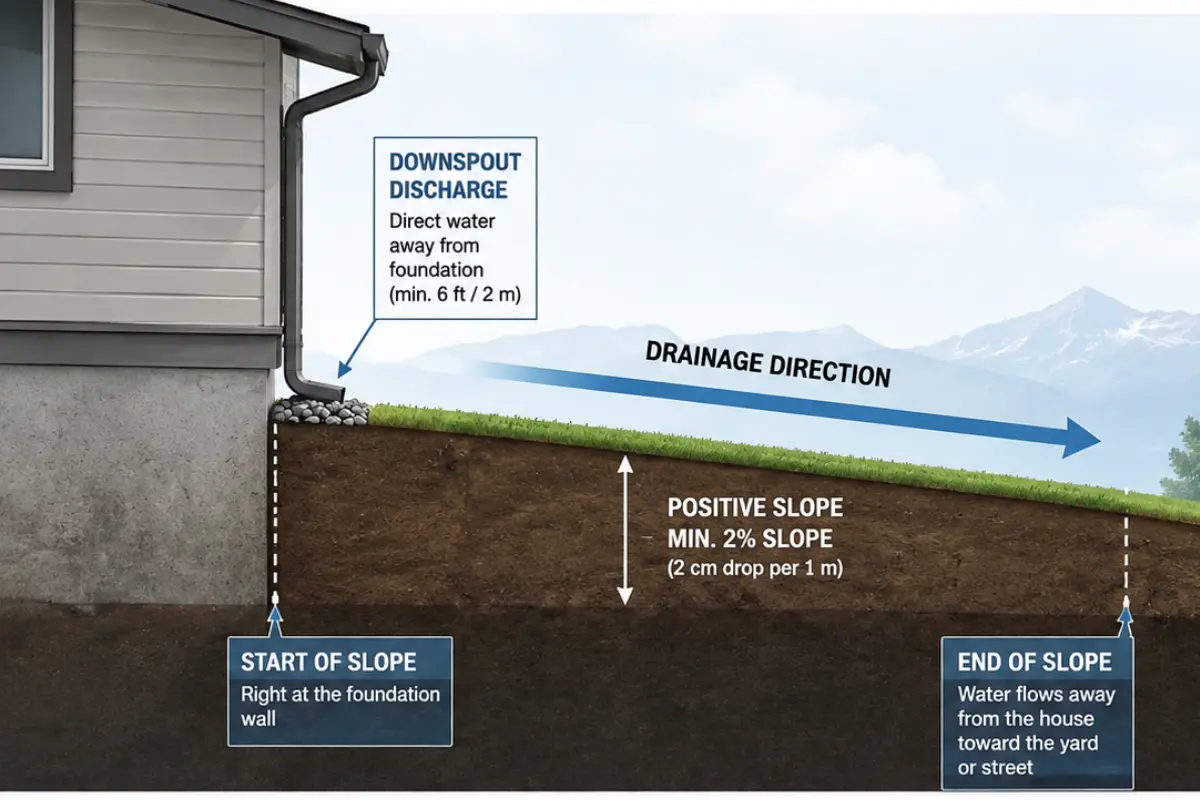
Site grading is the process of reshaping the surface of your land — cutting high spots down, filling low spots in, and establishing controlled slopes so that water flows where you want it to go. The goal isn’t necessarily a perfectly flat yard (in fact, flat is often a problem). The goal is a yard with intentional, engineered slope that directs surface water away from structures and toward appropriate drainage points.
There are two main types of grading you’ll hear about:
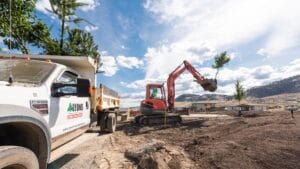
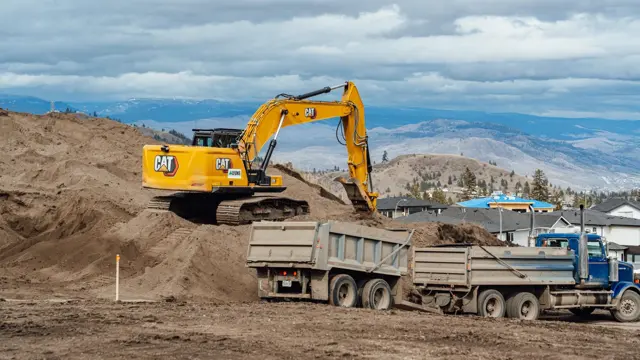
- Rough grading — the initial shaping of a site, typically done with heavy equipment like excavators and graders. This is where major cuts and fills happen, retaining walls are planned, and the foundational topography is established.
- Fine grading — the finishing work done closer to the surface, smoothing out the ground before topsoil, sod, or hardscape is installed. This is where slopes are precisely set and drainage patterns are confirmed.
Both matter. Rough grading without proper fine grading leaves you with an uneven surface. Fine grading on top of a poorly rough-graded site is like putting a fresh coat of paint on a cracked wall — it looks fine until it doesn’t.
A standard positive grade slopes away from the foundation at 2–5%, with 5% considered ideal, according to the Government of Canada’s property grading guidance. That’s not a suggestion — it’s what keeps water out of your basement.
Why BC’s Interior Makes Grading More Critical Than Most Places
Here’s where we’ll get specific, because generic advice about grading doesn’t fully apply to the BC Interior — and that distinction matters.
Kamloops and the surrounding region sits in a semi-arid climate zone with cold winters, limited precipitation in summer, and concentrated moisture events in spring. That combination creates some grading challenges that homeowners and even some contractors underestimate:
- Freeze-thaw cycles — Kamloops regularly sees temperatures oscillating above and below freezing throughout late fall and early spring. This repeated freezing and thawing of soil causes significant ground movement. If your site isn’t graded to handle this movement, you’ll see cracking in hardscape, shifting in retaining walls, and drainage patterns that slowly migrate over time.
- Clay-heavy soils — A large portion of residential and commercial properties in the Kamloops area sit on silty clay or clay loam soils. Clay expands when wet and contracts when dry. It drains slowly and can hold water near your foundation for extended periods if the grade isn’t actively working against it. We’ve seen properties in the South Thompson area where clay soil held moisture against a garage slab for three full months after snowmelt — entirely because the lot was graded flat.
- Spring runoff intensity — Snowmelt in the BC Interior can be dramatic. A relatively modest snowpack on a suburban lot can release a significant volume of water over just a few warm days in March or April. Without proper grading, that water has nowhere to go except into your yard, against your foundation, or under your patio.
- Rocky or uneven terrain — Many BC Interior properties sit on sloped terrain with exposed rock or shallow soils. Grading these sites requires experience with the local geology, not just a textbook approach to slope percentages.
BC’s Ministry of Environment and Climate Change Strategy also has stormwater management guidelines that influence how grading and drainage are handled on larger residential and commercial projects — another reason to work with a team that understands the local regulatory environment.
What Happens When Grading Is Skipped or Done Wrong
We’ll be honest: this is the section most people should have read before they called us. Because by the time grading problems show up, the fix is almost always more expensive and more disruptive than it would have been to do it right the first time.
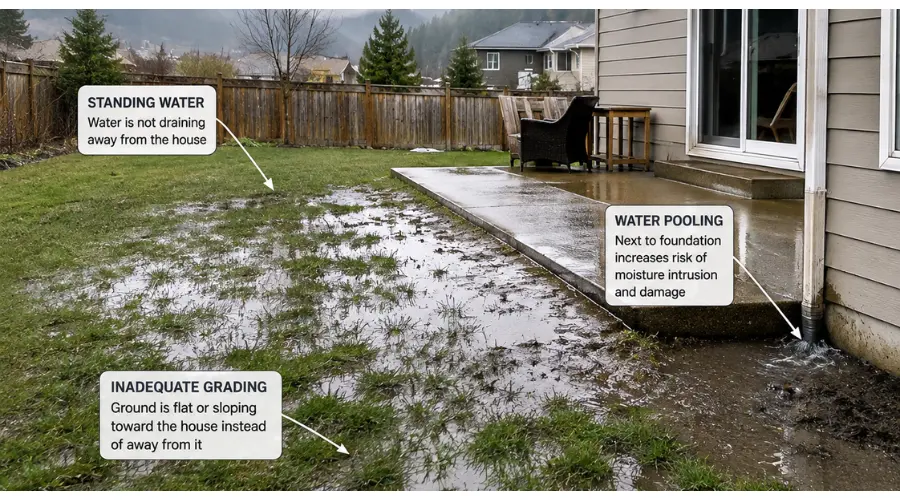
Here’s a real scenario we’ve encountered more than once. A homeowner in Kamloops has a new patio installed — concrete, looks great. The landscaping crew puts in sod, plants some shrubs along the fence, and everybody’s happy. Then spring arrives. The patio starts to lift slightly along one edge. Water pools in the lawn after every rain. The shrubs near the fence start to look stressed and yellowed by midsummer. By year three, there’s a crack running through the patio and the lawn has a persistent low spot that never fully drains.
The diagnosis? The yard wasn’t graded before the project started. The crew worked with whatever slope was there — which happened to direct water toward the house and pool it in the middle of the lawn. The patio was poured on improperly compacted fill. The shrubs were sitting in a zone that stayed wet far too long for their root systems to handle in BC’s clay soil.
Fixing it meant pulling up sections of patio, re-grading the sub-base, installing a French drain, and re-sodding roughly a third of the lawn. The cost was substantially higher than the original grading would have been.
Common consequences of poor site grading include:
- Water intrusion into basements, crawlspaces, or garages
- Erosion along property edges, especially on sloped lots
- Waterlogged lawn areas that never fully recover
- Heaving or cracking in concrete flatwork and paving
- Shortened lifespan for trees and shrubs planted in poorly drained soil
- Retaining wall failure due to uncontrolled hydrostatic pressure
Our honest opinion, after years of working in the BC Interior: grading issues account for more repeat service calls and remediation projects than almost anything else. It’s the foundation — literally and figuratively — of everything else.
What a Professional Site Grading Assessment Looks Like
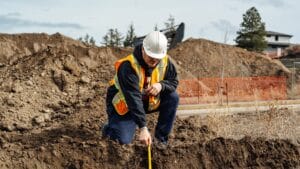
Before any grading work begins — or before you commit to any significant landscaping investment — a proper site assessment should happen. This isn’t just someone walking around and eyeballing your yard. Here’s what a thorough grading assessment actually involves:
- Topographic review — Understanding the existing slope, including high and low points across the full site, and identifying where water currently flows.
- Soil evaluation — Identifying soil type, compaction, and drainage characteristics. Clay soils in Kamloops behave very differently from the sandier soils you might find in parts of the South Okanagan.
- Drainage point identification — Determining where water can safely exit the site — whether that’s a municipal storm drain, a swale, a French drain, or a designated infiltration area.
- Foundation proximity check — Confirming that finished grades will consistently slope away from any structures on the property, meeting CMHC guidelines for foundation drainage.
- Equipment access planning — On residential properties especially, understanding how and where excavation equipment can operate without damaging existing features.
At Lyons Landscaping, our civil excavation team handles site grading as part of a full-scope site preparation process — meaning we’re thinking about grading in context with everything else that’s planned for the property, not just in isolation. That integrated approach matters, because grading decisions affect drainage system placement, irrigation layout, retaining wall design, and even plant selection.
If you’re starting a larger landscaping project and want to understand the scope of decisions involved, our post on what a landscape designer does is worth a read — proper grading is one of the first things a good designer will flag.
When You Should Prioritize Site Grading
Not every landscaping project requires a full re-grade. But there are situations where grading should absolutely be the first conversation, before any design decisions or installation quotes happen:
- New construction lots — Builders are required to rough-grade lots, but that doesn’t mean the grade is optimized for your landscaping plans. New construction grading is often done to minimum code, not to best practices for long-term performance.
- Properties with visible drainage problems — If water already pools on your property, any landscaping you install on top of that problem will be compromised. Fix the grade first.
- Sloped properties in the BC Interior — Lots with significant slope (which describes a huge percentage of Kamloops and Kelowna residential properties) need careful grading plans to prevent erosion and control where runoff goes.
- Before installing patios, pathways, or retaining walls — Hardscaping placed on improperly graded sub-base will shift, crack, and fail prematurely. No amount of quality materials will compensate for poor base preparation.
- Before irrigation installation — Irrigation systems are designed with drainage assumptions built in. If your grading doesn’t match those assumptions, you’ll end up with overwatered low spots and underwatered high spots.
- Older properties with settled or shifted grade — Over time, soil settles, trees grow, and grading that worked well years ago may no longer perform the same way. If you’re doing a major refresh on an established property, a grading check is worth the time.
And if you’re not sure whether your project warrants a grading assessment, it’s worth asking before you start — not after. Check out our post on 10 questions to ask before hiring a landscaper — grading and drainage are exactly the kind of things you should be raising in that initial conversation.
Conclusion: Get the Ground Right Before Anything Else
Site grading isn’t the exciting part of a landscaping project. Nobody’s posting photos of freshly graded topsoil on their Instagram feed. But it is the part that determines whether your patio holds up for twenty years or starts cracking in five, whether your lawn thrives or drowns every spring, and whether the thousands of dollars you spend on plants and hardscape actually delivers lasting value.
In BC’s Interior — with our clay soils, our freeze-thaw winters, and our concentrated spring runoff — getting the grade right isn’t optional. It’s the foundation everything else depends on.
If you’re planning a landscaping project in Kamloops, Kelowna, or anywhere across the BC Interior and you’re not sure whether your site grading has been properly addressed, we’d love to take a look. The Lyons Landscaping team has the civil excavation expertise and hands-on BC experience to assess your site honestly and set your project up for long-term success.
Contact Lyons Landscaping today to discuss your site grading needs and get a professional assessment before your next project begins.