Key Takeaways
- Acreage property maintenance in BC requires a completely different seasonal rhythm than urban lot care — fire risk, irrigation scale, and access roads change everything.
- The BC Interior’s freeze-thaw cycles and dry summers create maintenance windows that simply don’t exist on most generic checklists.
- Ditch the monthly urban calendar. Acreage owners need to think in seasonal risk categories: fire, frost, erosion, and access.
- Invasive species like knotweed and diffuse knapweed spread fast on rural properties — and ignoring them for one season can cost you years of remediation work.
- Hiring a maintenance team familiar with BC Interior conditions saves time, money, and a lot of frustration — especially if you’re not on the property year-round.
Introduction: Why Urban Maintenance Schedules Don’t Translate to Acreage Life
Most property maintenance checklists are written for a city lot with a lawn, a garden bed, and a fence. They tell you to dethatch in April, fertilize in June, and rake leaves in October. Honestly, that’s fine advice — for a quarter-acre in a Kelowna suburb. But if you’re managing a 5-, 10-, or 20-acre rural property in the BC Interior, that same checklist is going to leave you scrambling every single season. Acreage property maintenance in BC operates by a different set of rules, and the gap between “what the internet says” and “what actually works here” is wide.
We’ve worked on properties across Kamloops, Merritt, Barriere, Cache Creek, and the surrounding Thompson-Nicola region long enough to know where acreage owners get caught off guard. It’s not that they’re careless — it’s that they’re working from checklists designed for someone else’s property in someone else’s climate. This post is our attempt to fix that. We’ll walk through the categories that matter most for BC Interior acreages, what to do seasonally, and what most people miss until something goes wrong.
Start With Risk Categories, Not Months
The first mistake acreage owners make is organizing their maintenance calendar by month, just like the urban templates suggest. The problem? On a rural property in the Interior, your actual priorities aren’t about month — they’re about risk. Four categories drive almost every decision on a BC Interior acreage:
- Fire risk — grass management, defensible space, dry debris
- Frost and freeze-thaw — irrigation lines, access roads, drainage
- Erosion and drainage — slopes, disturbed soil, culverts, ditches
- Access and infrastructure — driveways, gates, service routes, fencing
Once you’ve sorted your property into these categories, seasonal timing starts to make more sense. A driveway grading task isn’t a “spring job” because April is when everyone else does it — it’s a spring job because the frost heaving that happened over winter has made ruts that will tear apart vehicles and channel runoff in the wrong direction.
We recommend sitting down with a property map and physically walking your acreage with each risk category in mind before you ever write a single task on a checklist. You’ll almost always find something you hadn’t thought about. One client near Barriere was convinced their drainage was fine until we walked the lower pasture edge in April and found a culvert completely blocked with sediment — it had been slowly redirecting spring melt toward the foundation of their barn for two years.
The Spring Checklist: What to Do Before the Heat Hits
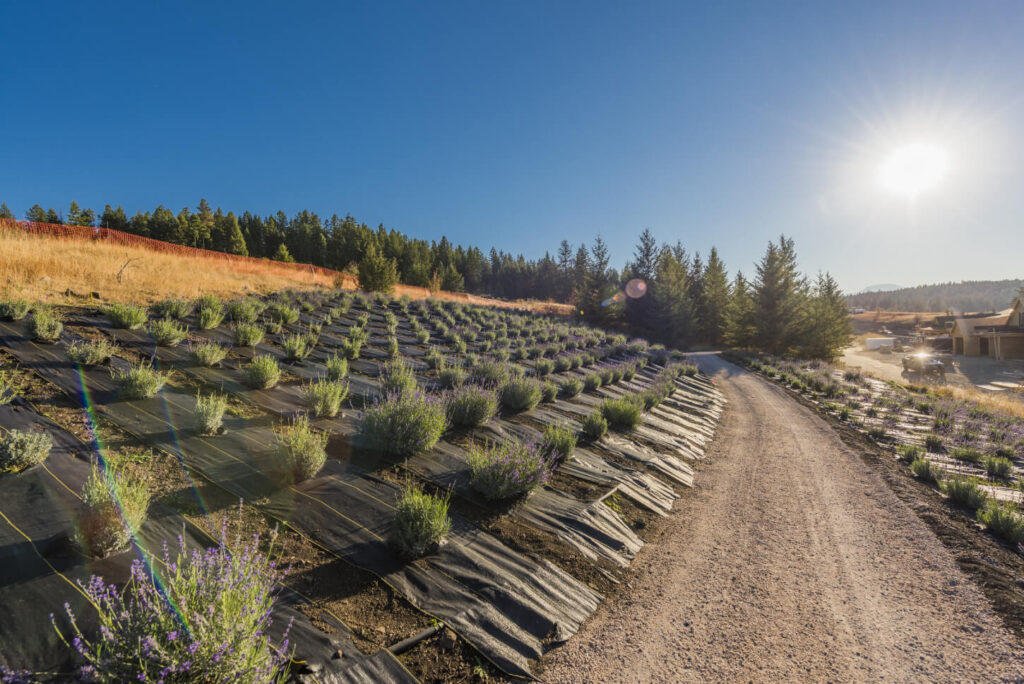
Spring on a BC Interior acreage is not gentle. Freeze-thaw cycling through March and April can leave your driveway looking like a lunar surface, heave fence posts out of the ground, and crack irrigation fittings you thought were properly winterized. The window between “still freezing at night” and “too dry to do soil work” is surprisingly short — sometimes just three or four weeks in the Thompson region.
Here’s what to prioritize before June heat locks things in:
- Driveway and access road assessment: Look for frost heaving, soft spots, and erosion channels. Grade gravel roads before the surface dries and hardens. This is also the time to clear any debris or deadfall that accumulated over winter near access routes.
- Irrigation system start-up and inspection: Check every zone, every fitting, and every emitter. Replace cracked components now — not in July when you’re already rationing water during a heat dome.
- Fenceline inspection: Posts heave. Wire sags. Wildlife creates gaps you don’t notice until a neighbour calls about your livestock. Walk every line.
- Invasive species scouting: Spring is your best opportunity to catch knotweed emergence, diffuse knapweed rosettes, and other invasive plants before they go to seed. The BC Invasive Species Council has excellent identification resources — we’d genuinely recommend bookmarking it.
- Ditch and culvert clearing: Any blockage left over from fall or winter needs to go now, before snowmelt overwhelms your drainage infrastructure.
For more on what spring maintenance specifically looks like in the Kamloops area, we go into greater detail in our post on spring property maintenance in Kamloops — worth a read alongside this checklist.
Summer: Fire Season Is a Maintenance Season
Most urban maintenance guides treat summer as “mow and water” season. On a BC Interior acreage, summer is fire season — and that reframes every single outdoor task from June through September.
Under the BC Wildfire Act, property owners have legal obligations around maintaining defensible space. That means more than just keeping your grass short near the house. It means managing fuel load across your entire property, thinking about ember catch points like wood piles, dry brush, and dense shrub plantings near structures, and ensuring vehicle access routes are clear enough for emergency response.
Practically speaking, your summer maintenance checklist should include:
- Grass and vegetation management: Keep grass mowed within 10 metres of structures, ideally to under 10 cm height. Dry standing grass is fuel. If you’re using a ride-on mower on dry slopes, know your fire risk — a spark from a blade hitting rock can start a fire in seconds.
- Dead tree and snag removal: Standing dead trees within your defensible zone need to come down. This is not a task to defer.
- Irrigation monitoring: Drip systems and soaker lines are particularly prone to pressure drops in peak summer. Check for clogged emitters and cracked poly-pipe monthly at minimum.
- Weed management: Diffuse knapweed and yellow starthistle — both common in the Thompson and Nicola valleys — set seed in summer. Mowing before seed set or spot-treating with an appropriate method keeps them from spreading to neighbouring properties and into your pasture.
Summer is also when we see acreage owners push off tasks because “it’s too hot to work.” Honestly, we get it. But a lot of expensive problems — cracked irrigation lines, spreading knapweed, overgrown firebreaks — trace back to June decisions that got delayed to September and then forgotten until spring.
Fall and Winter: Infrastructure, Not Aesthetics
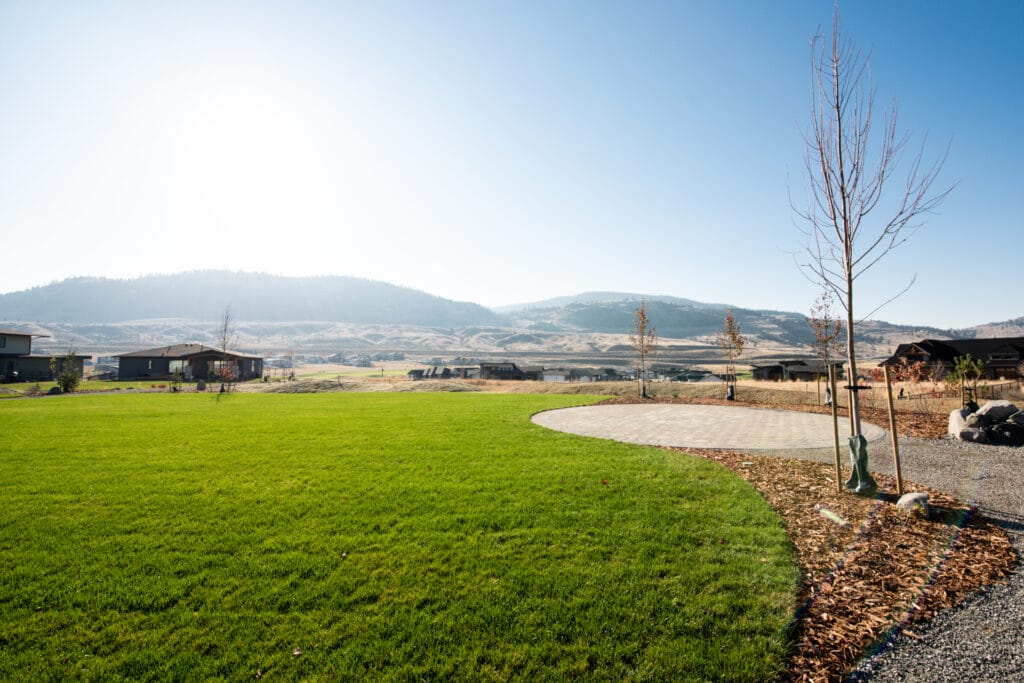
Urban fall checklists are full of leaf blowing, bulb planting, and lawn overseeding. On an acreage, fall is about infrastructure. Your goal before freeze-up is simple: make sure nothing is going to fail, flood, or become inaccessible when the ground freezes hard and you’re dealing with 30 cm of snow.
Fall priorities for BC Interior acreages:
- Irrigation winterization: Blow out every zone with compressed air. Don’t skip secondary lines or outbuilding connections — a cracked poly fitting under a barn floor is genuinely miserable to repair in February.
- Culvert and drainage final check: Clear leaf debris, check for beaver activity if you’re near water, and ensure flow paths are unobstructed heading into freeze-up.
- Driveway prep for snow management: Mark driveway edges with stakes before the ground freezes. If you’re working with a contractor for snow removal, now is the time to confirm service agreements. You don’t want to be figuring out liability in January — our post on snow removal liability in BC covers the legal side of this in plain language.
- Fencing and gate hardware: Lubricate hinges, replace worn latches, and check post stability before frost sets in. Frozen ground makes fence repairs significantly harder and more expensive.
- Fuel and fire wood storage: Stack firewood well away from structures — minimum 10 metres is the standard recommendation for defensible space compliance.
Winter on an acreage isn’t maintenance-free, but if you’ve done fall right, it’s mostly about access: keeping driveways clear, watching for ice near water sources and low-lying areas, and checking in on any drainage infrastructure after major thaw events.
The Honest Truth About DIY vs. Professional Acreage Maintenance
We’re not here to tell you that you need to hire someone for every task. Plenty of acreage owners are capable, well-equipped, and genuinely enjoy managing their own land. But there’s a specific type of property we see over and over — usually owned by someone who moved from a city lot, bought a rural acreage because they loved the idea of it, and then realized pretty quickly that the scale and complexity is just different.
The tasks that consistently go sideways when handled without the right equipment or experience are: driveway grading (a poorly graded road channels runoff in exactly the wrong direction), invasive plant management (one missed patch of knotweed rhizome and you’re back to square one), and irrigation expansion or repairs on larger systems. These aren’t skill failures — they’re equipment and experience gaps.
Our landscape maintenance services are designed specifically for BC Interior properties, including large rural acreages where the scale and seasonal conditions demand a different approach than standard residential maintenance. We’re not just mowing lawns — we’re managing fire risk zones, maintaining road infrastructure, and keeping drainage systems functional through some genuinely demanding freeze-thaw cycles.
If you’re building a maintenance plan for your acreage and want an honest assessment of what’s realistic to DIY versus what’s worth delegating, that conversation is worth having early — not after the driveway has washed out or the knotweed has taken over the lower field.
Conclusion: Build a Checklist That Reflects Your Actual Property
The best acreage maintenance checklist isn’t the one you download from a generic home improvement website. It’s the one you build by walking your specific property, identifying your actual risk categories, and mapping tasks to the seasonal windows that make sense for the BC Interior — not for a suburb in southern Ontario.
Start with risk, not months. Prioritize infrastructure over aesthetics. Don’t let summer fire prep get pushed to “later.” And be honest with yourself about what requires professional equipment and experience versus what you can genuinely handle with what you’ve got.
If you’re not sure where to start, or if you’ve just taken on a property that needs a serious reset before it’s properly maintained, contact Lyons Landscaping today for a free on-site estimate. We work with acreage owners across Kamloops, Merritt, Barriere, and the broader BC Interior — and we’ll give you a straight answer about what your property actually needs.