Snow Removal Liability in BC: Who’s Responsible — and What Happens If You Get It Wrong
Key Takeaways
- In BC, property owners — not municipalities — are generally responsible for clearing snow and ice from their own walkways, driveways, and accessible areas.
- Strata corporations have specific obligations under the Strata Property Act to maintain common property, including safe snow and ice management.
- Commercial property owners face significantly higher liability exposure than homeowners and should have a documented, contracted snow removal plan in place.
- Verbal agreements and DIY approaches leave gaps in liability coverage — a written contract with a professional snow removal company is your best protection.
- Timing matters: failing to clear snow and ice within a reasonable window after a storm can constitute negligence, even if the storm is still ongoing.
Every winter in BC’s Interior, someone gets hurt on an icy walkway. Sometimes it’s a tenant at a strata complex. Sometimes it’s a customer stepping out of a shop in Kamloops. And more often than people expect, it leads to a lawsuit — one that could have been avoided with a proper snow and ice management plan. Snow removal liability in BC is one of those topics most property owners don’t think about until something goes wrong, and by then, it’s too late.
Whether you own a home, sit on a strata council, or manage a commercial property, understanding your legal obligations isn’t optional. The BC Interior gets real winters — Kamloops, Merritt, Salmon Arm, and the surrounding areas can see significant snowfall events that require fast, consistent response. This post breaks down who’s responsible for what, what the consequences look like if you drop the ball, and how to protect yourself the right way.
The Legal Framework: What BC Law Actually Says
BC doesn’t have a single provincial statute that spells out snow removal timelines the way some municipalities do in other provinces. Instead, liability in snow and ice cases typically flows through two channels: municipal bylaws and tort law (negligence).
Many BC municipalities — including the City of Kamloops — have bylaws requiring property owners to clear sidewalks adjacent to their property within a set timeframe after snowfall ends, often 24 to 48 hours. Failing to comply can result in a fine. But here’s what many owners don’t realize: bylaw compliance doesn’t automatically protect you from a civil lawsuit. Even if you cleared the walk within the required window, if someone still slipped and fell and a court decides you didn’t take reasonable precautions, you could still face liability.
Negligence claims in snow and ice cases generally come down to one question: did you take reasonable steps to prevent a foreseeable hazard? Courts in BC look at factors like how long the ice had been there, whether you had a system in place, whether you used sand or salt, and whether the area in question gets heavy foot traffic. BC’s Occupiers Liability Act makes it clear that anyone who occupies or controls a property owes a duty of care to visitors — and in winter, that duty includes reasonably safe walking surfaces.
The short version: “I didn’t know” or “it just snowed” are not strong legal defences.
Homeowners: Your Obligations Are Real, But Manageable
If you own a single-family home in Kamloops or elsewhere in the BC Interior, your primary obligation is to maintain safe conditions on your own property — your driveway, front walkway, and the sidewalk in front of your home (where a municipal bylaw applies). Most homeowners understand this in theory but underestimate the timing piece.
Here’s a realistic scenario we’ve seen play out: a homeowner gets a heavy dump of snow overnight, leaves for work at 7am without clearing the walk, and a mail carrier or delivery driver slips on the untreated ice at 9am. Legally, that homeowner may bear some responsibility — even if the snow only fell six hours earlier. The standard isn’t perfection; it’s reasonableness. But “I was at work” doesn’t fully insulate you.
For residential properties, the practical recommendations are straightforward:
- Clear snow promptly after a storm, especially from high-traffic entry points.
- Apply sand or ice melt to prevent refreezing, particularly on steps and sloped walkways.
- Check for ice formation on sunny days after a thaw — that afternoon melt can refreeze into black ice by evening.
- If you’re away, make sure someone is covering snow removal for you — not just plowing the driveway, but treating walkways too.
BC’s Interior climate throws a particular curveball here: freeze-thaw cycles. Kamloops can sit at -12°C overnight and climb above zero by midday. That means a cleared walkway in the morning can be a sheet of ice by dinner. It’s not just about reacting to snowfall — it’s about monitoring conditions throughout the day.
Strata Corporations: Higher Responsibility, More Complexity
If you sit on a strata council, snow removal liability in BC becomes considerably more layered — and the stakes are higher. Under the Strata Property Act, the strata corporation is responsible for maintaining and repairing common property. In winter, that means parking lots, walkways, stairs, ramps, and any common exterior surface that residents or visitors use.
The mistake we see strata councils make most often? Assuming that because a resident slipped “on their own section” of walkway, the strata isn’t liable. That’s not always how it works. If the common pathway leading to their unit was icy and the strata had no active snow management plan in place, liability can — and does — attach to the corporation.
Strata councils also need to be careful about how they delegate. Assigning snow removal to a resident volunteer or using a handshake deal with a local truck owner might seem cost-effective in October, but it creates serious exposure. A credible, professional snow removal contract should include:
- Defined service triggers (e.g., service begins when accumulation reaches 2–3 cm)
- Clear response time commitments (e.g., within 2 hours of snowfall ending)
- Specific ice management provisions — not just plowing
- Proof of the contractor’s liability insurance and WCB coverage
- A service log or dispatch record that can be used as documentation if a claim arises
That last point is one most people overlook. If a slip-and-fall claim comes in three months after an event, having dated service records showing the lot was treated at 6am the morning of the incident can be the difference between a dismissed claim and a costly settlement.
For more on what strata councils should look for when hiring a professional landscaping or grounds maintenance company, our post on what strata councils in BC need to know before hiring a commercial landscaper covers the vetting process in detail.
Commercial Property Owners: The Highest Exposure — and the Least Room for Error
Commercial property owners — retail centres, office buildings, restaurants, industrial sites — carry the most significant liability exposure of any property type. Why? Because the volume of foot traffic is higher, the expectation of safe conditions is stronger, and courts tend to hold businesses to a higher standard of care than private homeowners.
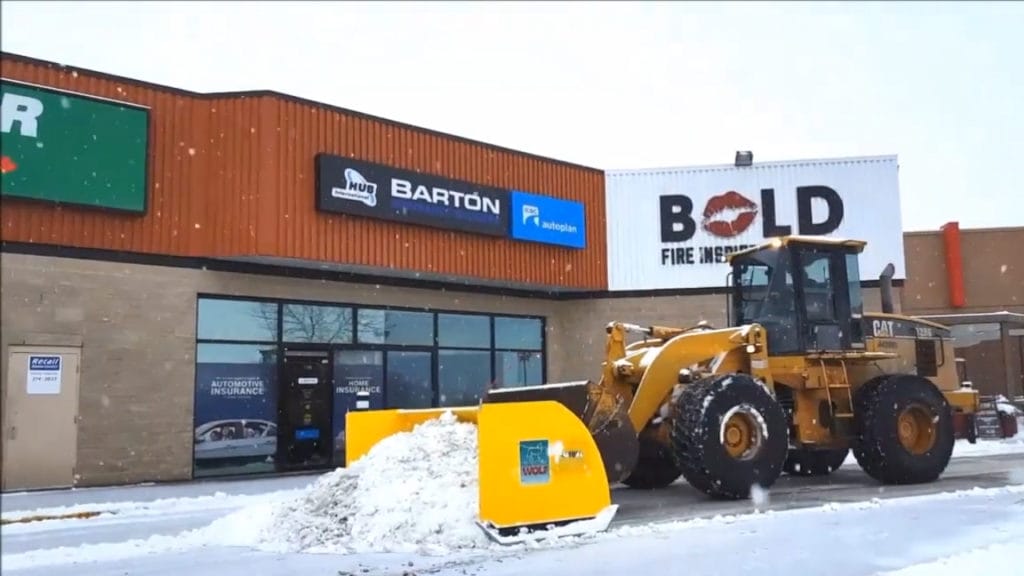
Here’s a real-world example of how this plays out: imagine a mid-sized shopping plaza in Kamloops with a main entrance facing north — in shade all day, so melt never fully clears. Overnight temperatures drop, the morning rush brings dozens of customers through that entrance, and by 9:30am, someone goes down on a patch of black ice near the door. Even if the lot was plowed at 6am, failing to treat that shaded entrance specifically could still constitute negligence. The argument? The hazard was foreseeable, and reasonable precautions weren’t taken.
From our experience managing commercial properties across the BC Interior, the properties that handle winter liability best share a few things in common:
- They have a professional contractor on a seasonal retainer with clearly defined service expectations — not a per-event call system that delays response.
- They conduct daily site checks during winter months, especially during freeze-thaw periods.
- They maintain written logs of when service was performed and what products were applied.
- Their contractor carries at minimum $2 million in commercial general liability insurance — and they’ve actually verified it, not just been told it exists.
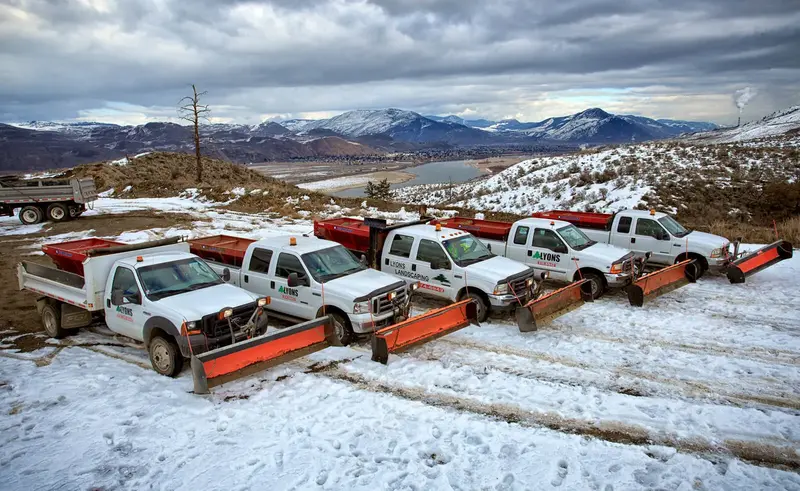
It’s also worth noting that the contractor you hire carries some of the liability too — which is why choosing a qualified, insured, professional snow removal company matters beyond just getting the job done fast. Our 24/7 commercial snow removal and ice management services are structured specifically to give property managers the documentation, response time, and coverage they need to stay protected through a BC Interior winter.
What a Professional Snow Removal Contract Should Actually Cover
Whether you’re a strata council in Salmon Arm or a commercial property manager in Kamloops, the quality of your snow removal contract matters as much as the quality of the service itself. A well-written agreement does three things: it defines expectations clearly, it protects you legally, and it ensures the contractor is accountable.
Here’s what to look for beyond the basics:
Scope of work: Every surface that needs treatment should be listed explicitly — don’t assume. Parking lots, fire lanes, accessible ramps, pedestrian walkways, stairs, and building entrances are all separate zones with different risk profiles.
Service triggers and response times: A contract that says “snow will be removed as needed” is nearly useless. You want specific triggers (e.g., 2 cm of accumulation) and guaranteed response times. For a high-traffic commercial site, a 4-hour response window isn’t good enough during a morning storm.
Ice management: Snow plowing and ice management are not the same thing. Make sure your contract specifies what de-icing products will be used, where, and under what conditions. Sand, liquid brine, calcium chloride — the right product depends on temperature and surface type.
Insurance verification: Request a certificate of insurance directly from the contractor’s broker. Don’t accept a verbal assurance or a photocopy of a document with no verification date. WCB clearance letters should also be confirmed at the start of the season.
Incident documentation: Ask whether the contractor keeps time-stamped service logs. This is your paper trail if a liability claim surfaces weeks after an event.
Honestly, in our experience, many property owners only learn what was missing from their snow removal contract after something goes wrong. Don’t wait for that lesson.
Conclusion: Don’t Leave Your Winter Liability to Chance
Snow removal liability in BC is one of those areas where the gap between “we handled it informally” and “we handled it properly” can cost tens of thousands of dollars — or more. Whether you’re a homeowner making sure your front steps are treated before the mail arrives, a strata council managing a 40-unit complex, or a commercial property owner with hundreds of customers walking your lot every day, the standard is the same: take reasonable, documented steps to prevent foreseeable hazards.
BC Interior winters don’t give you a lot of wiggle room. The freeze-thaw cycles are relentless, the storms can be sudden, and the liability exposure is real. The good news is that getting it right isn’t complicated — it just requires a professional plan, a reliable contractor, and the documentation to back it up.
If you’re looking for a snow removal partner who understands the demands of BC’s Interior winters and can provide the response times, insurance coverage, and service records that actually protect you, Lyons Landscaping’s snow removal and ice management team is available 24/7 for commercial, strata, and residential properties across the region. Contact us today to talk through what your property needs this winter — before the first storm rolls in.