Strata Landscaping in BC: What Every Strata Council Should Know Before Signing a Contract
Key Takeaways
- Strata landscaping in BC is governed by both the Strata Property Act and your corporation’s own bylaws — your landscaper needs to understand both.
- A one-size-fits-all maintenance contract won’t cut it in the BC Interior, where conditions swing from frozen ground in November to 38°C drought stress in July.
- Scope creep is one of the most common (and expensive) problems strata councils face — get everything in writing before the first mow.
- Snow and ice management deserves its own contract, not a footnote at the bottom of your summer maintenance agreement.
- The right landscaper acts as a proactive partner, not just a crew that shows up on Tuesdays.
Introduction
If you’re on a strata council in BC, you already know that managing common property is rarely straightforward. Between balancing owner expectations, working within a budget set by a vote, and keeping up with everything from irrigation to snow removal, the landscaping piece alone can feel like a full-time job. That’s exactly why finding the right commercial landscaper for your strata property matters so much — and why strata landscaping in BC has its own specific set of considerations that generic landscaping advice simply doesn’t cover.
We’ve worked with strata corporations across the BC Interior, from townhouse complexes in Kamloops to larger multi-building stratas in the Okanagan. The questions we hear most often aren’t really about plants or grass seed — they’re about accountability, scope, communication, and staying compliant with bylaws. This post covers what strata councils actually need to know before they hire, not a checklist you could find anywhere in North America.
1. Understand What Your Strata Bylaws Actually Say About Landscaping
Before you even request a quote, pull out your strata corporation’s bylaws and read the sections on common property maintenance. This sounds obvious, but you’d be surprised how many councils hire a landscaper and then discover mid-season that certain planting decisions, irrigation changes, or tree removals require a resolution at an AGM or SGM first.
Under BC’s Strata Property Act, the strata corporation is responsible for maintaining and repairing common property — but the scope of that responsibility, and how decisions get made, is largely governed by your own bylaws. Some stratas have very specific rules about what species can be planted in common areas, whether synthetic turf is permitted, or how close plantings can be to building envelopes (important for moisture and pest control). When you do have flexibility, it’s worth weighing the design options suited to strata properties — from low-maintenance plantings to hardscaping — against your long-term upkeep budget.
A good commercial landscaper working in the BC strata space will ask to see your bylaws before proposing a maintenance plan. If they don’t ask — that’s a flag. At Lyons Landscaping, we make this part of our onboarding process for every strata client, because working against your own governing documents creates headaches for everyone. Know your rules before you invite someone in to work within them.

2. BC Interior Climate Demands a Seasonally-Specific Maintenance Plan
This is where a lot of generic commercial landscaping contracts fall short. A maintenance schedule written for Metro Vancouver — where the ground rarely freezes hard and rain handles most of the irrigation — is going to fail you in Kamloops or Vernon. The BC Interior is a different beast entirely.
Here’s what that actually looks like for a strata property in Kamloops: you’re dealing with clay-heavy soils in many neighbourhoods that compact badly under foot traffic and crack in dry heat. Summer temperatures regularly hit 35–38°C, and without proper irrigation management, your common area turf will look like a wheat field by the third week of July. Conversely, by mid-October you may already be dealing with ground frost, and if your landscaper hasn’t winterized your irrigation system before that first hard freeze, you’re looking at cracked manifolds and a repair bill that nobody budgeted for.
A strata maintenance contract for BC Interior properties should explicitly cover:
- Spring activation: irrigation system startup, typically late April to early May depending on frost dates
- Summer drought management: watering schedules, drought-tolerant plant care, turf recovery protocols
- Fall prep: irrigation winterization (September–October), leaf management, late-season overseeding
- Winter services: either included or contracted separately (more on that below)
If a landscaper hands you a one-page annual contract with no mention of seasonal transitions, push back. The Interior’s four distinct seasons aren’t a footnote — they’re the whole story.
For more on what a full-service maintenance plan should include, our post on what’s included in property maintenance breaks it down in plain language.
3. Scope of Work: Get Specific, or Pay for It Later
Scope creep is, in our experience, the number one source of frustration between strata councils and landscaping contractors. It usually doesn’t start as a conflict — it starts as an assumption. The strata council assumes the contractor will trim the hedges along the east fence line. The contractor assumes that’s outside the agreed perimeter. By August, nobody’s happy and somebody’s getting an unexpected invoice. For a fuller rundown of the contract mistakes to avoid, our property-manager guide walks through the most common and costly ones.
When you’re reviewing or requesting a landscaping proposal for your strata, the scope of work section needs to answer these questions clearly:
- Which areas are included? (Attach a property map if possible.)
- What tasks are included at what frequency? (Weekly mowing? Bi-weekly edging? Monthly pruning?)
- What’s explicitly excluded? (Individual unit patios? Fenced yards?)
- How are extras handled? (Ad hoc requests, storm cleanup, tree removals — are these quoted separately or billed at an hourly rate?)
- Who is the single point of contact for the strata council?
That last point matters more than people realize. Strata councils are often made up of volunteers who have jobs and families — they don’t have time to chase down a landscaping crew for updates. Clear communication channels aren’t a nicety, they’re a functional requirement. We’ve written about this directly in our post on how we’re improving communication at Lyons Landscaping — it’s something we hold ourselves to because we know how much it matters to property managers and councils alike.
4. Snow and Ice Management Needs Its Own Conversation
Here’s an honest opinion from years of working in Kamloops and across the Interior: most strata councils either over-rely on a summer landscaping contractor for snow removal (without properly vetting their capability) or they scramble every October to find someone reliable. Neither approach ends well.
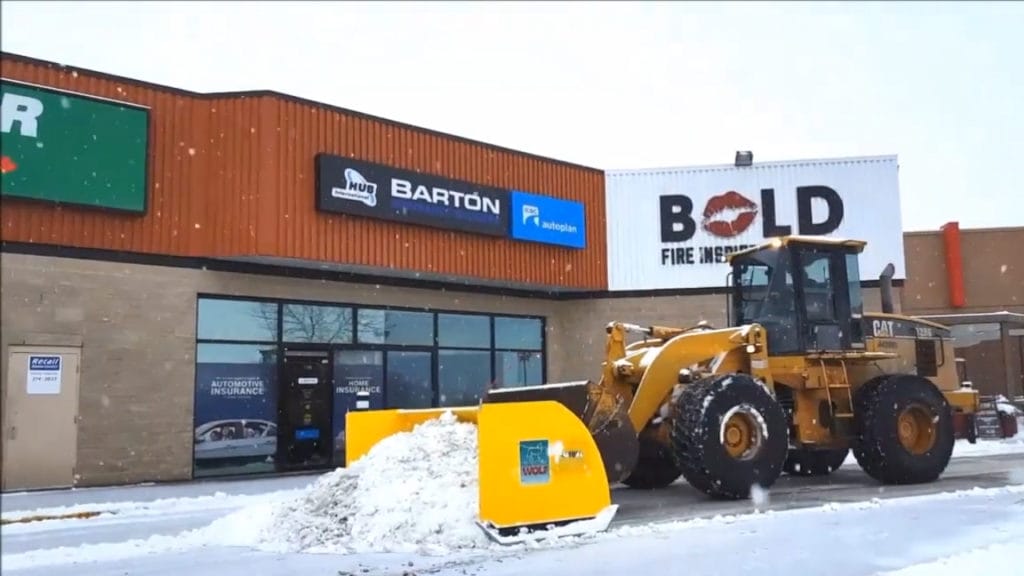
Snow and ice management for a strata property isn’t just about keeping pathways clear. It’s about liability. If a resident slips on an icy walkway and the strata can’t demonstrate it had a documented maintenance plan in place, that’s a legal exposure problem. BC courts have consistently held that strata corporations can face liability for slip-and-fall incidents on common property — which means your snow removal contract should include response time commitments, a log of service visits, and coverage for both snow clearing and ice treatment.
For a strata in Kamloops, you’re typically looking at meaningful snowfall from November through March, with freeze-thaw cycles in shoulder months that make black ice a recurring issue. Sand and de-icing treatments need to be applied on a specific schedule, not just after a major dump.
At Lyons Landscaping, our snow removal and ice management services are structured specifically for commercial and strata properties, with 24/7 availability during active weather events. We’d always recommend treating this as a separate contract from summer landscaping — it deserves that level of attention. Because budgeting winter maintenance separately gives you a clearer picture of the real cost, it’s worth understanding typical snow removal pricing before you sign.
5. Ask the Right Questions Before You Sign
Once you’ve got a shortlist of commercial landscaping contractors to consider, the interview process matters. You’re not just evaluating price — you’re evaluating whether this company understands strata work specifically. A landscaper who does excellent residential work isn’t automatically the right fit for a 60-unit townhouse complex with a strata council, a property manager, and 60 different opinions about what the garden should look like.
Some questions worth asking directly:
- Have you worked with strata corporations in BC before? Can you provide references?
- Are you familiar with the Strata Property Act and how it affects landscape decision-making?
- Do you carry commercial general liability insurance and WCB coverage? (Non-negotiable.)
- How do you handle owner complaints about common area landscaping?
- What’s your process when scope changes mid-season?
If you want a broader framework for evaluating landscapers in general, our post on 10 questions to ask before hiring a landscaper gives you a solid starting point that you can adapt for the strata context.
The strata landscape work we do at Lyons falls under our broader commercial landscaping services — and we approach every strata property the same way we’d approach any other commercial client: with a written scope, clear communication, and the accountability that comes from being a BC-based company with a real reputation to protect.
Conclusion
Managing strata landscaping in BC is genuinely more complex than hiring someone to mow a lawn. It involves bylaws, seasonal extremes, liability considerations, and a stakeholder group that has every right to expect a well-maintained common space. The good news is that when you hire the right contractor — one who’s worked in the BC Interior, understands strata governance, and communicates proactively — it actually becomes one of the easier parts of managing your strata property.
If your strata council is heading into a new contract cycle or just not happy with your current landscaping provider, we’d be glad to have a straightforward conversation about what you need. Contact Lyons Landscaping today for a free consultation — we work with strata corporations across Kamloops and the BC Interior, and we’re happy to walk through your property, review your existing scope, and give you an honest assessment.