Key Takeaways
- Kamloops sits in USDA hardiness zone 6b–7a, with bone-dry summers and cold snaps that can dip to –20°C — not every “perennial” sold at big box stores will survive that combination.
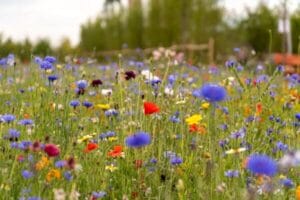
- The best perennial flowers for Kamloops gardens handle low summer rainfall, alkaline soil, and hard freezes without much help from you.
- Lavender, echinacea, yarrow, and Russian sage are among the top performers we recommend and plant regularly across the BC Interior.
- Soil preparation matters more than plant selection — even the toughest perennial will struggle in poorly drained or heavily compacted Kamloops soil.
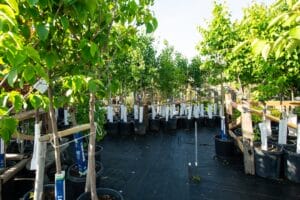
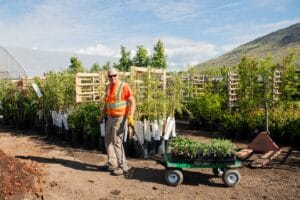
- Buying from a local garden centre stocked with BC Interior-tested varieties gives you a real head start over ordering online or grabbing whatever’s on sale at a chain store.
Introduction
If you’ve ever planted a flat of gorgeous perennial flowers in spring, watched them bloom beautifully through June, and then came back the following May to find nothing but bare dirt — you’re not alone. It happens constantly in Kamloops, and it’s rarely the gardener’s fault. The BC Interior has a climate that humbles even experienced gardeners: scorching summers with almost no rain, alkaline soil that locks out nutrients, and winters that can swing hard enough to heave roots right out of the ground. Choosing the right perennial flowers for Kamloops gardens means thinking about all three seasons at once, not just what looks pretty at the nursery in April.
We’ve planted a lot of gardens across Kamloops and the wider BC Interior over the years — residential front yards, commercial property borders, acreage estates — and we’ve learned which perennials earn their keep and which ones are basically annuals in disguise. This post lays out our honest recommendations, what makes each one a good fit for this specific climate, and how to give them the best start possible. No filler, no generic advice lifted from a gardening magazine written for the Pacific Northwest coast. This is the Interior — it plays by its own rules.
Why Kamloops Is Harder on Perennials Than You’d Think
Kamloops averages fewer than 280 mm of precipitation annually. To put that in perspective, that’s drier than many parts of the Canadian Prairies. Summer temperatures routinely hit 35–38°C, and the soil bakes hard between waterings. Meanwhile, come January, a cold snap can drop temperatures to –18°C or lower, especially on north-facing slopes or in frost pockets — the kind of spots that show up constantly in Kamloops residential neighbourhoods built into hillsides.
The soil is another challenge. Much of the Kamloops area sits on silty, alkaline soils — sometimes with significant clay content, sometimes almost sandy — and the pH tends to run higher than many flowering perennials prefer. That high pH can limit iron and manganese availability, which shows up as yellowing leaves even when a plant is otherwise healthy.
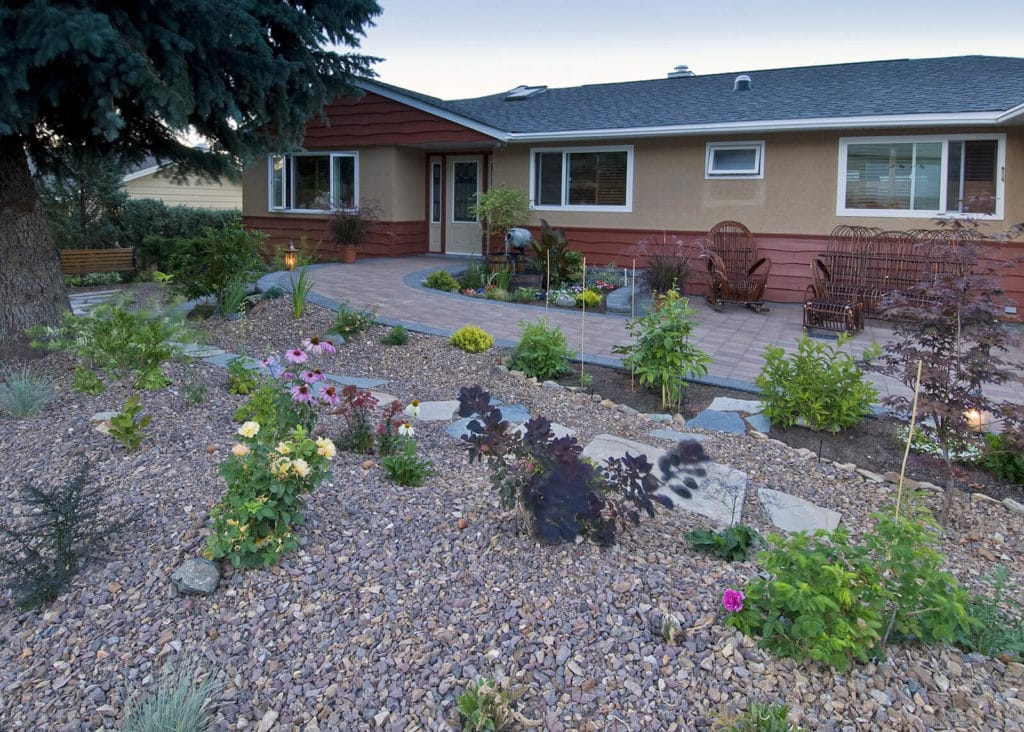
The plants that thrive here share a few traits: deep root systems that chase moisture, tolerance for alkaline conditions, and the ability to go semi-dormant during the worst summer heat without dying. When we’re planting a new perennial border for a client in Kamloops, those characteristics are the starting point — not flower colour or bloom time, though those matter too. It’s also worth noting that choosing low-water perennials can support broader FireSmart landscaping goals, since dense, lush plantings that need constant irrigation are a liability in wildfire season.
Our Top Perennial Picks for the BC Interior
These aren’t just plants we think might work — these are plants we’ve watched thrive across dozens of Kamloops properties, season after season.
Lavender (Lavandula angustifolia)
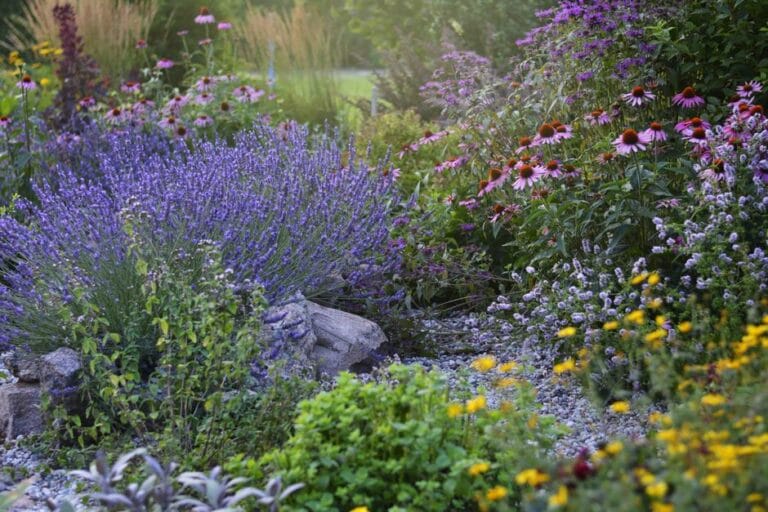
Lavender is about as close to a perfect Kamloops perennial as you’ll find. It loves alkaline, fast-draining soil. It shrugs off dry summers. It’s cold-hardy to around –25°C in the right conditions, and it gets more fragrant and productive every year once established. We regularly plant ‘Hidcote’ and ‘Munstead’ varieties for clients — both are compact, reliable, and genuinely hardy in zone 6. The one mistake people make is planting lavender in heavy clay without amending drainage first. Do that, and it’ll rot in the first wet spring. Get drainage right, and it’ll be there in fifteen years.
Echinacea / Purple Coneflower (Echinacea purpurea)
Echinacea is a workhorse. It blooms from July into September, handles drought like a champion, and self-seeds modestly — meaning your planting gets denser over time without becoming invasive. The native species and straight varieties outperform the fancy hybridized cultivars in our climate. Those neon-orange and yellow hybrids look stunning in a catalogue and can be sulky in the Kamloops heat. Stick with the classic purple species or ‘Magnus’ for reliable returns.
Yarrow (Achillea millefolium)
Yarrow grows wild across BC’s Interior grasslands for good reason — it evolved here. It handles poor, dry, alkaline soil and spreads steadily to fill bare spots. The cultivated varieties (‘Moonshine’ and ‘Paprika’ are favourites) give you more refined colour while keeping all the toughness of the species. Fair warning: yarrow can spread aggressively in irrigated beds. Give it a spot where you want coverage, and it’ll reward you.
Russian Sage (Perovskia atriplicifolia)
If you want something that looks architectural and ethereal at the same time, Russian sage is your plant. Those silver-blue flower spikes are stunning from July through September, and deer largely ignore it — a significant bonus on acreage properties around Kamloops. It’s drought-tolerant once established and hardy to zone 5. The only quirk: cut it back hard in early spring, not fall, or you risk losing vigour.
Daylilies (Hemerocallis spp.)
Daylilies are virtually indestructible in the BC Interior. They handle clay, they handle drought after the first year, and they multiply reliably. The older varieties — particularly ‘Stella de Oro’ and the classic orange tawny daylily — outperform the newer fancy hybridized forms in terms of hardiness. We’ve dug up established clumps from properties that were unwatered and neglected for two full seasons and watched them bounce back after replanting. That’s the kind of toughness this climate demands.
Sedum / Stonecrop (Hylotelephium spectabile, formerly Sedum spectabile)
Tall sedums like ‘Autumn Joy’ are excellent late-season perennials for Kamloops. They hold moisture in their succulent stems, bloom in late August through October when most perennials are done, and their dried seed heads provide winter interest and bird habitat. They’re also unfazed by the freeze-thaw cycles that can heave less robust perennials out of the ground.
The One Thing That Matters More Than Plant Choice
We’ll be direct: we’ve seen all of the plants above fail in Kamloops — and it’s almost always a soil preparation issue, not a plant hardiness issue. The most common scenario we encounter is a homeowner who buys good, hardy perennials, digs a hole barely bigger than the pot, drops the plant in, and calls it done. In Kamloops’ dense, alkaline soil, that plant spends its first year fighting to establish roots in conditions it was never prepared for.
Here’s what we actually do before planting a perennial bed: we loosen soil to at least 30 cm depth, incorporate quality compost to improve both drainage and organic matter, and — if pH testing shows above 7.5 — we add sulphur to bring it down toward the 6.5–7.0 range that most perennials prefer. Soil pH directly affects nutrient availability, and in Kamloops, ignoring it means your plants will look chronically stressed even with regular watering and fertilizing.
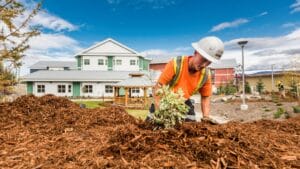
Mulch is non-negotiable. A 5–7 cm layer of quality mulch does three things in a Kamloops garden: it retains soil moisture between waterings, it moderates soil temperature swings (which helps roots survive hard freezes), and it gradually improves soil structure as it breaks down. If you’re sourcing soil and mulch for a new garden project, our Kamloops garden centre carries premium options suited specifically for the BC Interior climate — not generic products that weren’t designed for our conditions.
How to Plan a Perennial Garden That Actually Works Long-Term
One project that sticks in our mind: a client in Kamloops’s south-facing hillside neighbourhood wanted a low-maintenance front yard that looked full and colourful all season. The slope was steep, the soil was basically compressed silt with almost no organic content, and the irrigation was minimal. Classic BC Interior challenge.
We designed a tiered perennial planting with lavender and Russian sage anchoring the upper, driest section; echinacea and yarrow filling the middle band; and daylilies and sedum at the base where the soil retained slightly more moisture. Three years on, that garden is denser and more colourful than it was in year one, with almost no supplemental input beyond a spring tidy-up and a fresh layer of mulch. That’s what a well-chosen perennial plan looks like — it gets better with age, not worse.
A few practical planning tips:
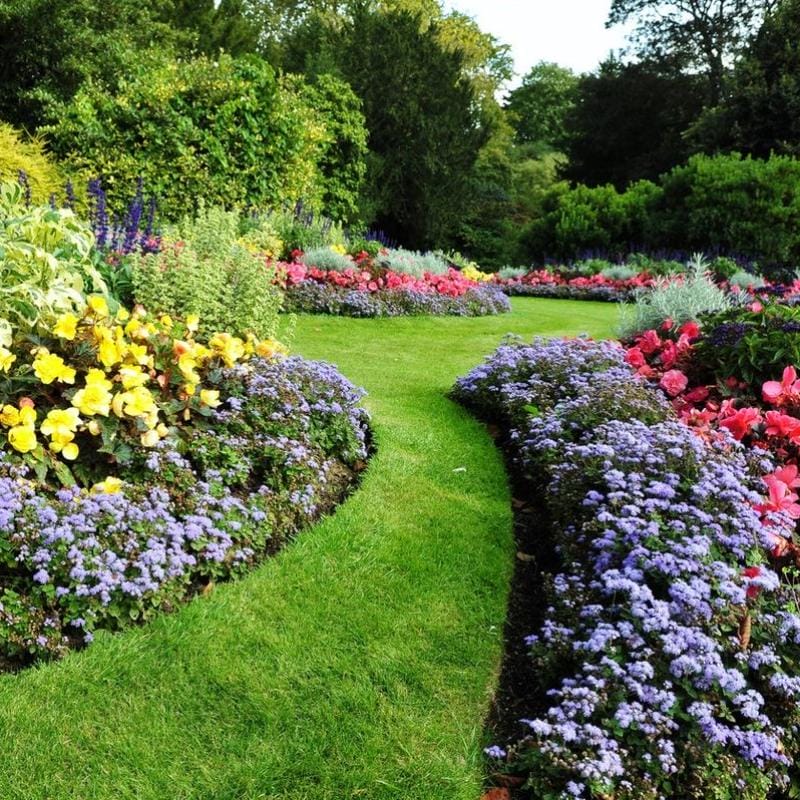
- Think in bloom seasons. Aim for something flowering from May through October. Lavender and yarrow carry spring and early summer; echinacea and Russian sage take over mid-summer; sedum and daylilies close out the season.
- Plant in odd-numbered groupings. Three or five of a given plant looks natural; two looks accidental.
- Leave room. Established perennials spread. Give each plant 1.5x the space you think it needs in year one — you’ll thank yourself in year three.
- Water deeply but infrequently after establishment. Deep, infrequent watering encourages deep root development, which is exactly what helps plants survive Kamloops summers and winters. Daily shallow watering does the opposite.
For larger property projects — particularly if you’re starting from scratch with grading or bed construction — it’s worth understanding the full scope of what a planned garden installation involves. Our post on planning a backyard landscaping project in Kamloops walks through the process step by step.
If you want expert guidance on plant selection and variety sourcing for your specific site, the Landscape BC industry association is a good reference for finding qualified professionals and understanding BC-specific planting standards.
Conclusion
Kamloops isn’t an easy gardening climate — but it rewards gardeners who work with it instead of against it. The perennial flowers that perform best here aren’t necessarily the showiest ones at the garden centre in April. They’re the ones with deep roots, drought tolerance, and the toughness to handle a January cold snap without flinching. Lavender, echinacea, yarrow, Russian sage, daylilies, and sedum are the plants we reach for again and again across BC Interior properties, and they’re the ones we’d recommend to any Kamloops gardener looking to build a garden that genuinely gets better every year.
Get the soil right, mulch well, water deeply, and choose varieties proven in this climate — that’s the formula. Everything else is details.
If you’d like help choosing the right perennials for your yard, or you’re planning a larger garden or landscaping project from the ground up, contact Lyons Landscaping today. We’re happy to walk your property, talk through your goals, and put together a planting plan that actually suits your soil, your slope, and your Kamloops microclimate. Get in touch with our team here.