
Key Takeaways
- A successful backyard landscaping project in Kamloops starts with understanding your site conditions — soil type, sun exposure, drainage, and frost dates — before a single plant goes in the ground.
- Skipping the design phase almost always costs more in the long run. A proper plan saves time, money, and a lot of regret.
- Kamloops has a semi-arid climate with hot summers and cold winters — your plant and material choices need to reflect that reality, not a garden centre catalogue from the Lower Mainland.
- Phasing a large project over two or three seasons is a smart and common approach — you don’t have to do everything at once.
- Choosing a contractor who handles design, build, and ongoing maintenance under one roof makes the whole process far smoother.
Introduction
A backyard landscaping project in Kamloops is one of those things that sounds straightforward until you’re three weeks in, knee-deep in clay, and wondering why nobody told you about the drainage problem along the back fence. We’ve been there — or rather, we’ve helped a lot of homeowners through exactly that scenario. The good news is that with the right plan and the right team, transforming a scrubby BC Interior backyard into something genuinely beautiful and functional is absolutely achievable. You just need to know what you’re getting into before you start.
This guide walks you through each phase of a residential backyard project — from that very first consultation call to the day you’re actually sitting outside enjoying it. We’re going to be specific about Kamloops conditions because generic landscaping advice from a Toronto blog or a YouTube channel filmed in California doesn’t account for our soil, our summers, or our winters. So let’s get into it.
Step 1: Start with a Site Assessment, Not a Wish List
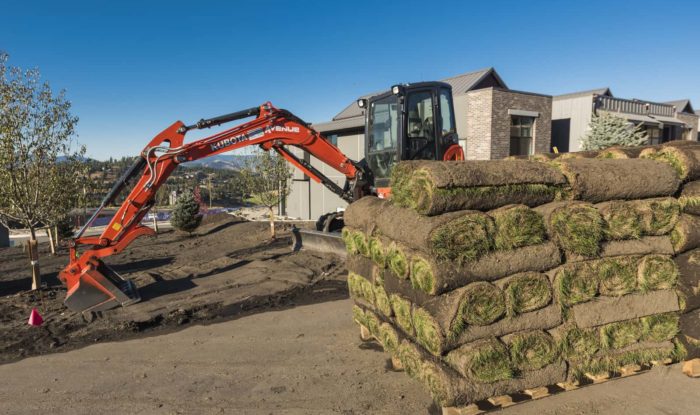
Most homeowners come to us with a vision — a patio here, some raised beds over there, maybe a pergola. That’s great. But before any of that can happen, we need to understand the site itself. And in Kamloops, the site has a lot to say.
Kamloops sits in a semi-arid Interior plateau environment. That means hot, dry summers (regularly hitting 35–40°C), cold winters, and an average annual precipitation of around 280mm — less than some desert cities in the American Southwest. Your soil is often a heavy, compacted clay with poor drainage, or in newer subdivisions, it’s been stripped of topsoil during construction and replaced with whatever fill was handy. Neither is ideal as a starting point.
A proper site assessment looks at:
- Soil composition and compaction — digging test holes in several spots tells us a lot more than just looking around
- Drainage patterns — where does water go when it rains, and where does it pool in spring snowmelt?
- Sun and shade mapping — which areas get full afternoon sun (brutal in July), which are shaded, and how does that change seasonally?
- Existing utilities — gas lines, irrigation lines, electrical — you need to call BC 1 Call before any excavation begins
- Slopes and grades — Kamloops properties on hillside lots can have significant grade changes that need engineered solutions, not just a retaining wall thrown up over a weekend
In our experience, homeowners who skip this step and jump straight to picking plants and pavers end up redesigning mid-project. That costs real money. Start with the site.
Step 2: Design — Where Your Vision Meets BC Reality
Once we know what we’re working with, the design phase begins. This is where a professional landscape designer earns their fee many times over. A good design isn’t just a pretty sketch — it’s a technical document that accounts for grading, drainage, material specifications, plant placement, irrigation zones, and phasing.
Here’s a real example of what this looks like in practice. A few years back, we worked with a family in Brocklehurst who had a standard 60-foot wide backyard — flat, grassy, and completely unremarkable. Their goals were a covered patio, low-maintenance plantings along the fence line, a small irrigated lawn area for the kids, and raised vegetable beds. Totally reasonable. But their soil was dense clay, they had a natural low spot in the northeast corner that turned into a swamp every spring, and their back fence faced southwest — meaning brutal afternoon heat against a vinyl fence that was already warping.
The design solution involved a dry creek bed to manage that drainage issue (which also became a landscape feature), heat-tolerant screening shrubs like Spiraea and Potentilla along the fence, a concrete patio with a timber pergola to create shade, and raised cedar beds elevated 18 inches to get above the clay layer. None of those solutions would have come out of a wish list conversation — they came from understanding the site first.
If you want to understand what a landscape designer actually does at this stage, our post on what a landscape designer does is worth a read before your first meeting.
For the BC Interior, design should always address:
- Irrigation from the start — retrofitting drip irrigation into a finished landscape is painful and expensive
- Xeriscaping principles where appropriate — drought-tolerant planting isn’t just trendy here, it’s practical
- Frost heave on hardscape — Kamloops freezes hard, and improperly installed pavers will shift within two winters
- Wildfire interface considerations if you’re on the periphery of town — defensible space matters
Step 3: Budgeting and Phasing — Be Realistic, Then Plan Smart
This is the part of the conversation most homeowners find a little uncomfortable, but we’d rather have it clearly upfront than have surprises halfway through a project. A full backyard landscaping project in Kamloops — patio, plantings, irrigation, fencing, lighting — can range from $25,000 to well over $100,000 depending on scope, materials, and site conditions. That’s a wide range, and the honest answer is: it depends.
What we always recommend is phasing. You don’t have to do everything in year one. In fact, for most residential projects, phasing over two or three seasons is the smarter approach:
- Phase 1 (Year 1): Site prep, grading, drainage, hardscape (patio, pathways, retaining walls), and irrigation rough-in. Get the bones right first.
- Phase 2 (Year 1 or Year 2): Planting — lawn establishment, trees, shrubs, perennial beds. Allow plants time to establish before adding more.
- Phase 3 (Year 2 or 3): Finishing touches — pergola or shade structure, outdoor lighting, raised beds, decorative elements.
Phasing also lets you see how the space actually lives before you commit to every detail. You might decide that pergola placement makes more sense once you’ve spent a summer on the patio watching where the shade falls.
One thing we always say: don’t cheap out on Phase 1. The grading and drainage work isn’t glamorous, but it’s what every single other element sits on top of. A beautiful patio that puddles every spring because the grade wasn’t addressed is just a very expensive frustration.
For a broader look at what good landscaping services can include at each project stage, visit our landscape services page.
Step 4: Plant Selection for Kamloops — This Is Where Generic Advice Gets People in Trouble

We’re going to be direct here: a lot of plants sold at big box stores in Kamloops are not well-suited to Kamloops conditions. They survive in the display area under regular watering, get purchased by well-meaning homeowners, and then struggle through their first dry July. We’ve seen it hundreds of times.
For a Kamloops backyard, you want plants that are:
- Hardy to at least Zone 5 (Kamloops is Zone 5b–6a depending on your microclimate and elevation)
- Drought-tolerant once established — ideally suited to less than 350mm of annual precipitation
- Resistant to the particular pest pressures of the BC Interior (aphids, spider mites, and powdery mildew thrive in our hot, dry conditions)
Some of our go-to recommendations for Kamloops backyards:
- Trees: Trembling Aspen (Populus tremuloides), Amur Maple (Acer ginnala), Paper Birch (Betula papyrifera) — all cold-hardy and relatively drought-tolerant once established
- Shrubs: Potentilla (Dasiphora fruticosa), Saskatoon (Amelanchier alnifolia), Sagebrush (Artemisia tridentata) for dry exposed areas
- Perennials: Echinacea, Salvia, Russian Sage (Perovskia atriplicifolia), Yarrow (Achillea millefolium)
- Groundcovers: Creeping Thyme, Stonecrop (Sedum spp.) — excellent for hellstrip areas or slopes where irrigation is difficult
One thing to be watchful of: Japanese Knotweed (Reynoutria japonica) is present in parts of the Kamloops area and is one of BC’s most problematic invasive species. If you see it on your property during site prep, deal with it before construction begins — it spreads rapidly and can push through hardscape over time. The BC Government’s invasive species resources have solid guidance on identification and management.
If you want to source quality, regionally appropriate plants, our Kamloops Garden Centre carries hardy trees, shrubs, and perennials selected for BC Interior conditions — not whatever happened to be trending at a trade show in Vancouver.
Step 5: The Build Phase — What to Expect When Work Starts
This is the part that surprises a lot of homeowners who’ve never been through a full landscape build before. It looks worse before it looks better. That’s just the nature of construction.
During the build phase for a typical Kamloops backyard project, here’s roughly what the sequence looks like:
- Site preparation and excavation — clearing existing material, grading, addressing drainage, removing sod or old structures. This is the loud, dusty, “what have we done” phase.
- Structural work — retaining walls, concrete footings, base preparation for hardscape. If your project involves significant grading or retaining structures, this is where civil and excavation expertise matters. Our civil excavating and trucking team handles this stage on larger residential projects.
- Hardscape installation — patio, pathways, steps. Proper compaction and base depth matters enormously in a freeze-thaw climate like Kamloops.
- Irrigation installation — before any topsoil or planting goes in.
- Topsoil and amendments — adding quality soil and organic matter, especially critical in Kamloops where existing soil is often poor.
- Planting — trees first, then shrubs, then perennials and groundcovers.
- Lawn establishment — seeding or sod, depending on time of year and budget.
- Finishing — mulching, edging, lighting, accessories.
Throughout the build, communication matters. We wrote about this directly — how Lyons Landscaping approaches project communication — because it’s something we’ve invested in deliberately. You should always know what’s happening, what’s coming next, and who to call if you have questions. If your contractor goes quiet mid-project, that’s a red flag.
Step 6: After the Build — Establishment and Ongoing Maintenance
A finished landscape isn’t a finished product — it’s a living system that needs the right start to thrive. The first growing season after installation is critical, especially for trees and shrubs. In Kamloops, that means consistent irrigation through the heat of July and August, even for drought-tolerant species. “Drought-tolerant” means tolerant once established — typically after one to two full growing seasons.
We generally recommend a proper maintenance plan for at least the first year after a major install. That includes:
- Irrigation system checks and seasonal adjustments
- Fertilization at appropriate intervals
- Weed management — especially in the first year when mulch has settled and bare soil gaps appear
- Pruning at the right time (not just whenever it looks overgrown)
- Winterization of the irrigation system before freeze-up — in Kamloops, that’s typically late September to mid-October
If you want to understand what professional property maintenance actually covers on an ongoing basis, our post on what’s included in property maintenance breaks it down clearly.
Conclusion
Planning a backyard landscaping project in Kamloops is genuinely exciting — and it’s one of the most rewarding things you can do for your property and your quality of life. But it rewards those who approach it methodically. Start with the site. Build a design that reflects BC Interior realities. Budget honestly, phase smartly, choose plants that will actually thrive here, and work with a team that communicates clearly and does the job right the first time.
At Lyons Landscaping, we’ve spent years working on residential properties across Kamloops and the BC Interior — everything from modest backyard refreshes to large-scale estate projects. We handle design, build, and maintenance under one roof, which means your project doesn’t fall apart in the handoffs between contractors.
If you’re ready to start planning, we’d love to talk. Contact Lyons Landscaping today to schedule a consultation and take the first step toward a backyard you’ll actually want to spend time in.