Key Takeaways
- Kamloops’ semi-arid climate and alkaline, rocky soils make the right soil mix the single most important decision you’ll make for your raised bed.
- Cedar or composite framing significantly outlasts untreated lumber in the BC Interior’s freeze-thaw cycles.
- Choosing plants rated for Zone 5b or hardier gives you the best chance of success with Kamloops’ unpredictable late frosts.
- The most common mistake we see — by far — is filling beds with bargain topsoil that compacts into something resembling concrete by midsummer.
- A well-built raised bed can dramatically extend your growing season, which in Kamloops typically runs from late May to early October.
Introduction: Why Raised Beds Make Sense in Kamloops
If you’ve ever tried to grow tomatoes or carrots directly in a Kamloops backyard, you already know the challenge: the native soil tends to be shallow, rocky, and often alkaline — not exactly a vegetable garden’s dream environment. That’s exactly why a raised bed garden in Kamloops BC isn’t just a trendy Pinterest project. It’s genuinely one of the smartest ways to grow food and flowers in the BC Interior.
We’ve helped homeowners across Kamloops, Merritt, and the Thompson-Okanagan region transform hard, dry yards into productive, beautiful garden spaces. The difference between a raised bed that thrives and one that struggles usually comes down to three things: your soil blend, your frame material, and your plant selection. Get those right, and you’re set up for a genuinely rewarding growing season. Get them wrong, and you’ll be watering a very expensive box of disappointment all summer. This guide covers all of it — with real, BC Interior-specific advice you can actually use.
Understanding Kamloops Soil & Why It’s a Raised Bed’s Best Argument
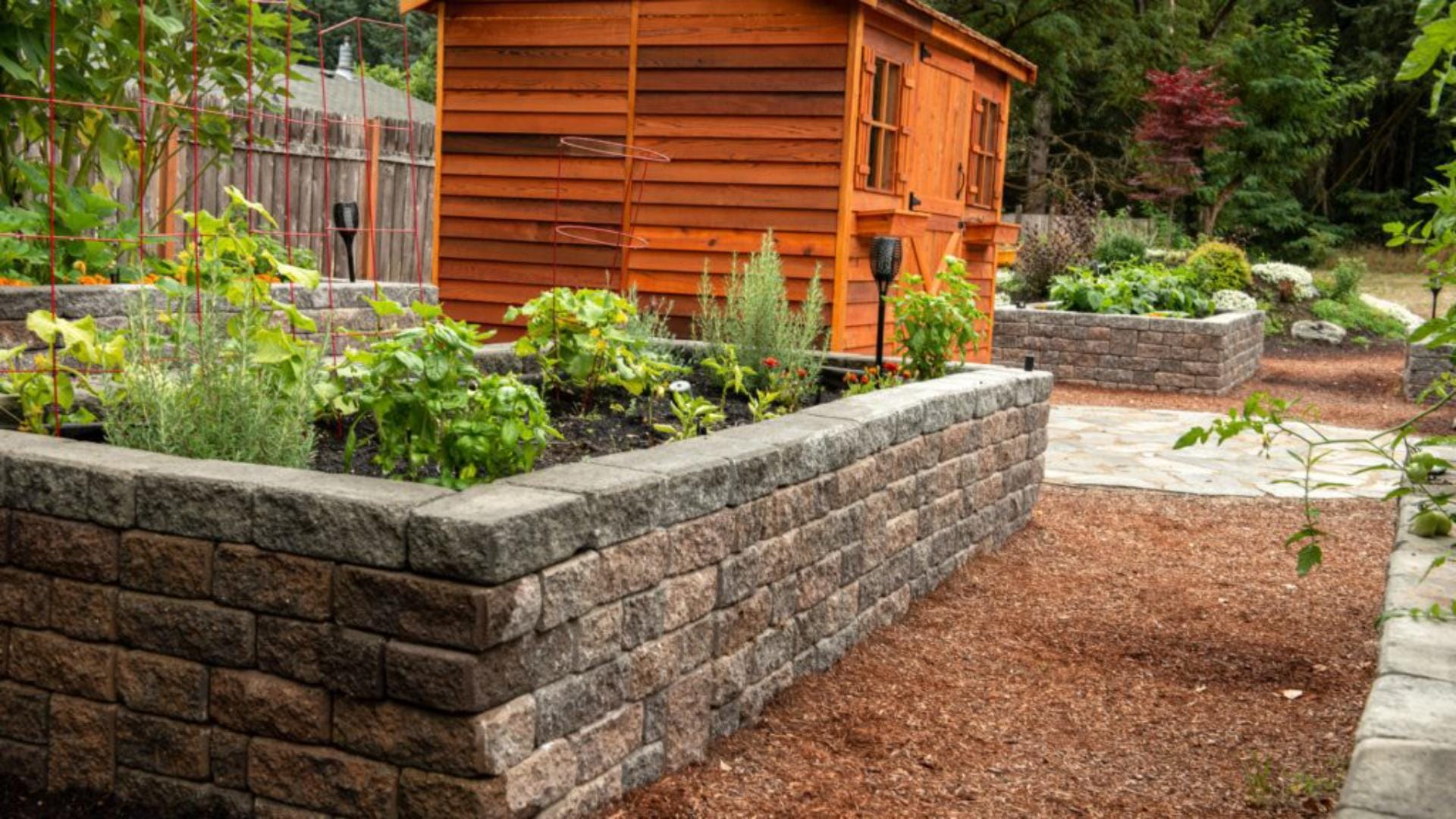
Let’s be honest about Kamloops soil: it’s challenging. Much of the Thompson Valley sits on glacial till, decomposed basalt, or clay-heavy subsoil with a pH that often runs between 7.5 and 8.2 — well above the 6.0–7.0 sweet spot that most vegetables prefer. Add in the baking summer heat (Kamloops regularly sees 35°C+ in July and August) and low annual rainfall of around 278mm, and you’ve got a combination that makes in-ground gardening genuinely hard work.
Raised beds sidestep almost all of these problems. You’re essentially starting from scratch with a controlled environment above the native ground. But — and this is a big but — only if you fill them with the right growing medium.
Here’s the soil blend we recommend for BC Interior raised beds:
- 60% quality compost-based topsoil — not bargain-bin fill dirt. Look for loamy, friable texture.
- 20% aged compost or mushroom manure — adds nutrients and improves water retention in our dry climate.
- 20% coarse perlite or vermiculite — critical for drainage and preventing the compaction that kills roots by August.
We also recommend adding a light dusting of agricultural lime if your compost is particularly acidic, and working in a slow-release organic fertilizer at planting time. The Agriculture and Agri-Food Canada soil health resources are a solid reference point if you want to dig deeper into soil chemistry for your region.
If you’d rather leave the soil sourcing to someone who knows the local supply chain, our Kamloops Garden Centre carries premium soil blends and amendments suited specifically to the BC Interior’s dry conditions.
Choosing the Right Frame Material for BC Interior Winters
Kamloops winters are deceptively rough on lumber. You might get -20°C in January, followed by a chinook that pushes temps above freezing within 48 hours. That freeze-thaw cycle is brutal on wood — it wicks moisture in, expands, contracts, and within a few seasons you’ve got warped, cracked boards that are pulling apart at the corners.
Here’s our honest take after building beds across the Interior:
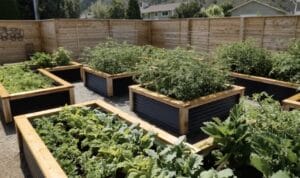
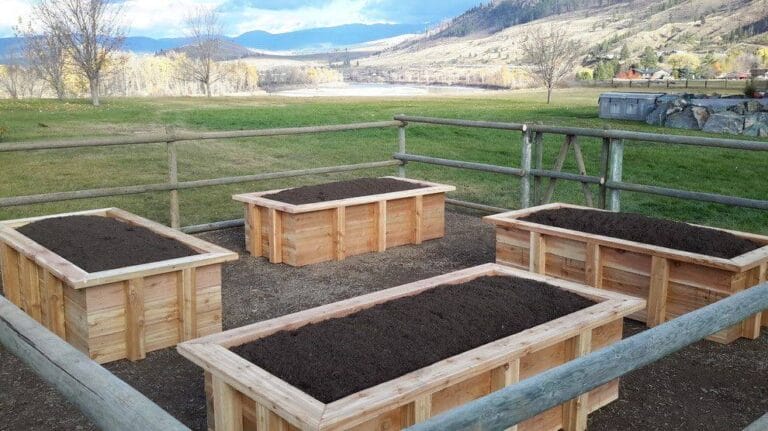
Western Red Cedar is our top recommendation. It’s naturally rot-resistant, handles moisture fluctuations well, and it’s a local material — which matters. A cedar bed built properly will last 10–15 years without treatment. It’s not the cheapest option upfront, but it’s absolutely the cheapest over time.
Composite lumber (made from recycled wood fibre and plastic) is a close second. It won’t warp, won’t rot, and comes in clean profiles that look sharp in a modern landscape design. Great for homeowners who want low-maintenance longevity.
What to avoid:
- Pressure-treated pine (older CCA-treated) — contains arsenic compounds. Not appropriate for food gardens. Modern ACQ-treated lumber is considered safer, but we still prefer untreated cedar for vegetable beds.
- Standard SPF lumber (spruce-pine-fir) — it’s cheap and it shows. Expect 2–3 seasons before you’re rebuilding.
- Railroad ties — heavily saturated with creosote. Avoid entirely for food growing.
For height, we recommend a minimum of 30cm (12 inches) deep for most vegetables, and 45cm (18 inches) if you’re growing root crops like carrots, parsnips, or beets. That depth matters more than most guides admit — it’s what keeps your soil from overheating and drying out completely during a Kamloops July.
Width matters too. Keep beds no wider than 120cm (4 feet) so you can reach the centre from either side without stepping in. Compacted raised bed soil is a contradiction in terms — protect it.
What Grows Well in a Kamloops Raised Bed (In Brief)
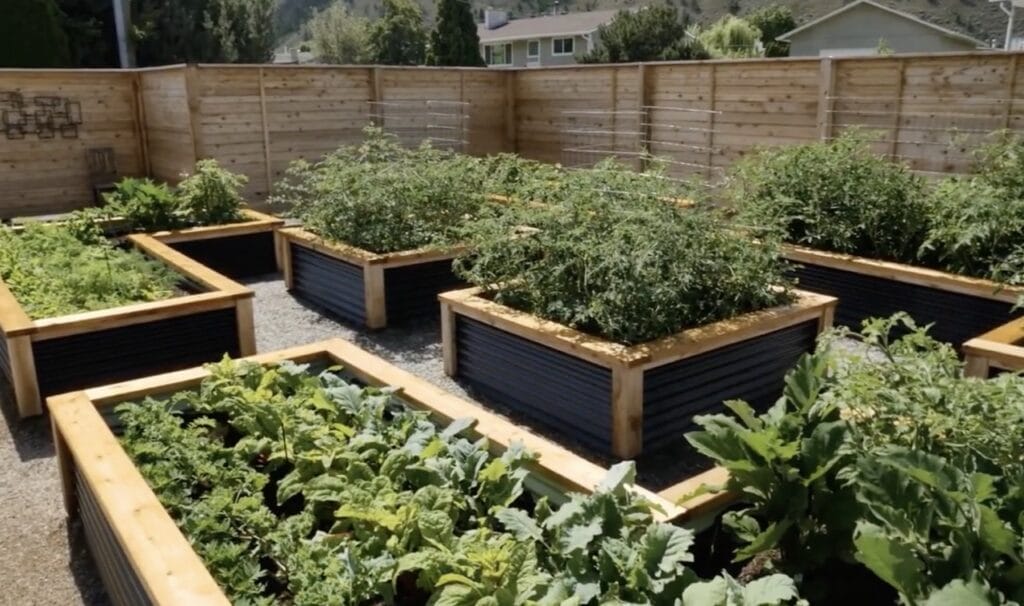
Once your bed is built and filled, you’ve got a controlled root environment that outperforms native Kamloops soil for almost everything — with a growing window that runs roughly mid-May to early October. Reliable performers here include tomatoes, zucchini, bush beans, kale and Swiss chard, garlic, and heat-loving herbs like basil and thyme.
This guide is about getting the bed built right; for the full crop list, seasonal timing, and what to grow first, see our Kamloops raised bed planting guide. And once your crops are chosen, working out what to plant together once beds are built improves yields and keeps pest pressure down. One habit worth adopting regardless of what you grow: start warm-season crops like tomatoes and peppers indoors in late February or early March — our season is too short to direct-sow them outside.
The BC Ministry of Agriculture’s vegetable production guides also offer regional growing guides worth bookmarking if you’re getting serious about food production.
The Mistakes We See Most Often (And How to Skip Them)
After building and advising on raised beds across Kamloops and the Interior for years, certain mistakes come up again and again. Here’s what to avoid:
1. Skimping on soil quality. This is the big one. We’ve seen clients spend $800 on beautiful cedar framing and then fill it with $20-a-yard topsoil that’s basically subsoil with some bark mixed in. By August it’s compacted, hydrophobic, and cracking. Spend the money on quality growing mix. It’s the foundation of everything.
2. No irrigation plan. Kamloops averages less than 280mm of rainfall annually. Without drip irrigation or a reliable watering schedule, your raised beds will dry out fast — especially in July and August when temps are consistently in the 30s. A simple drip system with a timer is one of the highest-return investments you can make. Our landscape maintenance team can set up irrigation systems that take the guesswork out of watering entirely.
3. Ignoring sun exposure. Raised beds need 6–8 hours of direct sun for most vegetables. We’ve seen beds built against north-facing fences that produce almost nothing all season. Spend a few days observing your yard before you commit to a location.
4. Going too wide. We mentioned this above, but it bears repeating. If you can’t reach the centre of your bed without stepping in, you will step in it. And then you’ve defeated the whole purpose of raised growing.
5. Not thinking about year-round access. Kamloops gets real winters. If your raised beds are in a location that becomes a snowdrift or turns into an ice rink, think about pathways and access before you build. Good design accounts for all four seasons, not just July.
6. Planting invasive species nearby. If your yard borders or previously hosted Japanese knotweed (Reynoutria japonica), take it seriously before building raised beds nearby. Knotweed can push through almost anything and will absolutely colonize a raised bed given the chance. Address knotweed before you build, not after.
Drip Irrigation, Mulching & Extending Your Kamloops Growing Season
Here’s something that doesn’t get enough attention in generic raised bed guides: water management in a semi-arid climate is its own discipline. Kamloops isn’t the Lower Mainland. You can’t count on rain to bail you out between waterings.
Drip irrigation is the gold standard for raised beds in the BC Interior. It delivers water directly to the root zone, reduces evaporation, and keeps foliage dry (which matters for disease prevention). A basic drip kit with a hose-end timer runs $50–$150 and pays for itself in water savings and plant health within a single season. If you’re managing multiple beds or want a professionally integrated system, that’s something our team handles regularly as part of broader property maintenance and irrigation services. Just keep in mind that summer limits can affect your schedule — watering raised beds within local restrictions is far easier when you know which stage Kamloops is under before you set your timer.
Mulching is non-negotiable. A 5–7cm layer of straw, wood chip, or shredded leaf mulch on top of your raised bed soil can reduce moisture loss by up to 70% in peak summer heat. It also moderates soil temperature — important when Kamloops afternoons are pushing 38°C.
Season extension: A simple wire hoop-and-row-cover setup can push your planting date back by 2–3 weeks in spring and protect plants from early October frosts in fall. We’ve seen Kamloops gardeners harvest tomatoes in late October using nothing more than a $30 frost cloth. It’s one of the easiest wins in the Interior gardening toolkit.
Conclusion: Build It Right the First Time
A raised bed garden in Kamloops BC done right is a genuine pleasure — productive, manageable, and something you’ll look forward to every spring. But cutting corners on soil, materials, or irrigation in our climate doesn’t save money. It just delays the frustration.
Start with quality cedar or composite framing. Fill it with a proper loam-compost-perlite blend. Choose plants that suit our Zone 5b/6a conditions and start them early indoors. Set up drip irrigation before June arrives. Mulch heavily. And enjoy the fact that raised beds give you complete control over the one thing our native Kamloops soil makes difficult: a healthy root environment.
If you’re ready to get started and want expert help — whether that’s sourcing the right soil mix, setting up irrigation, or integrating raised beds into a broader landscape design — contact Lyons Landscaping today for a free consultation. Our team has worked on properties across Kamloops, Merritt, and the BC Interior for years, and we’d love to help your garden get off to the right start.
You can also visit our Kamloops Garden Centre for quality soil, hardy plants, and expert advice from people who actually grow in this climate.