Key Takeaways
- In BC, “landscape architect” is a legally protected title regulated by the BC Society of Landscape Architects (BCSLA) — not anyone can use it.
- Landscape designers are skilled professionals but are not bound by the same licensing requirements — qualifications vary widely.
- Most residential projects in the BC Interior don’t require a licensed landscape architect, but larger commercial, municipal, or grading-intensive projects often do.
- The right choice depends on your project’s scope, site complexity, permit requirements, and budget — not just personal preference.
- Working with a full-service firm like Lyons Landscaping means you get design expertise matched to your actual project needs, without overpaying for credentials you don’t need.
Introduction
If you’ve started pricing out a landscaping project in Kamloops, Kelowna, or anywhere across the BC Interior and found yourself Googling “landscape architect vs landscape designer BC,” you’re already asking the right question. These two titles get used interchangeably all the time — by homeowners, contractors, and even some in the industry — but they’re not the same thing. Not even close. And hiring the wrong one for your project can cost you time, money, and in some cases, a permit approval.
The short version: in British Columbia, “landscape architect” is a protected professional designation, much like an engineer or a certified plumber. A landscape designer, on the other hand, may be incredibly talented and experienced, but the title itself isn’t regulated. That doesn’t make designers less valuable — it just means you need to understand what your specific project actually calls for before you pick up the phone.
What Makes a Landscape Architect Different in BC
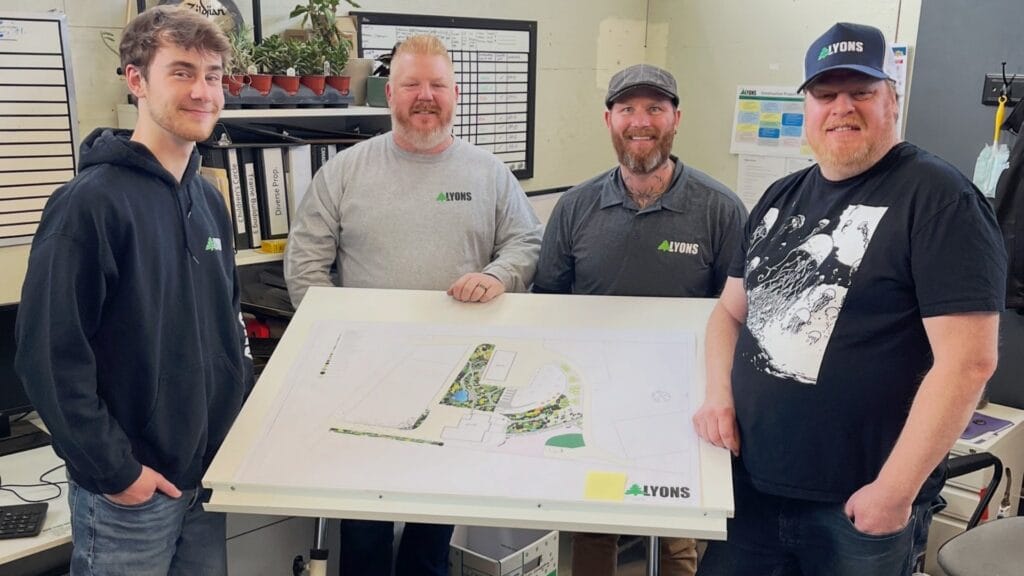
In British Columbia, the title “Registered Landscape Architect” (or RLA) is protected under the Landscape Architect Act and governed by the BC Society of Landscape Architects. To use that title legally, a person must complete an accredited university degree in landscape architecture, fulfill supervised work experience hours, and pass professional registration exams. It’s a rigorous process — similar in structure to what engineers and architects go through.
Why does this matter for your project? Because certain types of work in BC — particularly on public land, municipal projects, or larger developments — legally require a stamped drawing from a registered landscape architect. If you’re developing a multi-family residential site, working on a commercial property that requires a development permit, or doing anything that involves significant grading and drainage design, there’s a good chance the city or municipality will ask for RLA involvement.
Landscape architects are also trained to work across disciplines — coordinating with civil engineers, architects, and municipal planners. They understand things like stormwater management, accessibility standards, and environmental impact assessments. For large-scale or complex projects, that cross-disciplinary fluency is genuinely valuable, not just a credential box to check.
If your project involves significant earthwork, it’s also worth reading what site grading involves in BC before your first design consultation — it’ll help you ask better questions.
What a Landscape Designer Actually Does (And Why They’re Often the Right Call)
Here’s something we’ll say plainly from experience: for the majority of residential landscaping projects across the BC Interior, you don’t need a registered landscape architect. What you need is a skilled, experienced landscape designer who understands your site, your climate, and your goals.
Landscape designers typically come from horticultural, design, or trades backgrounds. Many hold diplomas in landscape design or horticulture, have years of hands-on project experience, and carry a deep understanding of plant selection, spatial planning, hardscape integration, and aesthetic cohesion. The lack of a protected title doesn’t mean a lack of talent — it means the bar for entry is lower, so you need to vet your designer more carefully.
A good landscape designer is the person you want when you’re transforming a tired Kamloops backyard into an outdoor living space, planning a native plant garden that can handle the Interior’s dry summers, or figuring out how to add a patio, pergola, and planting beds without the whole thing looking chaotic. That’s design thinking applied to real residential conditions — not an engineering problem that needs a stamp.
At Lyons Landscaping, our landscape design and architecture services are built around matching the right level of expertise to each project. We’re not going to upsell you on professional credentials your project doesn’t need. But we’ll be straightforward when it does.
The BC Interior Makes This Decision a Little More Complicated
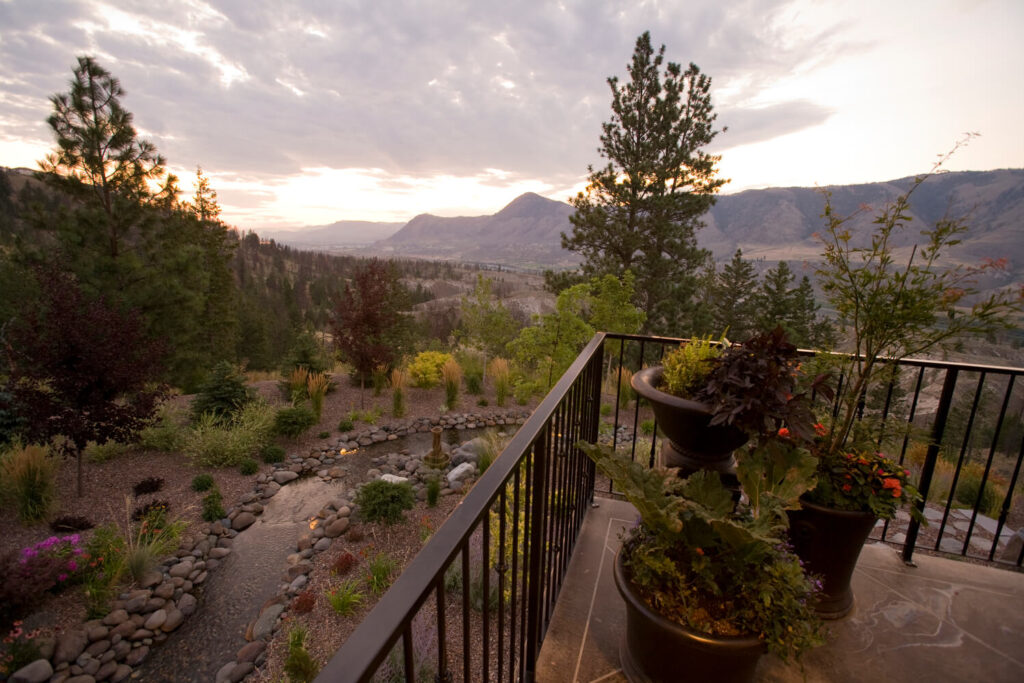
Designing for Kamloops, Merritt, or the South Okanagan isn’t the same as designing for Metro Vancouver or Victoria. The Interior has its own set of conditions that any competent designer or architect needs to understand from the ground up — literally.
You’re dealing with hot, dry summers where temperatures regularly hit 35°C or above, cold winters with hard freezes, alkaline soils that don’t behave the way gardening books written for coastal BC describe, and increasingly, wildfire interface concerns that affect plant selection and layout. A designer who learned their craft working on Vancouver’s North Shore rain gardens isn’t automatically equipped for a FireSmart-focused landscape on a Kamloops hillside. Those are genuinely different skill sets.
This is one reason we always recommend looking at a designer’s or architect’s actual project history in Interior BC, not just their credentials. Have they worked with native bunchgrasses and drought-tolerant shrubs like Ceanothus or Potentilla fruticosa? Do they understand how slopes and exposed southern aspects change irrigation needs? Have they dealt with the clay-loam soils common across parts of the Thompson-Nicola region?
FireSmart landscaping is a good example of where local knowledge really matters. If you’re designing a yard in the BC Interior’s wildland-urban interface, plant selection and spacing aren’t just aesthetic decisions — they affect how your property performs in an emergency. We’ve written about this in detail in our post on how to design a FireSmart yard that actually looks good in the BC Interior.
When You Actually Need a Landscape Architect in BC (Be Honest With Yourself)
Here’s a practical breakdown, based on the kinds of projects we see regularly across the Interior:
You likely need a registered landscape architect if:
- Your project requires a development permit from your municipality and the permit application specifies RLA drawings
- You’re working on a commercial, institutional, or multi-family residential development
- The project involves significant grading, stormwater management, or retaining walls over a certain height (which may also require an engineer — check BC’s excavation and grading permit requirements)
- You’re designing public green space, parks, or municipal infrastructure
- An environmental assessment or riparian area regulation review is required
A talented landscape designer is likely sufficient if:
- You’re redesigning a residential backyard, front yard, or estate property
- Your project involves patios, garden beds, fencing, irrigation, planting plans, and outdoor living areas
- You’re doing a phased renovation of an existing residential landscape
- No development permit requiring an RLA stamp is needed
- Your strata or HOA needs updated landscape plans that don’t trigger development permit thresholds
One real-world scenario we encounter fairly often: a Kamloops homeowner wants to overhaul a large hillside property — new terracing, retaining walls, native plantings, an outdoor kitchen area. It’s a big, complex project. But it’s still residential, still private property, and doesn’t require a stamped RLA drawing for permits. A strong landscape designer with solid retaining wall experience and knowledge of Interior plant material handles this beautifully — without the timeline and cost premium that full landscape architecture services carry.
That said, if those retaining walls are over a certain height (typically over 1.2m in BC municipalities), you may need an engineer involved regardless. That’s a separate lane from the architect vs. designer question, but it’s worth knowing.
How to Vet Whoever You Hire
Whether you’re hiring a landscape architect or a landscape designer in BC, here’s what actually matters in practice:
For landscape architects: Verify their registration directly through the BC Society of Landscape Architects member directory. Don’t just take a business card at face value — the title is legally protected, and using it without registration is a violation of provincial legislation.
For landscape designers: Ask about their education, their project portfolio, and specifically their experience in the BC Interior if that’s where your property is. Ask for references from similar projects. Find out whether they work with a design-build firm (which means your design translates cleanly into construction) or whether they hand off drawings and leave you to manage the rest.
In both cases, ask: Have you worked on projects like mine, in conditions like mine? That question will tell you more than any credential.
At Lyons Landscaping, we work across residential, commercial, and civil projects in Kamloops and across the BC Interior. Our team brings design capability that’s grounded in real construction experience — so the plans we develop are plans we can actually build, and build well. That integration matters more than most people realize until they’ve dealt with a design that looks great on paper but falls apart in execution.
Conclusion
The landscape architect vs. landscape designer question in BC isn’t really about prestige — it’s about matching the right expertise to the right project. For large-scale commercial, municipal, or permit-heavy developments, a registered landscape architect is often required and worth every dollar. For the vast majority of residential projects across the BC Interior, a skilled and experienced landscape designer is not only sufficient — they may actually be a better fit, especially if they have deep local knowledge of Interior conditions, soils, and plant material.
If you’re not sure where your project falls, the honest answer is: talk to someone who does both. At Lyons Landscaping, we’re happy to look at what you’re trying to accomplish and give you a straight answer about what kind of design support makes sense — without steering you toward anything you don’t need.
Ready to get started? Contact Lyons Landscaping today to talk through your project and find out what level of design expertise it actually calls for.