Trench Safety in BC: What Homeowners and Contractors Must Know Before Any Excavation Project
Key Takeaways
- Any trench deeper than 1.2 metres in BC requires shoring, sloping, or benching under WorkSafeBC regulations — no exceptions.
- BC Interior soil conditions — including loose glacial till, clay, and freeze-thaw instability — make trenching riskier than many homeowners realize.
- Calling BC One Call before any dig isn’t just smart; it’s legally required.
- Trench collapses happen fast and without warning — the weight of soil can exceed 1,800 kg per cubic metre, which is enough to kill in seconds.
- Hiring a qualified, WorkSafeBC-compliant contractor is the single most important step you can take before any excavation project.
Introduction
If you’re planning a landscaping project that involves any digging — installing drainage, running utility lines, building a retaining wall foundation, or laying irrigation — trench safety BC excavation rules apply to you. That’s true whether you’re a homeowner in Kamloops renting a mini excavator for the weekend, or a general contractor managing a full civil project across the BC Interior. The rules don’t bend based on project size, and the ground doesn’t care how experienced you think you are.
We’ve been doing civil excavation work across BC for years, and if there’s one thing we’ve learned, it’s this: the trenching incidents that hurt people almost always happen on jobs that seemed routine. A shallow drainage trench on a residential lot. A utility run through sandy backfill. A quick dig that turned into something much more serious when the wall gave way. This post is here to help you understand what’s actually required under BC law, what the ground in our Interior region does that you won’t read about in a generic online guide, and how to make sure your next excavation project goes safely from start to finish.
What BC Law Actually Requires for Trench Safety
WorkSafeBC is the governing body for occupational health and safety in British Columbia, and their regulations around excavation are specific, detailed, and legally enforceable. Under the WorkSafeBC OHS Regulation, Part 20, any excavation or trench deeper than 1.2 metres must be protected against cave-in. That protection has to come in one of three forms: shoring (installing physical supports against the trench walls), sloping (cutting the walls back at a safe angle based on soil type), or benching (creating stepped horizontal levels in the trench walls).
The method you use depends heavily on soil classification. WorkSafeBC categorizes soil into types based on stability, and each type has different allowable slope ratios. Loose, dry, or previously disturbed soil — which is extremely common in BC Interior construction zones — requires much more conservative slopes than solid, undisturbed material. A competent person must assess soil conditions before any trench work begins. That’s not a suggestion; it’s a regulatory requirement.
Good excavation also starts well before the first cut — proper site prep and grading before trenching keeps soil stable and helps prevent the drainage problems that lead to wall failure.
There are also requirements around spoil placement (excavated material must be kept at least 1 metre from the trench edge), access and egress (workers need a safe way in and out every 8 metres or less), and atmospheric hazards (some trenches require air quality monitoring). If you’re hiring a contractor, ask directly how they handle these requirements. If they look at you blankly, that’s your answer.
Why BC Interior Soil Makes Trenching More Dangerous Than You’d Expect
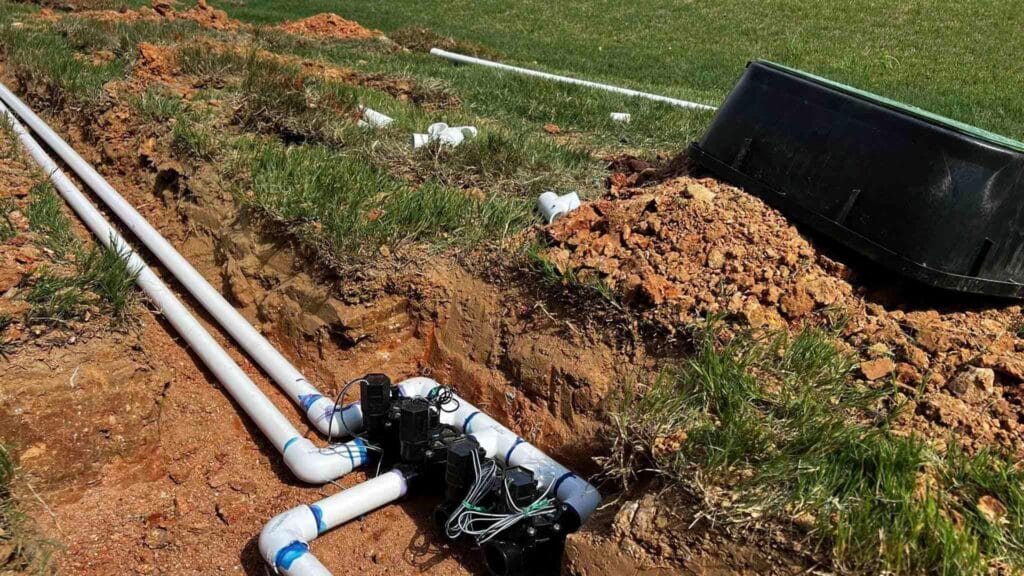
Here’s something that doesn’t show up in generic trench safety articles: the BC Interior has some genuinely challenging soil conditions that change the risk profile of excavation significantly. Around Kamloops and the Thompson-Okanagan region, you’re often working with a mix of glacial till, silty loam, sandy deposits, and clay-heavy subsoil — and these layers don’t always behave predictably.
Glacial till is deceptive. It can look and feel solid enough to stand on when you’re walking the site, but once you cut into it and expose a trench wall, the internal structure changes. Remove the overburden pressure and introduce air, and what looked like stable ground can begin to crack and shift within hours. We’ve seen this firsthand on sites in the Kamloops area where a trench looked perfectly fine at the end of a workday and had visible tension cracks by morning.
Freeze-thaw cycles add another layer of risk. In spring and fall — which are prime construction seasons in the Interior — ground temperatures fluctuate significantly. Soil that’s partially frozen has some cohesion; soil that’s thawing rapidly loses it fast. A trench dug in the morning through frost-bound earth can have completely different wall stability by early afternoon once the sun hits it.
Then there’s the irrigation and drainage factor. Kamloops-area properties often have extensive underground irrigation systems, and older neighbourhoods can have drainage infrastructure that isn’t accurately mapped. Water in the soil — whether from irrigation, rain, or proximity to creek beds — dramatically increases the risk of trench collapse. We always treat wet or recently saturated soil as the most dangerous scenario on site. This is exactly why drainage planning ties directly into excavation and grading — controlling where water goes is inseparable from keeping a trench wall standing.
The “It’s Just a Small Trench” Mindset — And Why It Gets People Killed
We’re going to be direct here, because this matters. The most dangerous trench isn’t a 4-metre deep commercial excavation with multiple trades working in it. The most dangerous trench is the 1.5-metre drainage ditch that a homeowner or small contractor decides doesn’t need any precautions because it “only takes an hour.”
A cubic metre of average BC Interior soil weighs roughly 1,600 to 1,900 kilograms. When a trench wall collapses, it doesn’t give you time to react. You’re not knocked over — you’re buried. And burial at even chest depth can compress the lungs enough that rescue within minutes is the only thing that saves a life. WorkSafeBC fatality data consistently shows that trenching deaths occur across all project scales, and a significant number involve excavations under 2 metres deep.
We had a situation a few years ago on a residential project in the BC Interior where the homeowner had started a trench for a French drain before we arrived on site — just a little preliminary digging, they said. It was about 1.4 metres deep, unshored, with spoil piled right at the edge. The soil was a sandy loam over a clay lens, and the wall was visibly beginning to crack. We stopped that job immediately, cleared the area, and re-excavated it properly with sloped walls before anyone went near it again. Nobody was hurt. But it was closer than it should have been.
The honest truth is that trench safety isn’t about bureaucratic box-ticking. It’s about the fact that soil is heavy, failures are sudden, and the consequences are fatal.

BC One Call: The Step That Absolutely Cannot Be Skipped
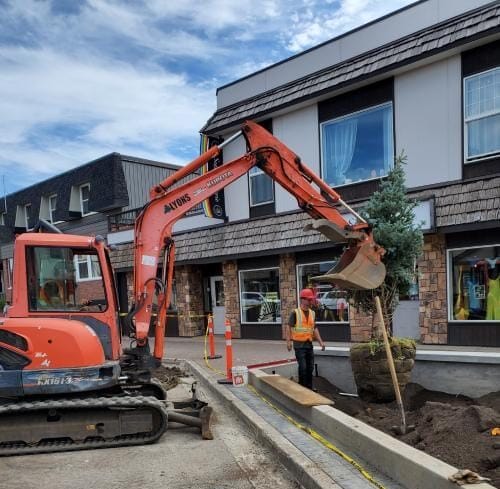
Before any excavation in BC — regardless of depth, regardless of whether you think you know where your utilities are — you are legally required to contact BC One Call at least three business days before you dig. This is not optional. Underground utilities including gas lines, electrical conduits, water mains, and telecom cables are present on nearly every residential and commercial property in BC, and they are not always where the records say they are.
In older Kamloops neighbourhoods especially, utility records can be incomplete, inaccurate, or reflect installations that have been modified over decades without full documentation. We’ve encountered electrical conduit running at half the expected depth, gas lines crossing lots at unexpected angles, and irrigation infrastructure that didn’t appear on any drawing. BC One Call coordinates with utility owners to mark lines on your site, which gives you the best available information — but even marked locations come with a tolerance zone, and hand-digging is required near any marked line.
Beyond the safety issue, hitting a buried utility is expensive. Repair costs, project delays, and potential fines for failing to call before digging can easily run into the tens of thousands of dollars. Between repairs and lost time, the rework and delay costs when excavation goes wrong are often one of the biggest hits to a project’s budget. It’s a three-minute phone call or online request. Make it every single time.
Choosing a Contractor Who Takes Trench Safety Seriously
If you’re hiring out your excavation work — which we’d strongly recommend for any trench deeper than about 600mm — the contractor you choose makes all the difference. WorkSafeBC compliance isn’t something you should have to ask about twice. A professional civil excavation contractor should be able to walk you through their approach to soil assessment, shoring or sloping decisions, spoil management, and site access without hesitation.
Ask about their safety plan for the specific project. Ask who the competent person is for soil classification on your site. Ask how they handle unexpected conditions — because in the BC Interior, unexpected conditions are more rule than exception. If a contractor quotes you a trenching job without any mention of wall protection methods or a pre-dig utility locate, that’s a red flag worth taking seriously.
At Lyons Landscaping, our civil excavation and trucking services are built around safety, experience, and the kind of site-specific thinking that the BC Interior actually demands. We don’t use cookie-cutter approaches because the ground here doesn’t behave in cookie-cutter ways. Every excavation project gets a proper site assessment, a safety plan, and a crew that knows the difference between what the soil looks like and what it’s actually doing.
Not sure what questions to ask when evaluating contractors? Our post on 10 questions to ask before hiring a landscaper is a good starting point — many of those principles apply directly to excavation contractors as well.
And if you want to understand what a well-run project looks like from a communication and process standpoint, take a look at how we approach project communication at Lyons — because knowing what’s happening on your site at every stage is part of what keeps everyone safe.
Conclusion
Trench safety in BC isn’t a topic that gets enough attention until something goes wrong. The regulations exist for good reason, the soil conditions in the BC Interior add real complexity, and the consequences of getting it wrong are about as serious as they get on a job site.
Whether you’re a homeowner planning a drainage project, a property developer breaking ground on a new site, or a contractor looking to make sure your excavation practices are tight, the fundamentals are the same: know the regulations, respect the soil, call before you dig, and work with people who take all of this as seriously as you do.
If you have an upcoming excavation project in Kamloops, the BC Interior, or anywhere we operate, contact Lyons Landscaping today for a consultation. We’ll assess your site honestly, explain exactly what’s involved, and make sure the job gets done safely — the first time.