Key Takeaways
- Once your beds are built and filled, the plants you choose — and when you put them in — are what actually determine your harvest in Kamloops’ short, hot growing season.
- Kamloops’ semi-arid climate (roughly a mid-May to mid-September frost-free window) rewards heat-loving, drought-tolerant crops and punishes anything that needs cool, damp, coastal conditions.
- Companion planting inside a raised bed makes the most of tight space, improves yields, and cuts pest pressure — but the pairings have to suit BC Interior conditions, not generic advice.
- Succession planting and starting seeds indoors are the two habits that separate a productive Kamloops raised bed from one that peters out by August.
- Hardy perennials and shrubs planted around your beds give the whole garden year-round structure and a backbone that survives Interior winters.
If you’ve already got your beds built, filled with a proper soil blend, and set up with irrigation, you’re past the hard infrastructure work — congratulations. This guide picks up exactly where that leaves off: what to actually plant, how to pair crops for bigger harvests, and how to time it all around Kamloops’ unforgiving calendar. If you haven’t built your beds yet, start with the construction side first and come back here for the planting.
Everything below comes from years of growing in exactly these conditions. At Lyons Landscaping & Garden Centre, we’ve helped hundreds of Kamloops and BC Interior gardeners get productive raised beds, and we run our own Kamloops Garden Centre stocked specifically for this climate — so the recommendations here reflect what actually performs on the ground here, not generic advice adapted from somewhere milder.
First: Your Beds Should Be Built and Filled Before You Plant
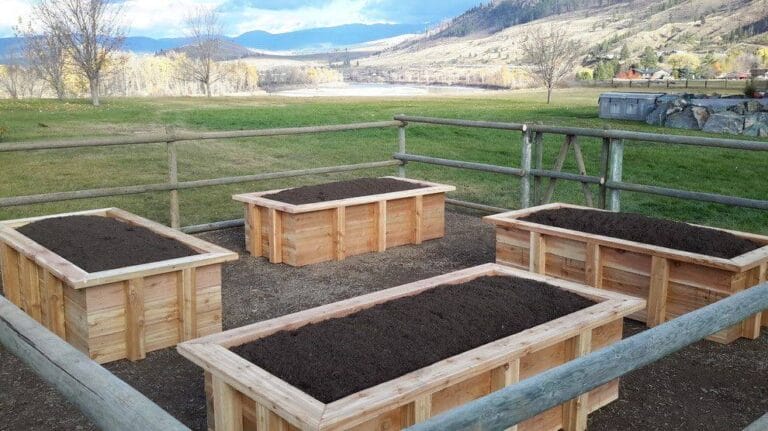
We’ll keep this part short, because we cover it in depth elsewhere. A productive raised bed in Kamloops needs three things sorted before a single seed goes in: a rot-resistant frame (cedar or composite) that handles our freeze-thaw swings, at least 30 cm of depth (40–45 cm for root crops), and a quality growing medium rather than bargain fill dirt. Native Kamloops soil is thin, alkaline, and low in organic matter, which is the whole reason raised beds make sense here in the first place.
If you’re still at the construction stage — sizing your beds, choosing lumber, or working out the right soil mix — our complete guide to building and filling a raised bed in Kamloops walks through framing, depth, and the soil blend step by step. Get that right first, because everything below depends on it. The rest of this guide assumes your beds are ready to grow.
What to Grow First: The Best Crops for a Kamloops Raised Bed
Generic vegetable guides are written for mild, coastal climates. Kamloops is not that. We get intense summer heat, a compressed growing window, and dry air that stresses anything not suited to it. The good news is that a lot of rewarding crops genuinely thrive in these conditions — often better than they would on the coast. Before you buy anything perennial, it’s worth confirming your exact zone, since Kamloops sits in a cool hardiness zone with real microclimate variation from one property to the next — Natural Resources Canada’s plant hardiness zone map lets you check your specific site. Here’s where we’d tell a first-year Kamloops gardener to start.
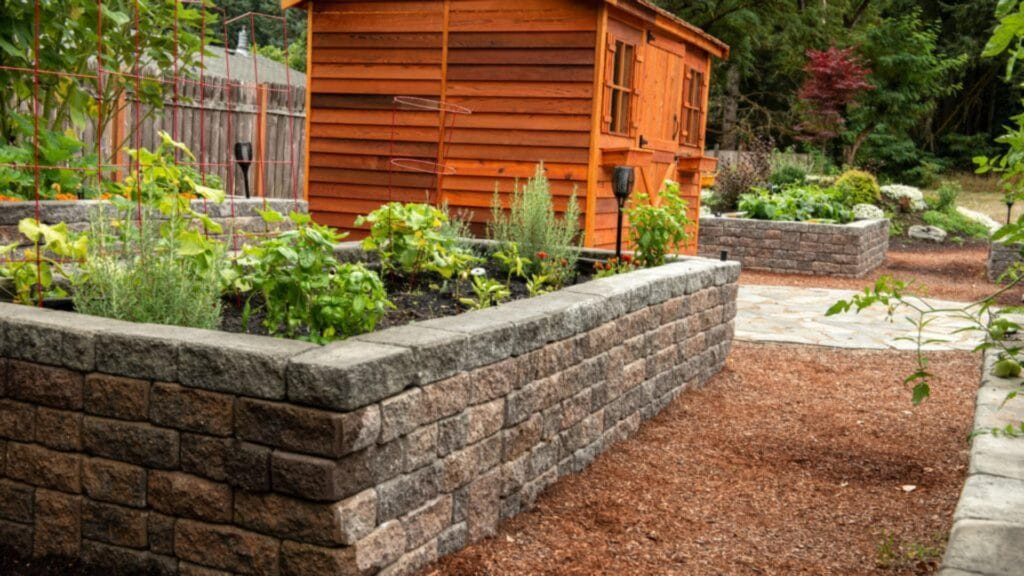
Tomatoes. Our heat is excellent for tomatoes. Raised beds warm faster than in-ground soil in spring, which tomatoes love. Start them indoors in late March, choose mid-season varieties (65–75 days), and get transplants in the ground after the mid-May frost risk passes. Sungold, Early Girl, and Siletz are reliable Interior performers; larger beefsteak types do well too given our long, hot summers.
Zucchini and summer squash. Almost aggressively productive in BC Interior heat. Direct sow after May 20 and stand back — one or two plants is usually plenty for a household.
Bush beans. Fast, heat-loving, and no staking required. Provider and Contender are dependable Zone 5 producers you can direct sow once the soil warms.
Kale and Swiss chard. Heat-tolerant, productive from late May through frost, and more forgiving of a late spring cold snap than most crops. Start them mid-April under frost cloth if needed. ‘Lacinato’ kale is a workhorse.
Garlic. Plant hardneck varieties like Rocambole in October, harvest in July. It sits in the ground over winter when the bed would otherwise be empty — one of the most efficient uses of raised-bed space you’ll find in the Interior.
Basil. Wait until night temperatures are reliably above 12°C — usually early June in Kamloops — before it goes outside. Basil sulks and blackens in the cold, but once it’s warm it thrives, especially with the heat radiating off raised-bed walls.
Root crops (carrots, beets, radishes). These are where bed depth pays off. In loose raised-bed soil, carrots grow straight and clean instead of forking through clay. Direct sow once the soil is workable; radishes are quick enough to slot between slower crops.
Peas and early greens. Cool-season crops that go in early — peas, spinach, and lettuce can be direct sown as soon as the soil can be worked in April. The catch: lettuce bolts fast in Kamloops heat, so treat it as a spring and fall crop and swap in something heat-tolerant once June arrives.
A note on what to skip in year one: sprawling crops like watermelon and pumpkin will take over a raised bed and crowd out more productive plants before you’ve figured out spacing. Save them for year two once you know your beds.
Companion Planting: Growing More in Less Space
Raised beds are compact by design, which makes what you plant next to what matter more than it would in a sprawling in-ground plot. Good companion pairings improve yields, deter pests, and help you fit more into a small footprint — but the combinations have to suit our conditions.
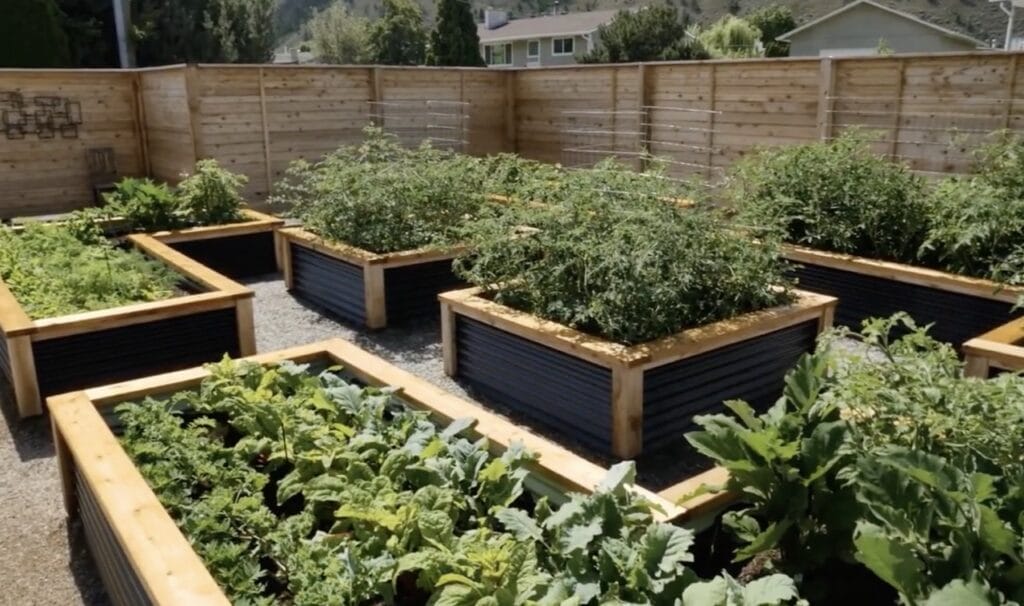
Working out what to grow together in a new raised bed is worth doing before you plant, not after. A few pairings that consistently earn their place in Kamloops beds:
- Tomatoes + basil + marigolds. Basil helps deter aphids and whiteflies (both common in our hot summers), while French marigolds around the edge suppress soil nematodes. All three want the same heat and drainage, so they share a watering schedule happily.
- Carrots + onions. Onions help mask the scent that draws carrot fly, and neither competes aggressively for root space — ideal for a tight bed.
- Lettuce under taller crops. In Kamloops, shading heat-sensitive greens under determinate tomatoes or climbing beans can extend your lettuce harvest by weeks before it bolts.
One caution specific to tight beds: avoid crowding heavy feeders together, and keep allelopathic plants like fennel out of the bed entirely — it suppresses the growth of most vegetables around it.
If you want the broader logic behind these pairings before you commit your layout, our guide to companion planting principles for the BC Interior covers the fundamentals that apply across the whole region.
Building Structure Around Your Beds
Raised beds don’t have to be all annual vegetables. Framing the growing area with permanent plantings gives the whole space year-round structure and keeps it looking intentional once the summer crops are spent. This isn’t about planting shrubs inside your beds — it’s about the borders, backdrops, and anchor plantings around them.
For that surrounding structure, hardy trees and shrubs for the surrounding beds — think Saskatoon berry, potentilla, or a columnar juniper for a windbreak — give you a durable backbone that survives Interior winters and softens the edges of a vegetable garden. A well-placed shrub border also provides afternoon shade and wind protection that your annual crops will appreciate through a Kamloops July.
A Kamloops Planting Calendar: Timing Is Everything
In a climate with a growing window this tight, when you plant matters as much as what. Get the timing wrong and you’ll either lose tender plants to a late-May frost or run out of season before your tomatoes ripen. Here’s the rhythm we’d recommend for a Kamloops raised bed.
February–March. Start warm-season crops indoors under grow lights — tomatoes, peppers, and basil especially. This 8–10 week head start is what makes the difference in a short season. Don’t wait for the seed racks to appear at the hardware store in May; that’s already late here.
April. Direct sow cold-hardy crops — peas, spinach, carrots, and radishes — as soon as the soil is workable. Keep frost cloth on hand for overnight dips. Top up your beds with a few centimetres of fresh compost before the season gets going.
Mid-May (after last frost). The main event. Transplant tomatoes, peppers, and basil once frost risk has passed. Direct sow zucchini and beans. Mulch exposed soil to hold moisture.
June–August. Water consistently, feed lightly every few weeks once plants are established, and stay ahead of pests. Deadhead and harvest regularly to keep production going. Succession-sow quick crops like beans, radishes, and greens to keep beds producing rather than sitting empty after an early harvest.
September. Harvest heavily and watch the forecast — Kamloops can see frost by mid-September. Frost cloth can buy your tomatoes a few extra weeks.
October. Pull spent plants, top up with compost, and plant next year’s garlic. Closing the bed out thoughtfully sets up an easier spring.
That rhythm — start early indoors, plant cold crops, transition to warm-season crops, succession-sow through summer, then close out — is what separates a bed that produces all season from one that fizzles by August.
Watering Raised Beds Through a Dry Interior Summer
Raised beds dry out faster than in-ground plots — they’re elevated, exposed on multiple sides, and filled with a well-draining mix. Kamloops averages only around 278 mm of precipitation a year — among the lowest of any city in BC, according to Environment and Climate Change Canada’s climate normals — so through July and August you may be watering deeply every one to two days.
Drip irrigation on a timer is the single best investment for consistent results, ideally running in the early morning to reduce evaporation. A 5–7 cm layer of mulch on the bed surface dramatically cuts moisture loss and steadies soil temperature during heat spikes — and consistent moisture is also what prevents blossom end rot in tomatoes and peppers.
One local factor to plan around: summer watering limits. Knowing which stage of Kamloops’ watering restrictions is in effect before you set your schedule keeps your beds compliant and your plants healthy — drip irrigation is usually still permitted even at higher restriction levels, but only if your system is set up for it.
Ready to Get Growing?
A raised bed garden in Kamloops is one of the most rewarding things you can do with your outdoor space — but the payoff comes from planting smart: the right crops for our heat, thoughtful companion pairings, and timing that respects our short, sharp season. Start your warm-season seeds early, get cold crops in as soon as the soil wakes up, pair your plants to work together, and keep the water consistent through the dry months.
If you’d like help choosing what will actually perform on your specific site — or sourcing quality transplants, compost, and hardy plants suited to the BC Interior — stop by our Kamloops Garden Centre and talk to our team. We’d rather help you choose right the first time than watch you replace plants that were never suited to our climate. Or contact Lyons Landscaping to talk through your garden project from the ground up.