Japanese Beetle in Kamloops Gardens: How to Spot It, Stop It, and Protect Your Plants
Key Takeaways
- Japanese beetle (Popillia japonica) has been steadily advancing westward and is now a credible threat to BC Interior gardens, including the Kamloops region.
- The beetle attacks over 300 plant species — roses, linden trees, grapes, and turf grass are among the most vulnerable in our climate.
- Early identification is everything: catching adults in July and August, or grubs in late summer, gives you the best control options.
- BC regulations restrict certain pesticides used elsewhere in North America — knowing what’s legal and effective here matters.
- A combination of physical removal, targeted biological controls, and smart plant selection gives Kamloops gardeners the best long-term defence.
Introduction
If you’ve been tending your Kamloops garden for any length of time, you’re already used to dealing with the usual cast of troublemakers — aphids on your roses, cutworms in the veggie beds, the odd case of powdery mildew during a dry August. But there’s a new pest that BC Interior gardeners need to start taking seriously, and it’s not something you can just shrug off with a soap spray and a bit of luck. The Japanese beetle (Popillia japonica) has been creeping steadily westward across Canada, and the question for Kamloops gardens is no longer if it arrives — it’s when, and whether you’re ready.
We’ve been watching this pest’s progression closely, and the spread into BC is not hypothetical. Established populations have been confirmed in the Lower Mainland, and surveillance programs are actively monitoring interior regions. For gardeners growing roses, grapes, linden trees, or maintaining a healthy lawn, this is the time to get informed — not after you find your plants skeletonized in mid-July. Here’s what you need to know, specific to conditions right here in the BC Interior.
What Japanese Beetle Actually Looks Like (and Why It’s Easy to Miss at First)
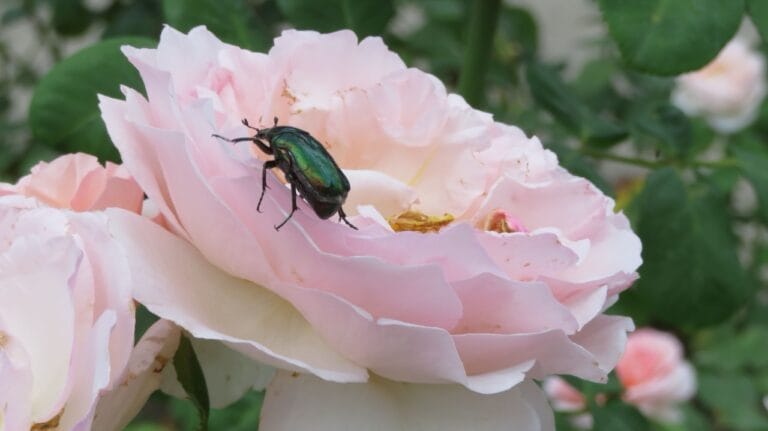
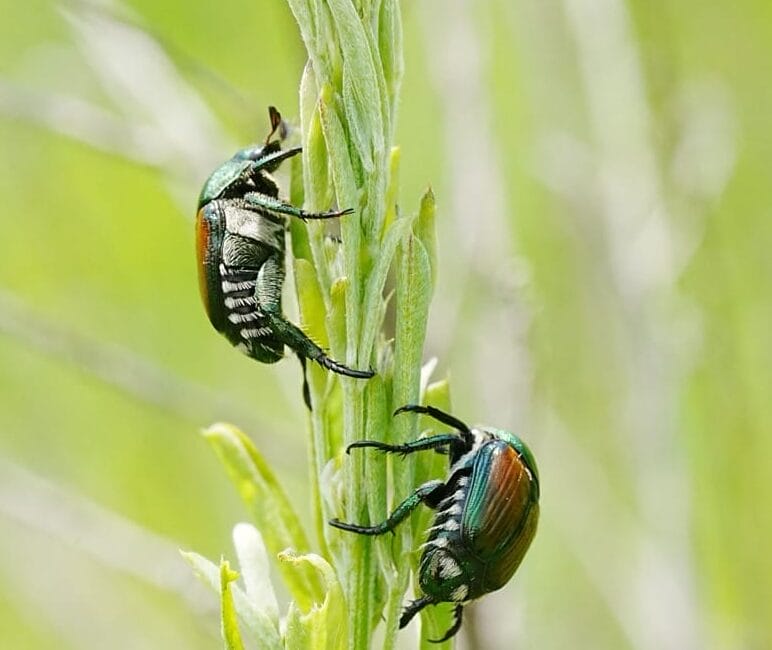
The adult Japanese beetle is, genuinely, a good-looking insect. It’s about 15mm long, with a metallic green head and thorax and copper-brown wing covers. Along each side of its abdomen you’ll see a row of small white tufts of hair — that’s your clearest ID feature and what sets it apart from our native bronze beetles and other look-alikes. In full sun on a rose bush in late morning, it almost looks decorative. Don’t be fooled.
Adults emerge from the soil in late June through July and feed aggressively through August. They skeletonize leaves — eating the soft tissue between the veins and leaving a lacy, brown husk behind. On roses, that damage is heartbreaking fast. On grapes, it can compromise an entire season’s fruit. They also release aggregation pheromones, which means one beetle quickly becomes twenty. If you see the characteristic lacy leaf damage on your linden or Virginia creeper, flip the leaf and look closely before assuming it’s something else.
The grub stage is underground and less visible, but equally damaging. White C-shaped larvae feed on grass roots from late summer through fall and again in spring, causing brown patches in your lawn that pull up like a loose carpet. In Kamloops, where we’re already pushing turf through hot, dry summers, grub damage can look deceptively similar to drought stress — which is why identification timing matters so much.
Which Kamloops Plants Are Most at Risk — and Which Are Worth Protecting First
Japanese beetle isn’t picky, but it does have preferences. In our experience working across Kamloops residential and commercial properties, the plants that will take the hardest hit in our region are the ones many of us already love to grow:
- Roses — absolutely a primary target. If you’ve got hybrid teas or shrub roses in a sunny border, expect heavy feeding pressure during peak adult season.
- Linden trees (Tilia spp.) — widely planted as boulevard and shade trees in Kamloops. Japanese beetles are strongly attracted to linden and can defoliate branches quickly.
- Grapes and Virginia creeper — both highly susceptible, which matters for Kamloops properties with ornamental vines or anyone growing table grapes in the hot Interior climate.
- Turf grass — lawns across Kamloops are already under stress from summer heat and water restrictions. Grub feeding on roots underneath compounds that stress significantly.
- Birch, elm, and apple trees — also listed as preferred hosts. If you’ve got an older ornamental birch in a sunny spot, it’s worth monitoring.
On the flip side, plants like boxwood, euonymus, forsythia, and most conifers are generally not preferred by Japanese beetle. If you’re replanting or expanding beds, that’s worth factoring in — especially on commercial properties where mass plantings of a single susceptible species could create a real vulnerability. That’s why choosing resilient species less prone to damage is one of the smartest long-term defences — building beds around hardy, Interior-adapted plants the beetle tends to ignore.
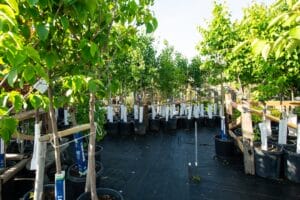
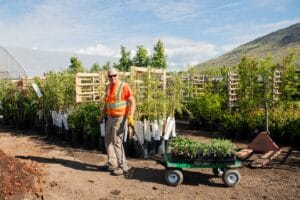
Our Kamloops Garden Centre carries a strong selection of hardy trees and shrubs suited to BC Interior conditions, and we can help you choose species that are both beautiful and less attractive to this pest.
What You Can Actually Do: Practical Control for BC Interior Conditions
Here’s where we’ll give you a straight answer rather than a list of vague suggestions: the most effective approach in BC right now is a layered one, and it starts with physical controls because many of the chemical options legal in the US or Ontario simply aren’t registered for use in BC.
Hand-picking adults is genuinely effective on a small scale, and it’s not as tedious as it sounds if you’re consistent. Early morning, when beetles are sluggish from cooler temperatures, drop them into a bucket of soapy water. Do this daily during peak season (July–August). It won’t eliminate the problem, but it reduces the pheromone signal that attracts more beetles to your plants.
Avoid Japanese beetle traps — we know they’re sold everywhere, but the research is clear: bag traps attract far more beetles to your yard than they catch. You end up concentrating the problem. Unless you’re placing traps well away from susceptible plants as part of a monitoring program, skip them.
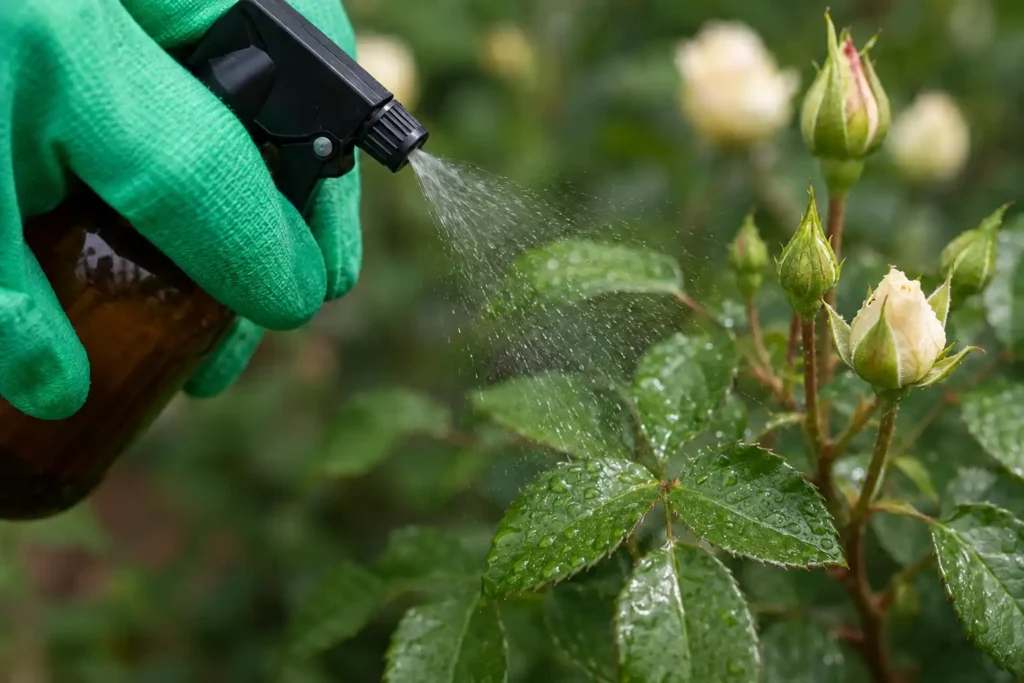
Neem oil (specifically products containing azadirachtin) is registered for use in Canada and provides a reasonable deterrent when applied consistently to foliage before and during adult feeding season. It won’t kill beetles outright but disrupts feeding and is safe for pollinators when applied in the evening after bees are done foraging.
For grub control in lawns, Bacillus thuringiensis var. galleriae (Btg) and entomopathogenic nematodes (specifically Heterorhabditis bacteriophora) are the biological options with real evidence behind them. Nematode applications need moist soil and work best in late August to early September in our climate — timing matters more here than in wetter coastal regions because our Interior soils dry out fast. Water your lawn well before and after application. As a complementary layer, some gardeners use companion planting as a natural pest deterrent, pairing vulnerable plants with strongly scented species that can help mask them from feeding insects.
The Canadian Food Inspection Agency (CFIA) has active surveillance and regulatory information on Japanese beetle in Canada — it’s worth bookmarking if you want to stay current on regulated zones and movement restrictions that may affect bringing plants or soil across certain boundaries.
A Real Scenario: Why Early Action on Turf Damage Matters in Kamloops
We had a residential client in Kamloops with a large front lawn — a mix of Kentucky bluegrass and fine fescue — that developed irregular brown patches in late August a few seasons back. The instinct, understandably, was to increase irrigation. The lawn looks dry, it’s been a hot summer, so you water more. But when we pulled back a section of turf, we found significant white grub populations at the root zone. The damage wasn’t drought. It was subsurface feeding, and by the time it was visible above ground, the root system was already compromised across a wide area.
The lesson here is important for Kamloops specifically: our dry Interior summers mask grub damage brilliantly. You can be looking at a grub problem and diagnosing drought stress for weeks before you investigate further. It’s also a two-way street — plant stress and pest vulnerability under drought go hand in hand, since heat-stressed, under-watered plants are less able to shrug off feeding damage in the first place. If your lawn isn’t recovering despite adequate watering in late summer, get on your hands and knees and check. Peel back a 30cm square of turf and count larvae. More than five to ten grubs per 30cm² is generally considered a threshold worth treating.
Repairing grub-damaged turf in Kamloops also isn’t as simple as overseeding. Our clay-heavy soils compact quickly, and bare patches on a slope can erode fast before new grass establishes. This is where proper soil prep and the right seed mix for our climate makes a real difference. If you’re dealing with significant lawn damage and want a second set of eyes on it, our landscape maintenance team can assess what you’re working with and recommend a practical recovery plan.
Staying Ahead of It: Monitoring, Reporting, and What BC Gardeners Should Do Now
The most useful thing you can do right now — before you’ve confirmed Japanese beetle on your property — is learn to identify it and start monitoring. Download the iNaturalist app and log any sightings. BC’s provincial government and the CFIA rely on public reports to track the spread of invasive species, and your observation in Kamloops genuinely contributes to the surveillance picture. Early detection in a new region gives authorities — and fellow gardeners — a meaningful head start.
Beyond monitoring, there are practical steps worth taking this season:
- Inspect susceptible plants (roses, lindens, grapes) weekly from late June onward.
- If you’re ordering plants or soil from areas with known Japanese beetle populations, check CFIA regulations on movement — there are restrictions in place for good reason.
- Consider your lawn health proactively: a dense, well-nourished turf tolerates some grub feeding without catastrophic damage. Core aeration, topdressing with quality compost, and appropriate fertilization in fall all help build that resilience.
- Talk to your neighbours. Japanese beetle spreads property to property, and a coordinated block-level approach to monitoring and control is significantly more effective than going it alone.
For more on what a full property maintenance plan looks like — including lawn care and seasonal pest monitoring — take a look at our post on what’s included in property maintenance. It covers more than you might expect.
If you’re also thinking about updating your garden plantings to reduce vulnerability — swapping out susceptible species, improving soil structure, or simply getting a professional eye on your property — our garden centre in Kamloops is a good place to start that conversation. We carry hardy, Interior-appropriate species and our team knows what grows well — and what holds up — in our specific conditions.
Conclusion
Japanese beetle isn’t here in force across Kamloops yet — but it’s not far off, and gardeners who learn to identify it now will be in a much stronger position when it arrives in numbers. The BC Interior’s hot summers and dry conditions create a slightly different pest management context than the wetter parts of the country, and generic advice from Ontario or US sources won’t always translate cleanly to what you’re dealing with here.
Know your plants, monitor them early, choose controls that are registered for use in Canada and suitable for our climate, and investigate any brown patches that appear on your lawn in late summer. A little attention now can save you a lot of replanting later.
If you want help assessing your property’s vulnerability, choosing resistant plants, or building a maintenance plan that keeps your garden healthy through whatever pest pressure comes our way, reach out to the team at Lyons Landscaping. We’ve been working across Kamloops and the BC Interior for years, and we’re always happy to take a look at what you’re working with. Contact us today to get started.