Key Takeaways
- Hardscaping and softscaping aren’t competing forces — they work best when designed together from the start, especially in BC’s Interior climate.
- In Kamloops and the surrounding Interior, the freeze-thaw cycle and clay-heavy soils make material selection and drainage planning critical to long-term hardscape performance.
- Too much hardscaping creates heat, runoff, and a sterile feel; too much softscaping without structure leads to erosion, maintenance overload, and short-lived results.
- A thoughtful ratio — typically 60/40 or 70/30 softscape to hardscape — works well for most residential properties in the BC Interior.
- Starting with a professional landscape design saves money and prevents costly do-overs that we see far too often.
Hardscaping vs. Softscaping: It’s Not a Competition — It’s a Collaboration
If you’ve ever stood in your backyard wondering why it doesn’t feel quite right — maybe it looks bare and boxy, or on the flip side, wild and unruly — there’s a good chance the hardscaping and softscaping are out of balance. These two elements are the foundation of every well-designed outdoor space, and getting hardscaping services in Kamloops BC right means understanding how they complement each other, not compete.
At Lyons Landscaping, we’ve worked on hundreds of residential and commercial properties across the BC Interior — from sun-baked hillside lots in Kamloops to waterfront estates in the South Okanagan. One thing we’ve learned is that the Interior’s unique climate doesn’t forgive poor planning. Summers are hot and dry. Winters bring hard freezes. The soils can swing from rocky and sandy to dense clay within the same yard. If you don’t design with those realities in mind, both your hardscaping and your plants will struggle. Let’s break this down properly.
What’s the Difference? Hardscaping vs. Softscaping Defined
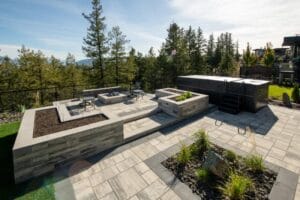
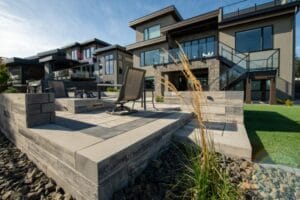
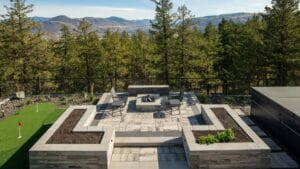
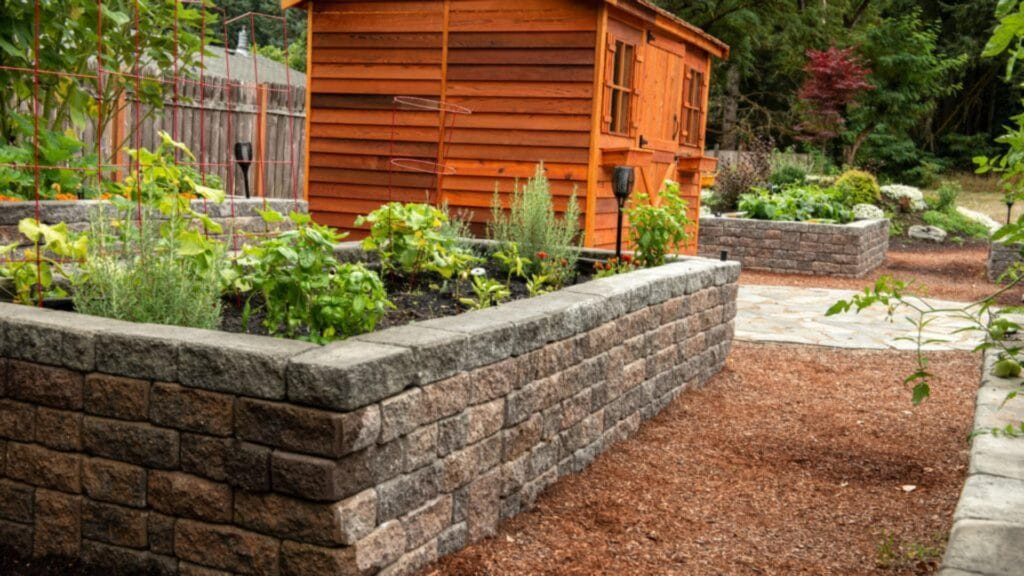
Let’s keep it simple. Hardscaping refers to all the non-living, structural elements of your landscape — patios, retaining walls, walkways, driveways, pergolas, fire pits, water features, and edging. These are the bones of your outdoor space. They define movement, create usable areas, and add permanence.
Softscaping is everything living — trees, shrubs, perennials, ornamental grasses, ground covers, and lawn. These are the layers of colour, texture, and life that make a yard feel like a place rather than just a surface.
Here’s the honest truth: neither one is more important than the other. We’ve seen gorgeous stone patios that feel cold and unwelcoming because there’s zero greenery softening the edges. We’ve also seen beautifully planted yards that turn into a muddy, eroded mess every spring because there’s no structure holding it together. The magic is in the relationship between the two.
For properties across the BC Interior, that relationship is especially important to think through early. Unlike coastal BC, where mild temperatures give you more margin for error, Kamloops and the surrounding region will stress-test your landscape design every single year.
Why the BC Interior Changes Everything About This Equation
Here’s something we say to clients regularly: designing for Kamloops is not the same as designing for Vancouver. The Interior has its own rulebook, and ignoring it leads to expensive mistakes.
The freeze-thaw problem. Kamloops can see overnight temperatures drop well below -10°C in January, then climb above freezing by afternoon. That cycle is brutal on hardscaping materials. Poured concrete, for example, is highly susceptible to cracking under repeated freeze-thaw stress. We generally favour interlock pavers, natural flagstone, or properly sealed exposed aggregate for patios and walkways because they handle movement better. If you’re being quoted on a plain concrete patio for a Kamloops property and nobody mentions freeze-thaw, ask questions.
Clay soil and drainage. A lot of properties in the Kamloops area sit on compacted clay. Clay doesn’t drain well, and water pooling beneath hardscape elements accelerates heaving and shifting. Before we lay any base material, we assess drainage thoroughly — and we’ll often recommend a drainage layer or channel to redirect water away from foundations and hardscape structures. This isn’t optional; it’s how you protect your investment.
Heat and sun exposure. The Interior averages over 2,000 hours of sunshine per year. That’s great for outdoor living, but it means dark-coloured hardscaping absorbs a lot of heat. We’ve been on patios in July that are genuinely unpleasant to stand on barefoot. Lighter stone tones and strategic softscape shading — think a well-placed Gleditsia triacanthos (honey locust) or a pergola with climbing vines — make a real difference in usability.
Drought-tolerant softscaping isn’t optional. Stage 3 water restrictions aren’t uncommon in Kamloops summers. Designing softscape elements around drought-tolerant, low-water species — Calamagrostis acutiflora (Karl Foerster grass), Penstemon, Salvia nemorosa, or native Arctostaphylos uva-ursi (kinnikinnick) — isn’t just environmentally responsible. It’s practical. Pairing those plants with a properly designed irrigation system keeps your landscape alive and attractive even in dry years. You can learn more about water-wise landscaping principles through BC’s drought information resources, which outline the water use regulations that can affect landscape irrigation across the province.
Getting the Ratio Right: How Much Hardscaping Is Too Much?
This is one of the most common questions we get, and there’s no single perfect answer — but there are useful guidelines. For a typical residential property in the BC Interior, we generally recommend that softscaping cover 60–70% of the landscape area, with hardscaping making up the remaining 30–40%. That balance gives you enough structure to be functional and low-maintenance, while keeping enough living material to moderate temperature, manage runoff, and make the space feel inviting.
Where homeowners get into trouble is when they start treating hardscaping as the “easy” option. We’ve seen properties where the owners have essentially paved over their entire backyard to minimize maintenance. Here’s the problem: that approach concentrates stormwater runoff, increases heat absorption, and often violates local impervious surface guidelines. The City of Kamloops stormwater management guidelines exist for good reason — urban runoff is a real issue, and a heavily hardscaped property contributes to it directly.
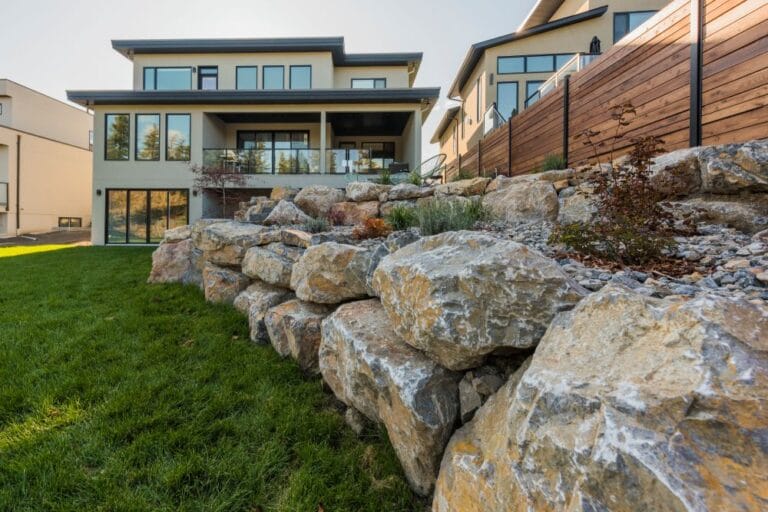
On the flip side, if you have a sloped lot in Barnhartvale or Batchelor Heights with no retaining walls, no edging, and nothing but lawn and shrubs, you’re fighting erosion every spring when the snowmelt arrives. Hard structure — even just a few well-placed boulders or a timber retaining wall — anchors the softscape and protects your topsoil.
The real goal is functional harmony. Hardscaping defines the space. Softscaping fills it with life. Neither one works at its best without the other.
A Real-World Scenario: What We’ve Seen Work in the Interior
A few seasons ago, we worked on a residential property in the South Thompson area — a newer build on a sloped lot with compacted fill soil, not much topsoil, and zero landscaping. The homeowners wanted something beautiful, low-maintenance, and usable for their family. They also wanted a fire pit area and a defined entertaining space.
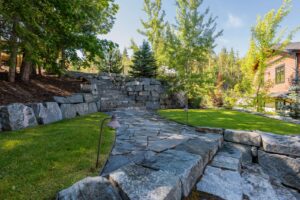
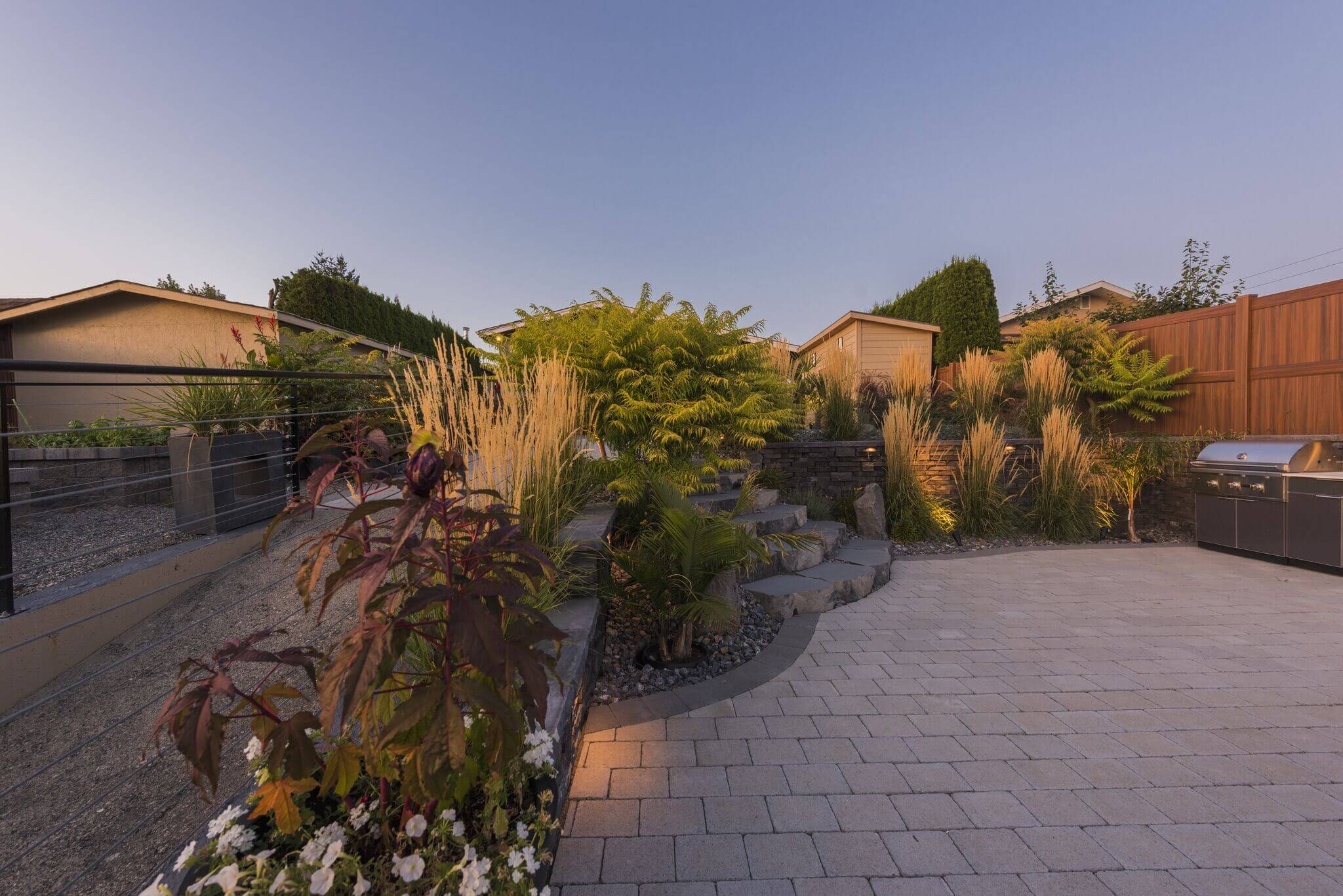
We started with the hardscaping framework: a mid-sized natural flagstone patio off the back of the house, a dry-stack boulder retaining wall to level the slope and create two distinct lawn tiers, a gravel pathway connecting the patio to a lower fire pit area, and concrete edging to define all the planting beds. All drainage was routed away from the foundation and toward a rain garden at the lower edge of the property.
Then we layered in the softscaping. We used Mugo pine and Karl Foerster grass in the upper terrace beds for year-round structure, Penstemon and Salvia for colour with minimal water needs, and a row of Caragana arborescens (Siberian peashrub) along the property edge as a tough, wind-tolerant privacy screen. We seeded the lawn tiers with a drought-tolerant turf blend suited to Interior BC’s dry summers.
The result? A yard that’s genuinely usable from May through October, requires minimal irrigation, handles the annual freeze-thaw without cracking or shifting, and still looks like it belongs in a magazine. That’s what a balanced approach to hardscaping and softscaping achieves.
If you’re not sure where to start on your own property, our post on what a landscape designer does is a great place to get oriented before making any decisions.
How to Plan Your Hardscape and Softscape Together (Not Separately)
The single biggest mistake we see — and this applies to both residential homeowners and commercial property managers — is planning hardscaping and softscaping in isolation. Someone hires a contractor to build a patio, then figures out the planting later. Or they plant a mature tree before realizing the root system will eventually undermine the walkway beside it. These are avoidable problems.
The right approach is an integrated design process. That means knowing upfront where your structural elements will sit, how water will drain, which areas get full afternoon sun, and what your maintenance capacity actually is before a single shovel goes in the ground. Our landscape services are built around exactly this kind of whole-property thinking — design, build, and maintain under one roof, so nothing falls through the cracks between trades.
Here’s a quick framework for thinking about the balance on your own property:
- Start with function: What do you need the space to do? Entertaining, play, privacy, curb appeal? Let that drive the hardscape layout.
- Plan for drainage first: In the BC Interior, water management is never an afterthought. It shapes everything.
- Choose hardscape materials for your climate: Interlock, flagstone, and textured concrete perform better than plain poured concrete in freeze-thaw conditions.
- Select softscape plants for Interior conditions: Native species and drought-tolerant cultivars aren’t a compromise — they’re genuinely the best choice for this region.
- Think about the view in January: A good landscape looks intentional year-round, not just in July. Evergreen structure plants and interesting bark textures matter in winter.
If you’re hiring a landscaping company for the first time, our post on 10 questions to ask before hiring a landscaper will help you make sure you’re working with someone who thinks this way from the start.
Conclusion: Build It Right the First Time
Hardscaping and softscaping aren’t two separate projects — they’re one landscape, designed to work together. In the BC Interior, where the climate is unforgiving and the soils are demanding, getting that balance right from the start isn’t just about aesthetics. It’s about durability, water management, and making sure your outdoor space actually holds up over the long term.
We’ve built landscapes across Kamloops, Kelowna, and communities throughout the Interior for years, and the properties that age best are always the ones where someone thought carefully about both the structure and the living elements before the first stone was laid. That’s not an accident — it’s intentional design.
Whether you’re starting from scratch on a new build, renovating an outdated backyard, or managing a commercial property that needs a serious upgrade, Lyons Landscaping has the expertise to get it right. Contact Lyons Landscaping today for a free estimate and let’s talk about what the right balance looks like for your property.