Companion Planting in Kamloops: What to Grow Together for Bigger Harvests in the BC Interior
Key Takeaways
- Companion planting in Kamloops requires accounting for our short growing season, alkaline soils, and hot, dry Interior summers — generic advice from wetter climates often doesn’t apply here.
- Classic pairings like tomatoes + basil, beans + corn + squash (Three Sisters), and carrots + onions work especially well in the BC Interior when timed correctly around our last frost date (typically mid-May).
- Marigolds, nasturtiums, and dill are your best friends for pest management in an Interior garden — they do real work, not just look pretty.
- Soil preparation matters as much as plant selection. Kamloops’ sandy-loam and alkaline conditions mean you’ll need to amend before you plant for companion strategies to pay off.
- A well-planned companion planting layout can reduce your watering needs — a big win when you’re gardening through a Kamloops July.
If you’ve ever stared at a seed catalogue in February wondering why your tomatoes look half-dead by August despite doing everything “right,” you’re not alone. Gardening in Kamloops has its own rules. We get brutal summer heat, alkaline soils that would baffle a gardener from the Fraser Valley, late spring frosts that can still bite you in May, and a dry season that makes overhead watering feel like pouring water on a skillet. Companion planting — strategically growing certain plants together — is one of the most effective tools you have for working with these conditions instead of against them.
This isn’t a generic “plant tomatoes with basil” listicle. We’re going to talk specifically about what works here, in the BC Interior, with our soils, our seasons, and our particular brand of summer. We’ve helped dozens of Kamloops homeowners build productive kitchen gardens through our Kamloops Garden Centre, and the questions we hear most often come down to one thing: what goes where, and why. Let’s dig in.
Why Companion Planting Works Differently in the BC Interior
Most companion planting advice you’ll find online was written for gardeners in mild, moderate climates — coastal BC, Ontario, the Pacific Northwest. Kamloops is none of those things. We’re sitting in a semi-arid rain shadow with average summer highs pushing 35°C, soils that tend toward sandy-loam with a naturally high pH (often between 7.5 and 8.0), and a growing season that’s shorter than it looks on paper once you factor in late frost risk.
That context matters enormously for companion planting, because many of the benefits people associate with companion planting — ground cover, moisture retention, nitrogen fixation — are especially valuable here, but only when the pairings are chosen with Interior conditions in mind.
If you want the wider context first, our guide to the broader BC Interior companion planting principles covers the fundamentals that apply across the whole region, not just Kamloops.
For example, the classic advice to grow lettuce under taller plants for shade is smart anywhere. But in Kamloops, it’s practically essential. Unshaded lettuce bolts by mid-June. A row of determinate tomatoes or tall climbing beans acting as a sunbreak for your lettuce can extend your harvest by three to four weeks. That’s a meaningful difference when your growing window is already tight.
Nitrogen fixation from legumes also matters more here because our native soils are often low in organic matter and biological activity compared to richer coastal soils. Planting beans alongside heavy feeders like corn or brassicas isn’t just a nice ecological touch — it’s a practical amendment strategy. According to Agriculture and Agri-Food Canada, legume-based nitrogen fixation can contribute meaningfully to available soil nitrogen, reducing the need for synthetic inputs. In a home garden with sandy soil, that’s real value.
The Best Companion Planting Combinations for Kamloops Gardens
Let’s get specific. Here are the pairings we consistently recommend for BC Interior gardens, with reasons that go beyond the generic.
Tomatoes + Basil + Marigolds
This trio is famous for good reason, but it earns its reputation here. Kamloops summers are hot enough that tomatoes thrive — but aphids, spider mites, and whiteflies thrive right alongside them. Basil is a known repellent for aphids and whiteflies, and in our dry heat it bolts to flower quickly, which also attracts beneficial predatory insects. Surround the bed with French marigolds (Tagetes patula) and you’ve added nematode suppression at the root level. Plant both at transplant time in late May, once night temperatures are reliably above 10°C.
Three Sisters: Corn + Beans + Squash
This Indigenous planting system was developed for conditions not unlike the Southern Interior — hot summers, variable rainfall, the need to maximize yield from limited space. Corn provides the vertical structure for beans to climb. Beans fix nitrogen that feeds the corn and squash. Squash spreads wide along the ground, shading out weeds and locking in soil moisture. In Kamloops’ dry summers, that ground-cover function is invaluable. We recommend starting corn and squash indoors by late April and direct-seeding beans around transplanted corn once it’s knee-high, typically late June.
Carrots + Onions (or Chives)
Carrot fly is less of a problem in the Interior than in wetter regions, but onion fly and thrips can still hit alliums. More relevantly, onions and chives are thought to confuse carrot fly by masking the scent of carrot foliage, while carrots may do the same for onion fly. They’re also both shallow-to-mid-rooted crops that don’t compete aggressively, making them natural neighbours in a raised bed. Bonus: chives flower beautifully and attract pollinators right when your tomatoes need them most.
Brassicas + Dill or Nasturtiums
Cabbage, kale, broccoli, and kohlrabi all attract cabbage worms and cabbage loopers — a persistent issue in BC Interior gardens. Dill attracts parasitic wasps that lay eggs in caterpillar larvae (yes, it’s as effective as it sounds). Nasturtiums act as a trap crop for aphids, drawing them away from your brassicas and onto a plant you’re happy to sacrifice. The catch: don’t let nasturtiums get too established before your brassicas are planted, or they’ll compete for the same soil moisture you’re trying to conserve.
Cucumbers + Beans + Sunflowers
Cucumbers love heat but need consistent moisture — something that’s genuinely hard to deliver in a Kamloops August. Planting them alongside beans gives them some lateral shade on their sunniest side, reducing evaporation from the soil surface. Sunflowers act as a windbreak (our afternoon winds can be brutal on climbing cucumbers), and their deep taproots help break up our compacted sub-soils. This trio works especially well along a south-facing fence. Since good pairings cut down on evaporation, they pair well with knowing Kamloops’ current watering restrictions before you set your irrigation schedule.
What to Avoid Planting Together in a Kamloops Garden
Companion planting is as much about what not to do as it is about what to pair. In the Interior, a few combinations cause specific problems worth flagging.
Fennel + almost everything. Fennel is allelopathic — it releases compounds from its roots that inhibit the growth of most vegetables. It’s not welcome near tomatoes, beans, peppers, or brassicas. Give it its own corner of the garden or leave it out entirely if space is tight.
Onions + beans or peas. Alliums suppress legume growth. If you’re relying on beans for nitrogen fixation alongside corn or squash, keep your onions well away from that bed.
Brassicas + brassicas (same bed, year after year). This isn’t a companion planting issue per se, but it’s the mistake we see most often. Clubroot is present in BC soils and builds up fast in brassica monocultures. Rotating brassicas out of the same bed every two to three years — and not planting them where other brassicas just grew — is non-negotiable in our region. BC’s Ministry of Agriculture has clear guidance on clubroot management and it’s worth reading before you plan your layout.
Tomatoes + corn (in small spaces). Both are heavy feeders and both are attractive to the same pest: the tomato/corn fruitworm. In a large garden you can isolate them. In a raised bed or small plot, don’t tempt fate.
Timing Companion Planting Around Kamloops’ Frost Dates and Soil Conditions
Here’s where a lot of well-meaning gardeners get tripped up. Kamloops’ average last frost date is around May 10–15, but we see late frosts into the third week of May in cooler years. If you’re following a planting calendar written for Vancouver or the Okanagan, you may be transplanting two weeks too early. That matters for companion planting because timing your pairs correctly is part of what makes them effective.
Our general Interior timeline looks like this:
- Early April: Start tomatoes, peppers, basil, and squash indoors. Direct sow peas, carrots, onion sets, and spinach outside once soil is workable (usually early-to-mid April in Kamloops proper).
- Late April: Start corn and cucumbers indoors. Transplant brassica starts if you have row cover ready for cold snaps.
- Mid-May (post-frost): Transplant tomatoes, peppers, basil, and squash. Direct sow beans. Get your companion pairings established together from the start.
- Late May to early June: Transplant cucumbers and corn. Sow nasturtiums directly around brassicas and squash.
One thing we’ve learned from working with Kamloops gardeners specifically: amend your soil before you plant, not after. Our alkaline, low-organic-matter soils need compost and a balanced organic fertilizer worked in before companion planting can do its job. A companion planting system built on depleted soil won’t perform the way you expect, no matter how well you’ve chosen your pairs. We carry quality soil amendments, compost, and mulch at our Kamloops Garden Centre — it’s worth stopping in before the season gets away from you.
A Real Kamloops Garden Scenario: What We’ve Seen Work
A few seasons back, we worked with a homeowner in Brocklehurst who had a south-facing backyard — ideal sun exposure, but almost no shade relief and soil that was somewhere between concrete and talcum powder by mid-July. She’d tried growing tomatoes and cucumbers the previous year with disappointing results: cracked tomatoes, bitter cucumbers, bolted lettuce by June 15th.
We helped her redesign her raised beds with companion planting as a core strategy. Along the north edge of each bed, we planted sunflowers and indeterminate tomatoes to cast afternoon shadow on the centre rows. Basil went in between the tomatoes. Cucumbers climbed a wire trellis along the fence with beans sown at the base. Nasturtiums bordered the entire setup along the south edge as a sacrificial aphid lure. French marigolds went in every third gap.
The result? Her cucumbers were productive through August — something she hadn’t managed before. The lettuce planted under the tomato canopy lasted until early July. And the aphid pressure that had devastated her plants the year before was noticeably lighter, with the nasturtiums taking the brunt of it just as intended.
Was it a perfect system? No. The squash she’d added got a bit aggressive and needed trimming. But the core pairings did exactly what companion planting is supposed to do: they created a small ecosystem where each plant helped its neighbours cope with our particular conditions. That’s the whole point.
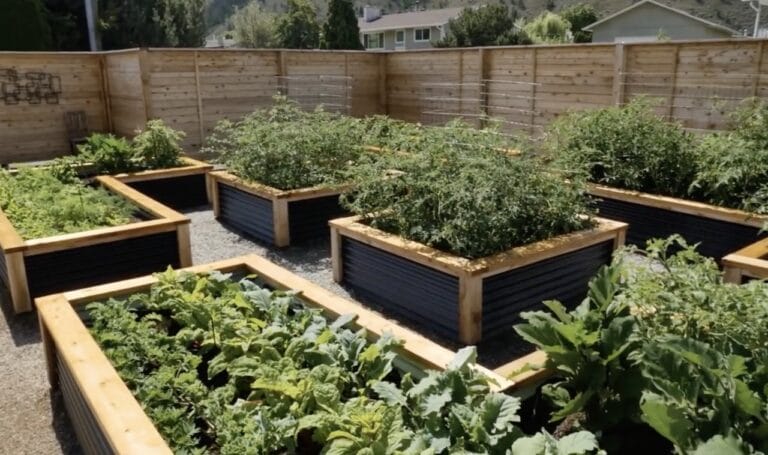
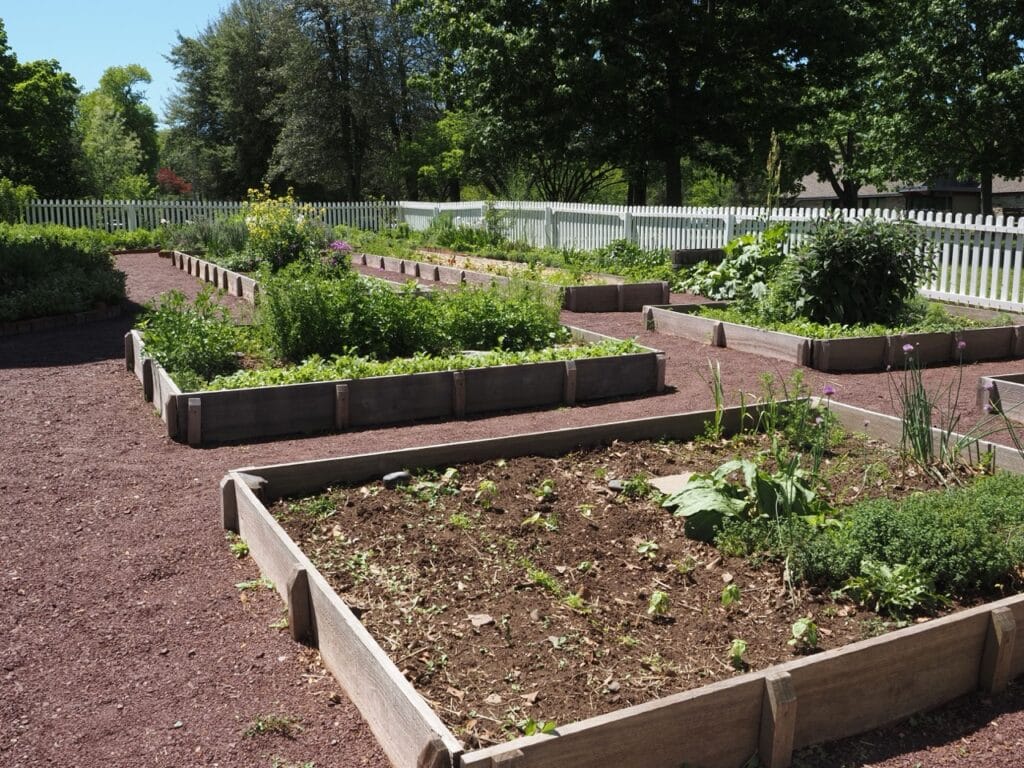
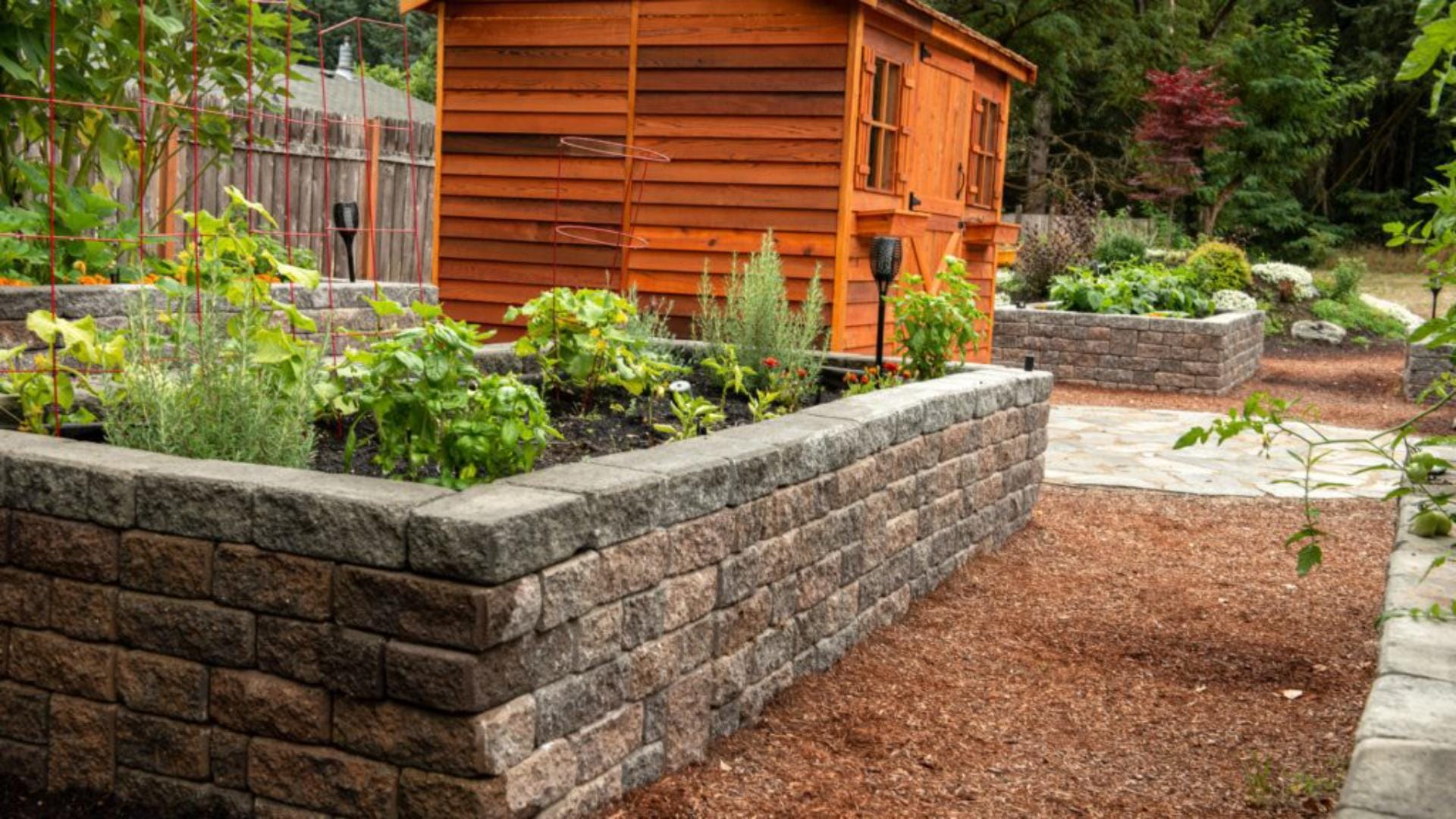
If you’re starting from scratch with a new garden layout, it’s worth reading up on what a landscape designer can help you plan — even a kitchen garden benefits from intentional design. And if you’re building raised beds as part of a broader outdoor project, our residential landscaping team can help you integrate growing space into a yard that actually functions well. If you’re growing in raised beds specifically, what to grow in a raised bed in Kamloops comes with its own spacing and timing considerations worth planning for.
Conclusion: Plant Smarter, Not Harder
Companion planting isn’t magic, and anyone who tells you it’ll solve all your garden problems is overselling it. But done thoughtfully — with real attention to Kamloops’ climate, soil, and timing — it can meaningfully reduce your pest pressure, improve your soil over time, cut down on watering frequency, and extend your harvests on both ends of the season. That’s a lot of upside for something that mainly just requires you to think carefully about what goes where.
Start small. Pick one or two companion pairs this season, get them timed right, and see what happens. The Three Sisters in a single raised bed. Tomatoes, basil, and marigolds in a cluster. Nasturtiums around your brassicas. Let the garden teach you before you redesign the whole thing.
And if you want to talk through plant selection, soil prep, or what’s actually in stock for the season, come find us at the Lyons Landscaping Garden Centre in Kamloops. We know this region, we know what grows here, and we’re happy to help you build a garden that works with the BC Interior instead of fighting it. Visit our Garden Centre page or give us a call — we’d love to help you get the most out of your growing season.