Key Takeaways
- Companion planting in a BC Interior garden requires plant combinations that tolerate drought, intense summer heat, and late spring frosts — generic advice from wetter climates often falls flat here.
- The Three Sisters combination (corn, beans, squash) thrives in the Okanagan and Thompson Valley but needs a frost-free window of at least 100 days — know your microclimate before you plant.
- Marigolds are your single best all-round companion in the BC Interior — they deter nematodes, repel aphids, and handle the heat without complaint.
- Avoid planting fennel near almost everything — it’s one of the most commonly misused companion plants we see in Kamloops-area gardens.
- Clay-heavy soils common in the Thompson Valley benefit enormously from deep-rooted companions like comfrey or daikon radish to break up compaction naturally.
Introduction: Why Generic Companion Planting Advice Doesn’t Cut It in the BC Interior
If you’ve ever Googled “companion planting” and tried to apply what you found to your Kamloops or Kelowna garden, you’ll know the frustration. A lot of that advice assumes you’re gardening in a temperate, rain-kissed climate with mild summers and forgiving soil. The BC Interior is something else entirely. A companion planting BC Interior garden strategy has to account for summer temperatures that routinely hit 35–40°C, irrigation-dependent growing seasons, soil that can swing between silty clay and sandy gravel depending on which side of the hill you’re on, and a last frost date that can catch you off guard well into May at higher elevations around Kamloops.
We’ve helped hundreds of homeowners and acreage clients across the Thompson-Okanagan region plan gardens that actually perform — not just survive. The combinations that work here are specific, and some of the classic companion planting pairings you’ll read about in general gardening books are genuinely counter-productive in our conditions. Let’s get into what actually works, what to avoid, and why the BC Interior deserves its own companion planting playbook.
Understanding Your BC Interior Growing Conditions First
Before you plant a single seed, you need to be honest about what you’re working with. Kamloops sits in a semi-arid climate zone — USDA hardiness zone 6b to 7a depending on your specific location and elevation. Kelowna runs slightly warmer and benefits from the moderating influence of Okanagan Lake, putting much of it in zone 7a to 7b. But both cities share a defining challenge: hot, dry summers with most annual precipitation falling outside the growing season.
This matters enormously for companion planting because moisture competition between plants is a real issue here. In a well-watered coastal garden, you can pack plants in tight and everyone gets along. In a Kamloops backyard running on drip irrigation, pairing two deep-rooted, thirsty plants right next to each other without a plan is asking for trouble.
Soil type is the other big variable. A lot of the Thompson Valley has heavy clay that drains poorly in spring and bakes hard by July. The Okanagan tends toward sandier, well-drained soils — excellent for lavender, heat-loving herbs, and stone fruits, but challenging for water-hungry vegetables without regular amendment. Knowing your soil before you plan your companion combinations means the difference between a garden that performs and one that limps through to September.
For authoritative local growing zone and climate data, the Government of Canada’s Climate and Weather data is an excellent starting point for understanding your specific site’s frost dates and precipitation patterns.
The Best Companion Planting Combinations for BC Interior Vegetable Gardens
Let’s get specific. These are combinations we’d confidently recommend to any client gardening in the Kamloops or Kelowna area.
If you’re gardening right in town, we’ve also put together a Kamloops-specific companion planting breakdown that narrows these combinations down to local conditions.
Tomatoes + Basil + Marigolds
This is the classic trio, and it earns its reputation — especially here. Basil is said to repel thrips and aphids, both of which are a genuine nuisance during Kamloops’ hot summers. More practically, basil does beautifully alongside tomatoes because both want heat, both want well-drained soil, and both respond well to the same irrigation schedule. Plant your basil on the south or east side of your tomato plants so it gets morning sun without being completely shaded out by mid-July when your tomatoes are full size.
Add French marigolds (Tagetes patula) around the perimeter of the bed. They deter soil nematodes, attract beneficial pollinators, and genuinely seem to confuse aphids looking for a soft target. We’ve seen this combo perform beautifully on Kelowna acreage properties where clients were struggling with root-knot nematodes in established vegetable beds. It’s not an overnight fix, but plant marigolds consistently for two or three seasons and your soil biology shifts noticeably.
The Three Sisters: Corn, Beans, Squash
The Three Sisters is one of the most elegant companion planting systems ever developed — and it works well in the BC Interior, with one big caveat. You need a frost-free growing window of at least 100 days, and your soil needs to be fully warm (above 15°C) before you plant corn. In Kamloops, that’s typically late May to early June. In Kelowna’s warmer valley floor, you might push it to mid-May.
Here’s how it works: tall corn provides a natural trellis for climbing beans; beans fix atmospheric nitrogen into the soil, feeding the hungry corn and squash; squash sprawls across the ground, shading the soil to reduce moisture evaporation — which in our dry Interior climate is genuinely valuable. It’s essentially a built-in mulch. Choose shorter-season corn varieties like ‘Peaches and Cream’ or ‘Bodacious’ that are bred for shorter growing windows, and pair them with a bush bean that matures in 55–60 days.
Carrots + Onions + Lettuce
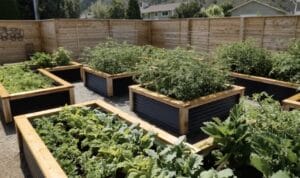
This is a combination we love for anyone dealing with limited raised bed space — which is increasingly common as more Kamloops homeowners move toward raised bed setups to manage that stubborn clay soil. If you’re going that route, applying companion planting in raised beds takes a bit of planning, since space is tighter and root competition is more pronounced. Onions deter carrot fly (a genuine problem in Interior vegetable gardens), while carrots aerate the soil around onion roots. Lettuce tucks neatly between them as a quick-maturing crop that’s harvested before the carrots and onions need the full space.
One BC Interior-specific tip: lettuce bolts fast in our summer heat. Stick to heat-tolerant varieties like ‘Jericho’ or ‘Nevada’, or use lettuce as a spring and fall companion only, swapping it out for something more heat-tolerant (like basil or low-growing herbs) once June temperatures climb.
Companion Planting for BC Interior Ornamental and Native Plant Gardens
Companion planting isn’t just for vegetables. In the BC Interior, where water conservation is a growing priority, pairing ornamentals strategically can reduce irrigation needs, improve pollinator habitat, and create garden beds that look after themselves more than they demand of you. It also helps to start from a strong backbone — building companion plantings around hardy anchor species like junipers and Saskatoon berry gives the softer plantings something durable to fill in around.
Lavender + Salvia + Ornamental Grasses
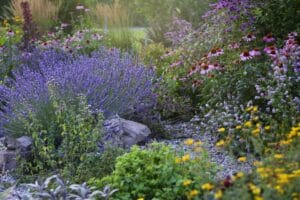
This combination is almost tailor-made for the Okanagan. Lavender (Lavandula angustifolia) and salvia both thrive in full sun, well-drained soil, and low-water conditions. They attract pollinators, deter deer (always a concern on the rural edges of Kelowna and Kamloops), and look spectacular together in July when both are in full bloom. Ornamental grasses like Karl Foerster feather reed grass provide vertical structure, move beautifully in the Thompson Valley’s afternoon winds, and require almost no supplemental water once established.
Together, these three create a planting bed that honestly needs very little from you once it’s settled in — and that’s exactly what most of our landscape maintenance clients are hoping for.
Native Companions: Oregon Grape + Kinnikinnick + Yarrow
If you want to go deeper into low-maintenance, ecologically sound planting for the BC Interior, combining native species is worth serious consideration. Oregon grape (Mahonia aquifolium), kinnikinnick (Arctostaphylos uva-ursi), and yarrow (Achillea millefolium) all tolerate the dry, sun-baked conditions of Interior BC, support native pollinators, and — critically — have no invasive tendencies. This matters because the BC Interior has real issues with invasive plants like Japanese knotweed, which we unfortunately see spreading along waterways and disturbed sites across the region.
Choosing native combinations means you’re building a garden that belongs here, that local wildlife recognizes, and that doesn’t require chemical inputs to stay in balance. For more on BC-appropriate native plant selection, BC’s Ministry of Environment native plant resources are a solid reference.
Companion Plants to Avoid in BC Interior Gardens (Yes, Fennel, We’re Looking at You)
Here’s where we’ll be direct, because we’ve seen these mistakes repeated across dozens of gardens in the Kamloops and Kelowna areas.
Fennel is the problem child of companion planting. It’s allelopathic — meaning it releases compounds from its roots that actively suppress the growth of nearby plants. Tomatoes, peppers, beans, and most brassicas all struggle near fennel. We’ve had clients puzzled by underperforming tomato beds for two seasons running before we identified a mature fennel plant sitting two feet away as the culprit. Grow fennel in a container or give it its own isolated bed, well away from your vegetables.
Mint needs containment, full stop. It’s a useful companion for deterring pests, but in the BC Interior’s warm summers, mint spreads aggressively. Plant it in a buried container with the rim an inch or two above soil level, or you’ll spend three years digging it out of places it was never invited.
Brassicas and strawberries are a bad pairing that shows up in a lot of general companion planting charts. In the BC Interior where growing space and water are premium, they compete fiercely for nutrients and one will always lose — usually the strawberries.
One thing we tell every client who comes into our Kamloops Garden Centre: read the label, but read your soil and climate first. The best companion plant in the world is the wrong choice if it’s fighting your conditions from day one.
A Real-World BC Interior Companion Planting Scenario
A few seasons back, we worked with a homeowner on Kamloops’ south side — sandy-loam soil, full sun exposure, a long narrow backyard running east-west. She wanted a productive vegetable garden that didn’t demand daily attention and didn’t rely on heavy pesticide use. Classic scenario, and one we genuinely enjoy solving.
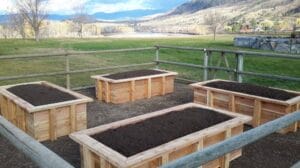
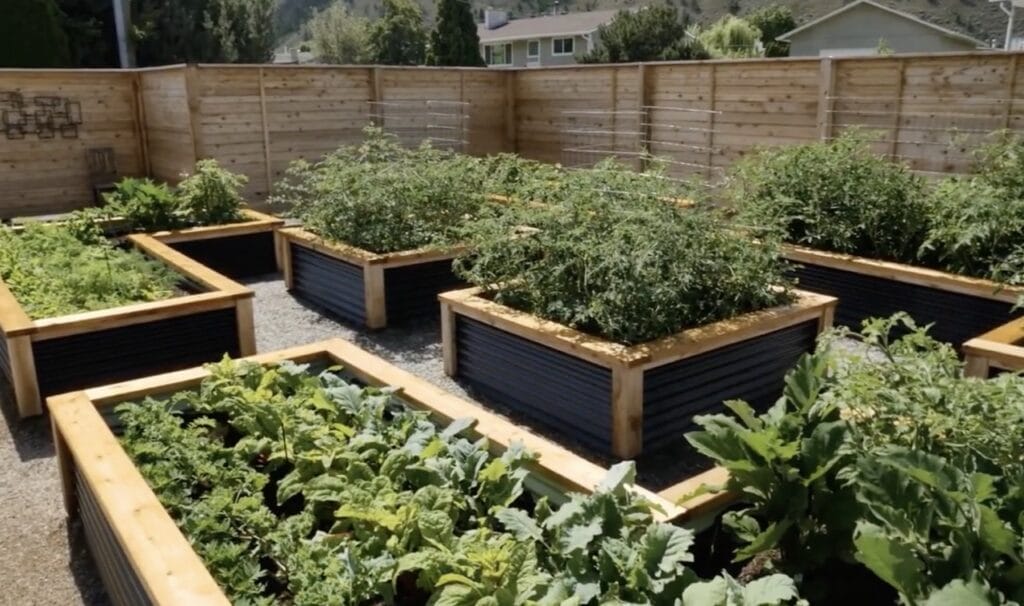
We set up three raised beds with amended soil (compost-heavy to boost water retention in that sandy mix) and designed the planting around three anchoring combinations: the Tomatoes/Basil/Marigold trio in the central sunny bed; a Carrots/Onions/Lettuce rotation in the second; and a squash-heavy Three Sisters bed along the east fence where the corn would get afternoon shade protection from the fence rather than compete with it. We bordered the entire garden with a strip of lavender and low-growing thyme — both drought-tolerant, both beneficial for pollinators, and both acting as a gentle deterrent to the aphid pressure she’d dealt with the previous two summers.
The result? A garden that largely regulated itself. Less pest pressure, noticeably better yields on the tomatoes, and — her words, not ours — “the first summer I didn’t feel like the garden was winning.”
If you’re curious about what a professionally planned garden layout could look like for your property, our landscape design team works with clients across the BC Interior to create gardens that are beautiful and genuinely functional for our climate. And if you’re wondering what ongoing garden care looks like after the planting is done, our post on what’s included in property maintenance breaks it down clearly.
Conclusion: Plant Smart for the BC Interior, Not for Someone Else’s Climate
Companion planting done right is one of the most rewarding things you can do for a BC Interior garden. It reduces your reliance on synthetic inputs, makes better use of limited irrigation, and creates a garden ecosystem that has some genuine built-in resilience — which matters when you’re dealing with the kind of summer heat Kamloops and Kelowna regularly serve up.
The key is to start with your conditions: your soil, your frost dates, your irrigation capacity, and your specific sun exposure. Build your companion combinations around plants that already want to be in the BC Interior, and you’ll spend a lot less time fighting your garden and a lot more time enjoying it.
If you’d like help planning a companion planting layout, selecting the right plants for your soil type, or sourcing hardy, locally appropriate varieties, the team at Lyons Landscaping is happy to help. Contact Lyons Landscaping today — whether you’re starting from scratch or looking to improve what’s already there, we know this region and we know what grows here.