Key Takeaways
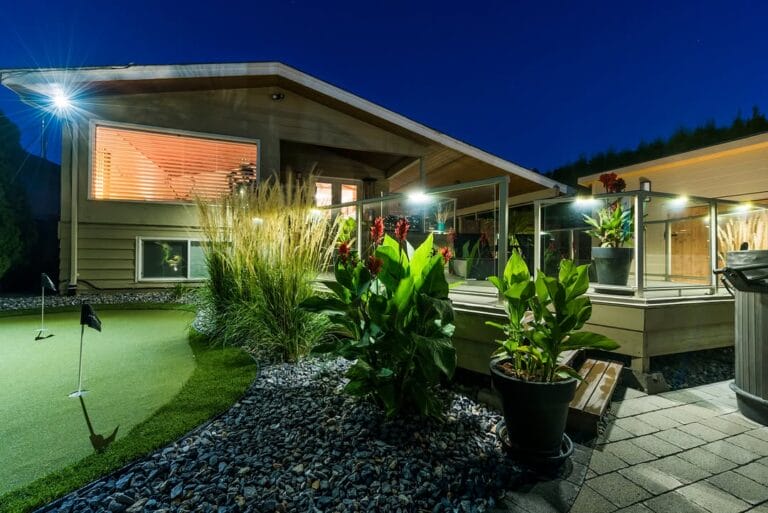
- Thoughtful landscape lighting design in BC can transform your outdoor space into a functional, beautiful extension of your home — even after the sun goes down.
- BC’s Interior climate, including long summer evenings and harsh winters, creates unique opportunities and challenges for outdoor lighting systems.
- Layering different light types — path lights, uplights, accent lights — creates depth and a professional finish that single-source lighting can’t match.
- LED and solar options have dramatically improved in quality and are worth considering for energy efficiency and low maintenance in BC’s varied climate zones.
- Working with a professional landscape designer ensures your lighting integrates seamlessly with your existing hardscaping, plantings, and architecture.
Introduction
If you’ve ever sat on your patio on a warm Kamloops evening in July, you already know how good outdoor living can feel. But once the sun drops behind the hills, that beautifully landscaped yard goes completely dark — and so does the evening. Good landscape lighting design in BC changes that. It’s one of the most effective and often underestimated upgrades a homeowner can make to their property.
At Lyons, we’ve worked on hundreds of residential properties across the BC Interior — from modest backyards in Kamloops to large estate projects in the South Okanagan. Over the years, we’ve seen how the right outdoor lighting can double the usable hours of a beautiful outdoor space, increase curb appeal, improve safety, and honestly, just make a property feel more like home. Whether you’re starting from scratch or retrofitting an existing landscape, this guide walks you through what you need to know.
Why Landscape Lighting Matters More Than You Might Think
Here’s something we hear fairly often: “We only use the backyard for summer parties.” And then we install good lighting, and suddenly that same homeowner is out there in late September with a glass of wine, enjoying the space they forgot they had.
Beyond aesthetics, outdoor lighting does real work. Well-placed pathway lights reduce trip hazards on uneven terrain — which matters a lot if your property has grade changes, stepping stones, or a set of stairs leading down to a lower patio. Security lighting deters unwanted visitors (two-legged ones, mostly — the deer in Kamloops are undeterred by anything short of a fence). Motion-activated flood lighting around entry points is a practical addition to any residential property.
From a value standpoint, outdoor lighting is consistently cited as one of the higher-return landscaping investments a homeowner can make.
For a sense of where lighting fits into overall project cost, our Kamloops pricing guide breaks down how features like this factor into a full landscape budget.
A well-lit landscape improves perceived property value and makes your home stand out in evening showings if you’re ever selling. It also signals that your outdoor space was thoughtfully designed — not just planted and forgotten.
The BC Interior’s long summer days mean you might not flip the switch until 9 or 10 PM in June, but come October, you’ll be grateful for every fixture you installed.
Understanding the Layers of Outdoor Lighting
Professional landscape lighting design isn’t just about sticking a few solar stakes in the ground and calling it a day (though we’ll get to solar in a minute). The best systems use multiple layers of light that work together to create depth, safety, and visual interest after dark.
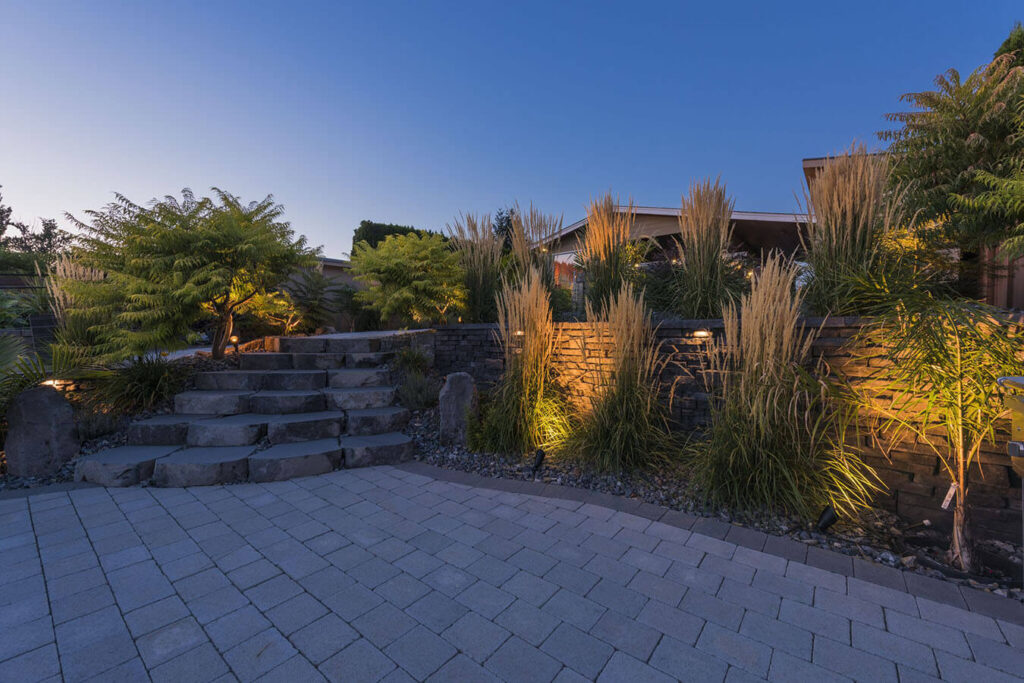
Path and step lighting is your foundation. These low-level fixtures guide movement safely through the yard and along stairs or garden edges. They’re functional first, but the right style also adds warmth and definition to a space.
Uplighting is where things get dramatic — in a good way. Placing fixtures at the base of a specimen tree, a stone retaining wall, or your home’s architectural features throws light upward and creates striking visual contrast. A well-uplighted Ponderosa pine in a Kamloops front yard looks completely different at 10 PM than it does at noon.
Downlighting — sometimes called moonlighting when placed high in a tree — casts softer, more natural light over a patio or garden bed. It mimics the feel of natural light and is one of our favourite techniques for creating ambiance on larger properties.
Accent and spotlighting draws the eye to specific features: a water feature, a sculpture, a particularly beautiful shrub border. Used sparingly, it’s highly effective. Used everywhere, it just becomes noise.
The goal is balance. You want light where you need it, shadow where you don’t, and a result that looks intentional rather than installed by someone who bought everything on clearance.
Choosing the Right Fixtures for BC’s Climate
BC’s Interior isn’t gentle on outdoor products. Kamloops regularly sees temperatures swing from 35°C in summer to -20°C in winter, and the freeze-thaw cycles in spring can wreak havoc on anything that wasn’t installed with longevity in mind. Fixture selection matters — a lot.
Look for fixtures rated for exterior use with solid brass, copper, or quality powder-coated aluminum construction. Cheap zinc-alloy fixtures might look fine in the showroom but they’ll corrode and crack within a few seasons. The same goes for wiring and connectors — use products rated for direct burial if anything is going underground.
LED technology has genuinely transformed landscape lighting over the last decade. Modern LED fixtures are energy efficient, produce minimal heat (which reduces insect attraction), last tens of thousands of hours, and come in colour temperatures that suit everything from warm, cozy patio settings (2700K–3000K) to crisp, bright security lighting (4000K+). For most residential settings in BC, we lean toward the warmer end of the spectrum — it feels more natural and less like a parking lot.
Solar fixtures have improved significantly and can work well in BC’s sunny Interior for certain applications — particularly path lighting in spots that get full sun through the day. That said, they’re less reliable in shaded areas, and during our overcast fall and winter months, they may not store enough charge to last the evening. For a primary lighting system, low-voltage hardwired LED is still the more dependable choice.
According to Natural Resources Canada’s energy efficiency resources, LED lighting uses at least 75% less energy than traditional incandescent bulbs — a meaningful saving when you’re running a system across a large property every evening.
Designing Your System: Start With a Plan
This is where a lot of DIY lighting projects go sideways. Someone picks up a box of path lights at the hardware store, jabs them into the ground along the driveway, and wonders why it looks a bit like an airport runway rather than a designed landscape. No shade — we’ve all started somewhere — but outdoor lighting really does benefit from intentional planning.
Start by sketching your property and identifying the key zones: entry and approach, outdoor living areas (patio, deck, fire pit), garden beds and specimen plants, pathways and steps, and any security-priority areas like garage entries and side gates.
Then think about what you want each zone to do. The front entry should feel welcoming and safe. The patio should feel warm and relaxed. The garden bed along the fence might just need subtle definition. A statement tree deserves a spotlight.
Low-voltage systems (typically 12V) are the standard for residential landscape lighting and are far safer and easier to work with than line-voltage systems. A transformer plugged into an outdoor outlet powers the whole network. That said, the layout of your circuit runs, the wattage load you’re managing, and the placement of your transformer all require careful thought — especially on larger properties with long wire runs where voltage drop becomes a real issue.
This is also the stage where integrating smart controls is worth considering. Timer-based systems are reliable and simple. Smart controllers connected to your home network let you adjust schedules, dim zones, and even sync with sunset/sunrise times automatically — which is genuinely useful in a place like Kamloops where daylight hours change dramatically between seasons.
If you’re planning a full outdoor living project — patio, planting, the works — lighting should be part of the design conversation from day one, not an afterthought at the end. Our landscape design and architecture team integrates lighting planning into the broader project scope so conduit runs are built into hardscape before the concrete is poured, not chiselled in afterward. That’s exactly why treating lighting as part of a full renovation plan — rather than a final add-on — saves both money and rework down the line.
Common Mistakes to Avoid
We’ve seen enough residential lighting projects — both ones we’ve built and ones we’ve been called in to fix — to know where things go wrong. Here are the most common pitfalls.
Over-lighting. More is not more. Flooding every corner of your yard with light eliminates the contrast and shadow that makes a lit landscape look good. It also wastes energy, creates light pollution for your neighbours, and ironically makes your property feel less inviting. Pick your focal points and light those well.
Ignoring glare. A fixture aimed directly at eye level is uncomfortable to sit near. Fixtures should direct light onto surfaces and plants, not into people’s faces. Full-cutoff and shielded fixtures manage this well.
Skimping on the transformer. Your transformer is the engine of your whole system. Buying a cheap, undersized one to save $80 is a false economy. If you plan to expand the system later — and most people do — make sure you have headroom on your transformer’s wattage capacity.
Not accounting for plant growth. That spotlight perfectly aimed at a young cedar now might be totally blocked by it in three years. Or a pathway light gets swallowed by a spreading perennial. Design for how the plants will look in five years, not just today. This is something a professional landscape designer thinks about automatically, but it trips up DIYers consistently.
Skipping maintenance. Fixtures shift. Lenses cloud over. Bulbs fail. Wiring gets damaged by frost heave or over-enthusiastic digging. Your lighting system needs a seasonal check-in — typically in spring after the ground thaws and again in fall before the dark months set in. This is something we include as part of our landscape maintenance services for clients who want one less thing to think about.
For a deeper look at what’s involved in professional landscape work and what to expect from a contractor, our post on 10 questions to ask before hiring a landscaper is a good read before you get started.
And if you’re curious about the full scope of what a designed residential project can include — lighting, hardscaping, planting, irrigation and more — the residential landscaping services we offer at Lyons cover large-scale and estate projects right through to more focused upgrades.
The BC Landscape & Nursery Association (BCLNA) is also a useful resource if you’re looking for vetted professionals in the province and want to understand the standards the industry holds itself to.
Conclusion
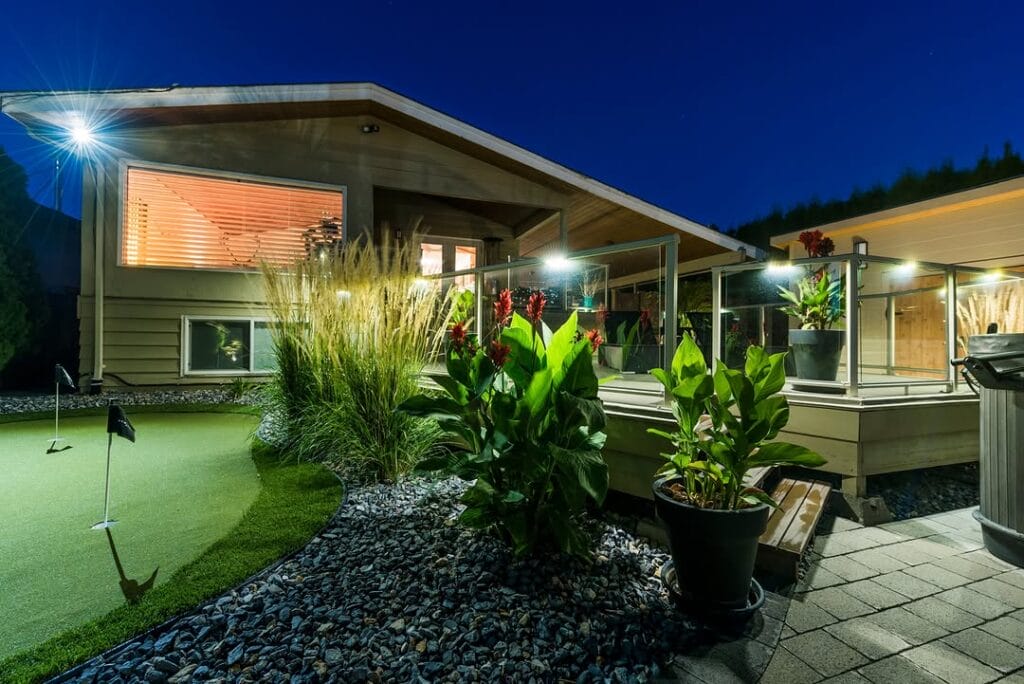
A well-designed outdoor lighting system isn’t a luxury — it’s a practical investment in how you use and enjoy your property. In BC’s Interior, where summers are genuinely spectacular and outdoor living is part of the culture, good lighting can extend those warm evenings by hours and make your yard feel like a real destination rather than just a lawn to mow. Often it’s the final layer — lighting as a finishing touch on a transformation is what makes everything else you’ve built usable well into the evening.
Whether you’re designing a new landscape from the ground up or looking to add lighting to an existing space, getting the planning right matters. The wrong fixtures in the wrong spots won’t just look underwhelming — they’ll frustrate you every time you flip the switch.
At Lyons, we’ve been helping BC homeowners get this right for years — from Kamloops to Kelowna and across the Interior. If you’re ready to talk about what a lighting design might look like for your property, we’d love to hear from you. Contact Lyons today for a free estimate and let’s figure out what your yard looks like after dark — at its best.