The best commercial landscaping option depends on how the property is used, how much maintenance is realistic, and how the landscape will perform over 5–10 years — not just how it looks on installation day.
At Lyons, we design, build, and maintain commercial landscapes across Kamloops and Interior British Columbia, where climate extremes, water restrictions, and freeze–thaw cycles quickly expose weak design decisions. Below, we’ll break down how we determine the best option for each site — based on real projects, not theory.
The Commercial Properties We Work With Most
From real-world experience, we most often design and maintain landscapes for:
- Office parks and business campuses
- Retail plazas and mixed-use developments
- Industrial and logistics sites
- Strata complexes and HOAs
- Municipal facilities and public infrastructure
- Healthcare and educational campuses
Each property type has different priorities — which is why there is no single “one-size-fits-all” solution. For strata complexes in particular, choosing the right approach for strata-managed sites comes with its own contract and maintenance considerations worth reviewing separately.
What Clients Really Mean When They Ask for the “Best Option”
When a client asks what the best option is, they’re usually trying to solve one (or more) of these problems:
- Reducing long-term maintenance costs
- Improving curb appeal and tenant perception
- Increasing safety and site durability
- Limiting irrigation and water use
- Avoiding rework, plant failure, or drainage issues
- Staying compliant with municipal requirements
The right landscape balances performance, cost, and maintenance reality.
Common Commercial Landscaping Options We Compare
These are the most frequent comparisons we walk clients through:
- Turf vs decorative rock
- Natural turf vs artificial turf
- Shrubs vs hardscaping
- Native planting vs ornamental planting
- High-design landscapes vs low-maintenance landscapes
In most cases, the “best” option isn’t the cheapest — it’s the one that performs consistently without creating ongoing problems.
What Performs Best in Kamloops & Interior BC (5–10 Year View)
In our climate, the most reliable commercial landscapes typically include:
- Drought-tolerant and native-adapted plantings
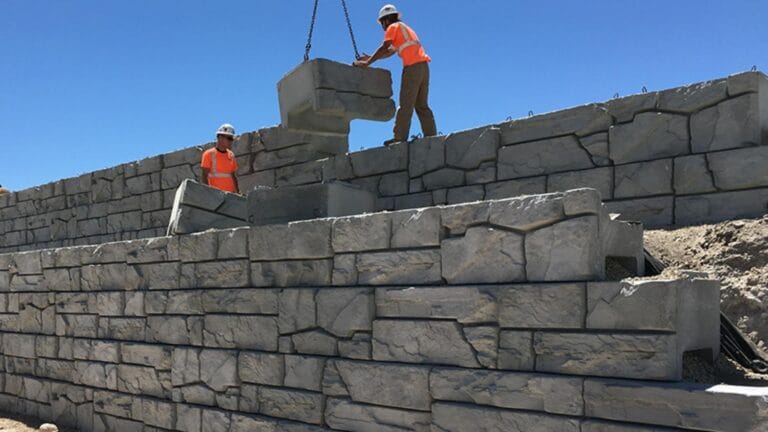
- Hardscaping in high-traffic or high-wear areas
- Limited, intentional turf (only where it serves a purpose)
- Proper soil preparation and drainage from day one
Freeze–thaw cycles, intense summer heat, dust, and irrigation limits all punish overdesigned or high-maintenance landscapes over time. Proper drainage and hardscape planning play a major role in long-term performance — something we cover in more detail in Drainage & Hardscaping Tips for Fall in BC: Prevent Winter Flooding and Damage.
Real Commercial Project Outcomes
Example 1: What Worked Well
- Property type: Office park
- Installed: Decorative rock, drought-tolerant shrubs, limited turf
- Outcome: Low maintenance, strong curb appeal, consistent performance after 7+ years
Example 2: What Failed
- Property type: Retail plaza
- Installed: Large turf areas with ornamental plantings
- Outcome: High irrigation costs, frequent turf repair, poor winter durability
The difference wasn’t budget — it was matching design to site reality.
How Budget Changes the “Best” Option
- Tight CapEx budget: Simplified plant palette, hardscaping in wear zones
- Best long-term ROI: Durable materials, reduced irrigation, integrated maintenance planning
- Aesthetic priority: Design-forward landscapes supported by realistic maintenance plans
Many cost overruns happen when landscapes are designed without considering long-term upkeep — something we explore further when we look at the cost drivers behind commercial landscape choices.
Landscaping Choices That Cost More Over Time
The most common money-drainers we see include:
- Turf installed in shaded or high-traffic areas
- High-maintenance plants in harsh exposure zones
- Poor soil prep and grading
- Cheap materials that don’t survive Interior BC winter conditions
Upfront savings often disappear within a few seasons.
Why Maintenance Should Shape Design Decisions
Maintenance is part of the design — not an afterthought. That’s why the ongoing maintenance considerations for the chosen design should be mapped out before installation, not discovered after.
We factor in:
- Service frequency: What’s realistic long-term
- Irrigation needs: Water availability and efficiency
- Seasonal cleanup: Leaf drop, pruning, debris
- Snow removal interactions: Plant survival near plow zones and sidewalks
This is especially critical in Kamloops, where snow storage and access planning directly affect landscape longevity.
Commercial Landscaping Options That Work Almost Everywhere
Across most industries, the most reliable options include:
- Hardscaping in primary circulation areas
- Native or climate-adapted planting
- Clear snow storage and drainage planning
- Integrated design, build, and maintenance
They work because they align with how sites are actually used — year-round.
A Simple Expert Framework for Choosing the Best Option
- Define how the site is used daily
- Assess exposure, climate, and traffic patterns
- Match materials to maintenance reality
- Optimize for 5–10 year performance and ROI
This approach consistently delivers landscapes that look good, perform well, and cost less over time.
If you’re planning a new project or upgrading an existing site, our commercial landscaping services are designed to align design decisions with real-world conditions from day one. Contact our team to discuss your site, priorities, and long-term goals.